You could win £10,000!
Simply download, register and use the Scottish Widows app between 7 July and 31 December 2026. For full details and eligibility, or to opt out, see our terms and conditions.
Head of Portfolio
Management
& Implementation
Political tensions have been running high. The start of 2026 has seen events in the Middle East and Venezuela hitting the headlines and causing uncertainty and volatility - or ups and downs - in stock markets.
These geopolitical risks, as they are known, such as wars, elections, trade disputes, or tensions between countries, can change how confident businesses and consumers feel - and that can affect markets.
The conflict involving the US, Israel and Iran, for example, has created uncertainty that’s pushed oil prices sharply higher. Attacks on energy facilities and shipping in the Gulf have disrupted supply routes, leading oil prices to climb to over US$100 a barrel. This kind of rise can make everyday costs higher and can unsettle financial markets.
Stock markets have seen some volatility as investors react to the latest developments. Certain sectors - like energy and defence - are holding up better, while consumer-focused businesses have felt more strain. Investors are now watching how long tensions last, as prolonged disruption could keep volatility elevated.
Financial markets tend to respond quickly to geopolitical news and events, which can cause short-term volatility in the stock market.
Let’s look at a recent example. Following the threat of new tariffs by the US administration on countries considered to be blocking its moves on Greenland, and the subsequent climbdown on that announcement, some stock markets experienced a period of increased volatility.
When the possibility of tariffs was announced, markets reacted to the risk of increased trade tensions, which led to short-term falls in stock markets, where shares are traded, in the US, UK and Europe. With the US announcing the tariff plans would be dropped, stock markets reacted positively and we saw a rise.
You can see this in the chart below, where the value of the S&P 500 Index, one of the key US share indices, fell sharply as share prices declined on the news of possible tariffs, and then rose as the news that these would not be put in place broke.
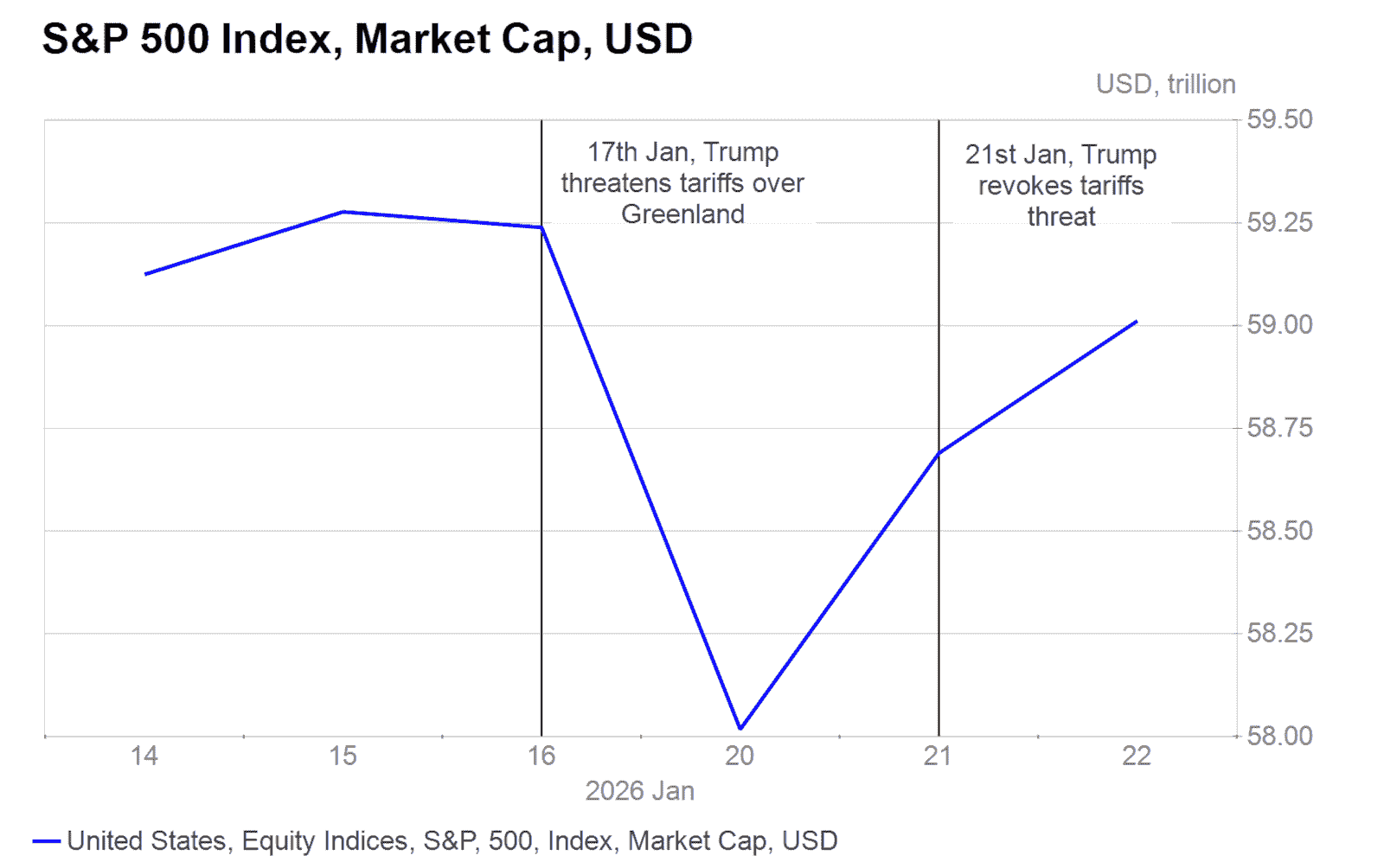
US market size, as represented by S&P in trillions of US Dollar
Financial markets react to geopolitical risk events because of the uncertainty they cause, and the possible impact of these events on consumers, businesses and investors - and ultimately on economies.
While events can often centre on a crisis, a natural disaster, or a conflict, they can also be caused by policy shifts, particularly when it relates to trade. The US proposals to impose tariffs created concerns about how relationships between the US and key European trading partners would change.
With negotiations leading to the cancellation of those tariffs, the stock market rallied. It underlines why it’s important not to panic when events like this happen and financial markets wobble.
As you can see from this example, many of these events are short-lived and, therefore, cause short-term reactions in financial markets. Even when events last longer, markets quickly adapt, so the effects are typically short term in nature. It’s why investors should take a long-term approach, so that their investments are less likely to be impacted by any short-term moves in financial markets.
While the headlines can feel unsettling, it’s important to remember that short-term volatility is a normal part of investing. Markets have experienced similar episodes many times before, including previous tariff announcements.
When it comes to investing, there are a few things to bear in mind that can help when there are bumps in the road:
Despite market volatility linked to the conflict in Iran and rising energy prices, the long-term investment outlook remains resilient. While higher oil prices and geopolitical uncertainty have created more short-term bumps than expected, many experts still believe that global growth and long-term market returns can remain positive - provided tensions ease over time.
With over 200 years’ experience, Scottish Widows has helped customers navigate many periods of uncertainty. We continually monitor global economies and markets to guide our investment decisions.
We take a diversified, disciplined approach to investing in our funds which is designed to help withstand periods of uncertainty. We remain focused on delivering strong long-term outcomes for our customers.