You could win £10,000!
Simply download, register and use the Scottish Widows app between 7 July and 31 December 2026. For full details and eligibility, or to opt out, see our terms and conditions.
Backing the shift to a lower-carbon economy

Scottish Widows responsible investment expert
Climate transition investing is no longer a niche corner of the market. It’s becoming a mainstream way to think about long-term growth, risk management and the future shape of the global economy. For investors, the question is not simply whether the world will transition to lower-carbon energy, transport, buildings and industry, but which companies and assets are best placed to benefit as that transition unfolds.
It also sits within a wider responsible investment approach: considering environmental, social and governance factors to help protect long-term savings, manage risk and identify businesses that are mitigating climate risks by decarbonising or transitioning to low-carbon technologies or operations.
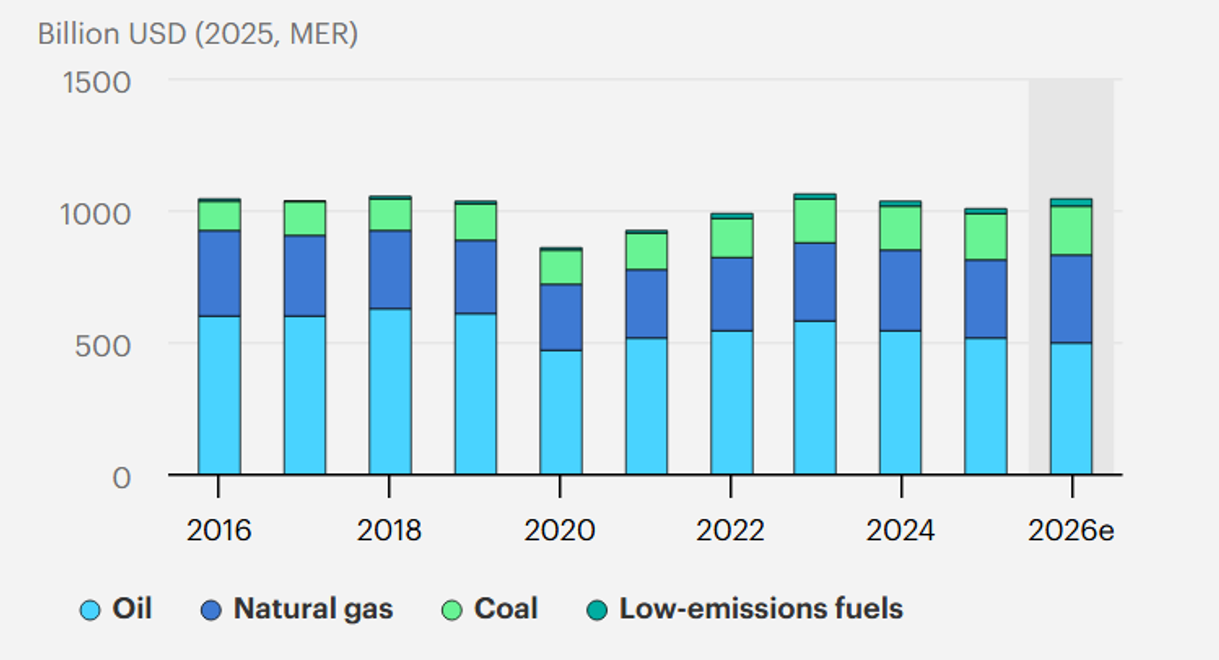
The transition to a low-carbon economy will require significant investment. The International Energy Agency (IEA) forecasts global energy investment to reach around $3.4 trillion in 2026, up 5% on 2025, with roughly $2.2 trillion going into clean energy technologies such as renewables, nuclear, grids, storage, low-emissions fuels, efficiency and electrification - around twice the amount directed towards fossil fuels.
But that’s still short of what achieving net zero by 2050 would require: the IEA estimates clean energy investment needs to increase to around $4.8 trillion a year over the next decade to limit overshooting the 1.5°C goal.
Despite the Middle East conflict, capital outlays on fuels are expected to rise about 3% in 2026, driven mainly by investment in natural gas projects.
Investors often associate climate investing with renewable energy, but transition opportunities can be broader. For example, some companies are set up to deliver climate solutions, such as clean power, grid technology, energy efficiency, sustainable infrastructure or low-carbon materials. Others are established businesses in higher-emitting sectors that may create value by cutting emissions, improving efficiency or shifting their business models.
This is where a transition lens can differ from a simple exclusion-based approach. Rather than just avoiding carbon-intensive industries, investors can look for credible companies that are investing in the transition and setting measurable decarbonisation plans. Our responsible investment approach, for example, combines several levers: investing more in companies working to reduce their negative impact on the planet and society, engaging with companies to encourage better practice, and excluding those operating in areas such as coal production, controversial weapons or tobacco.
Investors may be attracted by the chance to be part of long-term structural growth while supporting companies that can help deliver the transition. In practical terms, that may mean investing in diversified funds with exposure to areas like renewable infrastructure, electrification, clean technology, resource efficiency, green buildings or companies with credible transition plans. It may also mean investing in funds that use stewardship and voting to encourage companies towards clearer targets, better disclosure and more resilient business models.
Climate transition investing isn’t without risk, for example, policies can change or technologies fail to deliver. Investors should also be alert to greenwashing. A fund labelled ‘sustainable’, ‘responsible’ or ‘climate’ may not necessarily invest in the way you’d expect. It’s worth checking the fund’s objective, holdings, stewardship approach, exclusions policy, carbon metrics and whether it invests in solutions, transitioning companies, or both.
But these risks must be weighed against both the opportunities the transition may offer and the potential transition risks facing companies that don’t adapt, as well as those investing in them. For example, businesses with high emissions, weak governance or poor disclosure may face rising costs, tighter regulation, changing customer demand or stranded assets.
Climate transition investing is best viewed as a long-term theme rather than a short-term trade. Diversification remains important, as does understanding how funds assess climate data, company engagement and valuation discipline.
The transition to a lower-carbon economy will require huge investment and there will be both winners and losers. For investors, the opportunity lies in looking beyond the label and asking whether a fund or company has the financial strength, strategy and credibility to thrive through the transition.
Key takeaways
If you’re interested in exploring the topic further, the IEA's World Energy Investment 2026 and World Energy Outlook 2025 reports provide an in-depth look at the trends, technologies and investment shaping the future of energy.