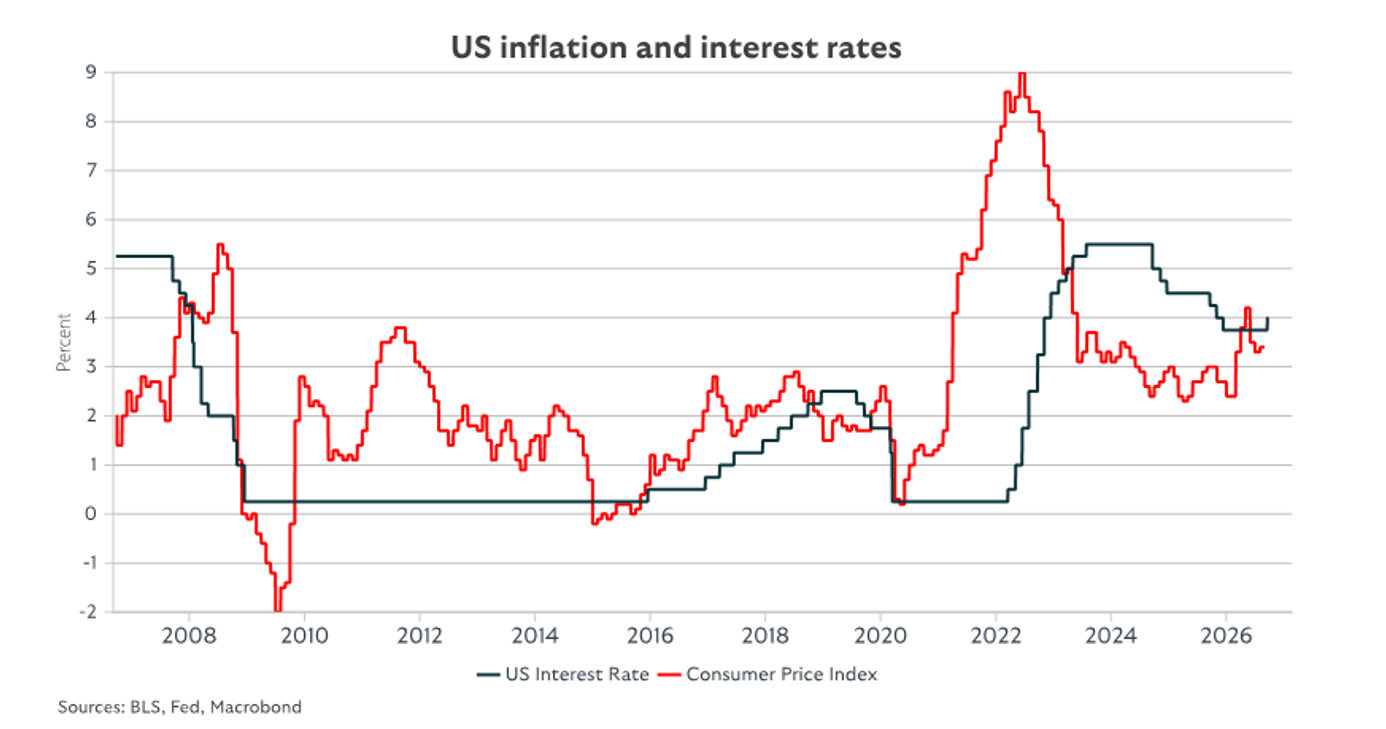
What inflation can tell us about future interest rates
- What the chart shows: Comparing US inflation with US interest rates over the past 20 years, the chart shows when inflation stays higher than expected, interest rates often rise in response.
- Why investors pay attention: Interest rates can have a big impact on investment markets. Higher rates can cause bond and share prices to fall, as seen in 2022 when rising inflation led to a sharp market downturn.
- Why the US matters: The US is the world’s largest economy, so changes in inflation and interest rates there can affect investment markets around the world and the value of people’s investments.
- Markets don’t wait for rate decisions: Investment markets often react before rates are changed, responding to inflation figures and other economic news. Share and bond prices often move based on what investors think might happen next. If a rate decision differs from investors’ expectations, markets can also be volatile.
- A recent example: A recent rise in US inflation increased expectations that interest rates could stay higher for longer. Bond prices fell as a result, while share prices remained relatively resilient. Interest rates were then raised in September.
- Looking ahead: Officials who set US interest rates currently expect only one more rise in 2026 and rates are not expected to rise as high as the peak seen in 2022.