Podcasts
Explore the Scottish Widows Workplace Savings podcast series, covering pensions, retirement, investments and financial wellbeing, alongside key trends shaping the industry – from AI to innovation and leadership. Each episode brings expert insight to help you stay informed on the latest industry developments. Browse below or listen on Spotify, Apple and other podcast platforms.
Check out our latest podcasts

The Gender Pension Gap: Going Beyond the Research
August 2026
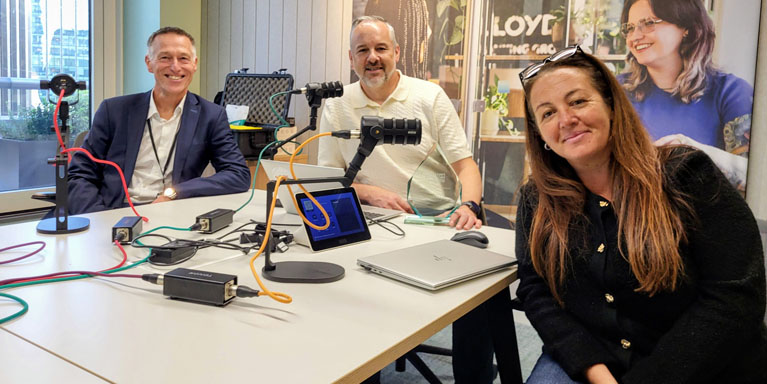
Susan Hope hosts a women and retirement special with Kelly Parsons, Tracey Gloyne and James Biggs, exploring the gender pension gap and the actions needed in response to two decades of Scottish Widows research.

2026 Retirement Report – Part 2 – Retirement Income Decisions
May 2026
In this episode, Pete Glancy, Head of Pensions Policy, explores the findings from Part Two of the 2026 Scottish Widows Retirement Report, the research switches to retirement income decisions, support needs and the challenges facing future retirees.
More podcasts to explore

Creating a movement for better pension outcomes
August 2026
In this episode, Alan Morahan discusses how governance, employer engagement and auto enrolment can improve member outcomes, alongside the industry's role in tackling lost pension pots and driving meaningful change.

Solving the Lost Pensions Challenge
July 2026
In this pension transfer special, Workplace Savings Leads Richard Brown and Eleanor Hassall-Marlow explore the lost pension problem and how pension tracing are helping savers find their pots and take control.
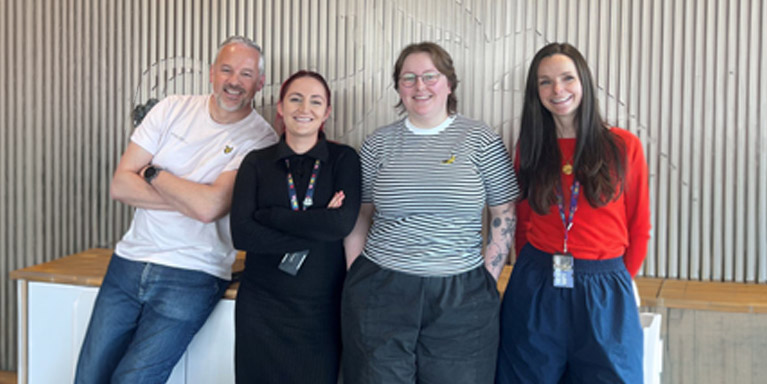
Can games make us care more about our pensions?
June 2026
What if pensions felt as engaging and intuitive as your favourite game? In this episode, the Lloyds gamification team explore how play can simplify decisions, build saving habits and inspire confident action.
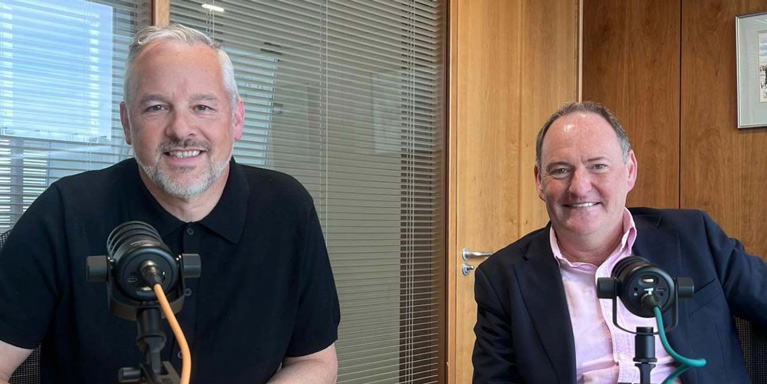
2026 Scottish Widows Retirement Report Part 1
June 2026
In this episode, Pete Glancy examines the UK’s retirement readiness, drawing on new findings including the updated National Retirement Forecast to highlight key risks and what could make the biggest difference.
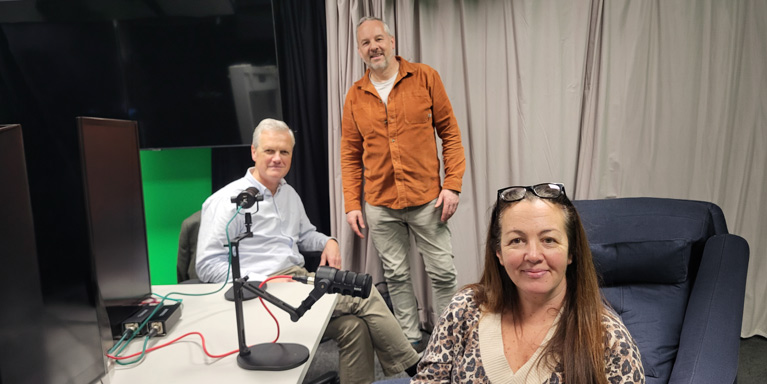
Investment Expert and Accidental Trustee
April 2026
Investment Lead for the Scottish Widows Master Trust, Gerald Wellesley joins Robert Cochran and Sharon Belligham in this episode. He shares views on VFM reform risks, private markets and liquidity management.
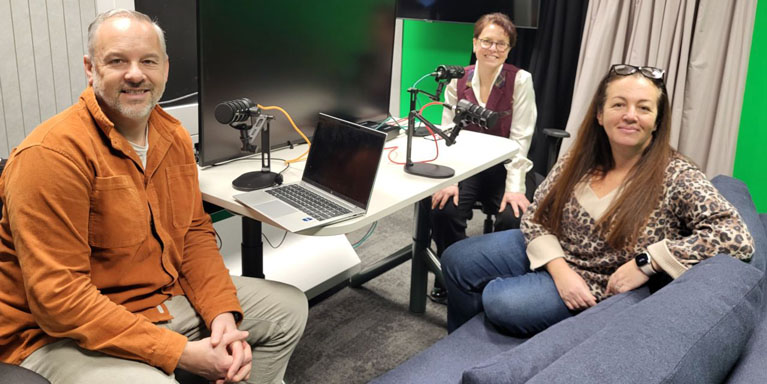
Trustee superpower - Operations Management Activated
April 2026
In this episode Joanne Fairburn joins Robert Cochran and Sharon Bellingham sharing her experience as a Master Trust Trustee and insights from her extensive pensions career.
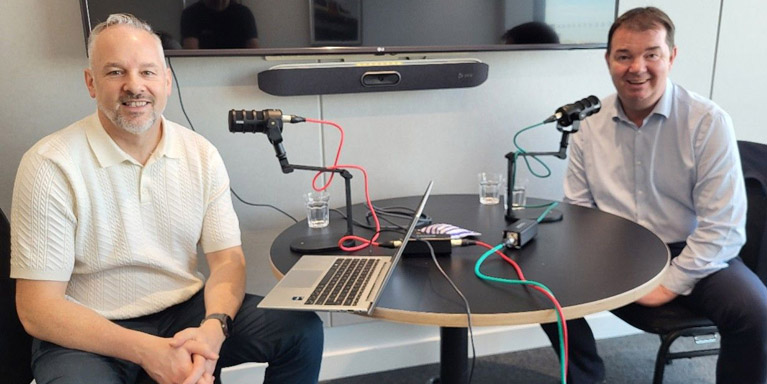
A record-breaking pensions minister shares his highs
April 2026
Former and longest serving Pensions Minister, Guy Opperman, joins Robert Cochran to reflect on major UK pensions reforms, from the Pension Schemes Act to dashboards and CDC.
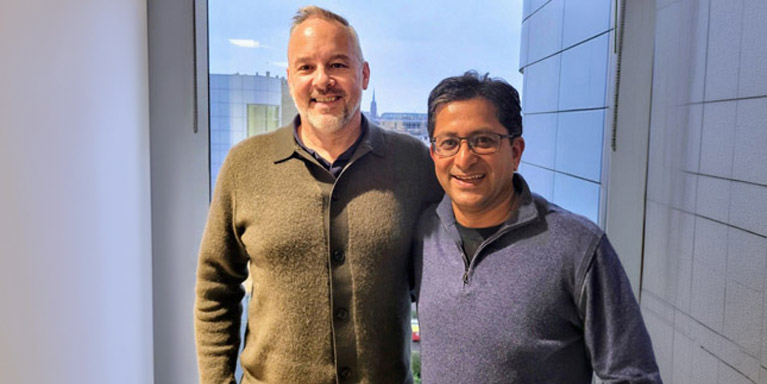
CEO time - Tigers to Agents
February 2026
Scottish Widows CEO Chira Barua joins our host Robert Cochran to share his highlights of 2025 and what excites him for 2026.
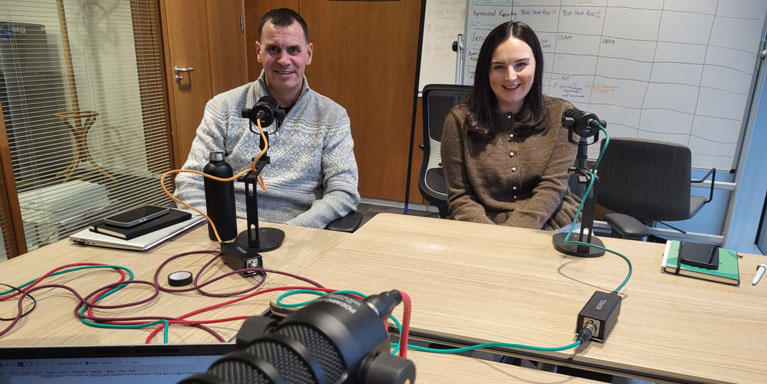
AI & Humans - Elevating customer services to new heights
January 2026
Robert Cochran is joined by Niamh Whelan and Scott Gunderson to share how AI is transforming customer support.
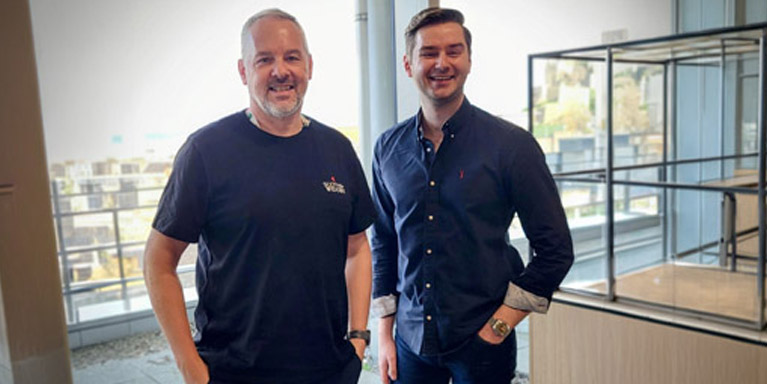
AI x Workplace Pensions - what can schemes do to improve what members see?
January 2026
AI is changing how people engage with pensions - whether they’re seeking advice, researching pensions schemes, or making workplace decisions.
Over the Fence from TPR to Trustee
January 2026
Hear former Pensions Regulator Director Mike Birch join Robert Cochran and Sharon Bellingham as he shares insights on becoming a Trustee and the key challenges facing the Master Trust market.
Podcast archive
-
December 2025
Trustee and Chair of the Scottish Widows Master Trust, Jonathan Reynolds, joins Robert Cochran and Sharon Bellingham, exploring targeted support, annuities and the future of member outcomes.
21 Years of the Scottish Widows Women and Retirement Report
November 2025
Marking 21 years of the Women in Retirement Report, this episode explores women’s financial futures beyond the numbers, through real stories, resilience and change.
September 2025
With over 30 million UK users and the rise of #FinTok, James Bowyer and Scott Stevenson explore TikTok’s success and its growing role in UK pensions planning.
September 2025
James Biggs reflects on 35 years helping people with their finances. He's a brilliant storyteller; he loves people and he's a non-stop innovator. Hear about how he launched EBC TV, being played on Radio 1, and what makes a great employer/adviser provider relationship.
Mithesh Varsani: An Investment Innovator
July 2025
Mithesh Varsani, Head of Investment Solutions at Scottish Widows shares his journey into private markets and how Scottish Widows is reshaping its default fund, with insights on new LTAF solutions.
Scottish Widows' Retirement Report - Love has its dividends?
June 2025
In this episode, Pete Glancy joins Robert Cochran to explore the Scottish Widows Retirement Report, including the finding that 39% of the UK may not meet a basic retirement standard of living.
*2025 Scottish Widows' Retirement Report
Kevin Doran - A CIO With A Plan
May 2025
In this episode, Kevin shares his journey from maths teacher to CIO and how he’s reshaping investment strategy at Scottish Widows, with insights on customer behaviour and his four "superpowers."
Digital Inclusion: How Savvy Are You?
May 2025
In this episode, Kevin shares his journey from maths teacher to CIO and how he’s reshaping investment strategy at Scottish Widows, with insights on customer behaviour and his four “superpowers.”
April 2025
In this episode, recorded live in front of employers, Robert Cochran is joined by Chris Curry and Richard Smith to explore the latest on pensions dashboards, including progress, learnings and audience questions.
March 2025
In our latest podcast, Damian Stancombe shares insights with Robert Cochran on the UK Workplace Savings Market, lessons from his extensive career in Employee Benefits, and his journey into early retirement with "60 Paydays to Retirement".
Empowering Financial Futures: International Women’s Day
March 2025
In this International Women’s Day episode, Jill Henderson, Jackie Leiper and her daughter Rebecca explore closing the pension gap through their own journey and the importance of open financial conversations.
February 2025
In our latest podcast, we switch it up to hear from the employer perspective. Paul Bird joins Robert Cochran, sharing his insights from 40 years delivering benefits in the workplace pensions market.
January 2025
In this episode, Robert Cochran is joined by Scottish Widows CEO Chira Barua to kick off the 2025 series, reflecting on his first 18 months and sharing his priorities for the year ahead, from adequacy and digitisation to financial engagement.
January 2025
IIn this episode, Robert Cochran is joined by Sharon Bellingham to close out 2024, sharing insights from Mansion House and secondary markets to DE&I and what matters most to members.
-
December 2024
Over 60,000 employees have taken part in the Scottish Widows Retirewell Pension Education sessions this year with a big boost for Pay Your Pension Some Attention.
In this episode, Robert Cochran is joined by Stuart Hopley to discuss exactly what pension scheme members are asking about their pensions.
Women and Retirement Report 2024
November 2024
The 2024 Women and Retirement report highlights the progress made over the past 20 years in narrowing the gender pension gap. This podcast reviews the key milestones reached in the past two decades.
Financial Wellness - a Talk Money Week special
November 2024
In this episode, they discuss financial wellness, financial resilience, and some of the ways that young people, vulnerable customers, and policyholders alike can manage their finances.
November 2024
In this special, Robert Cochran is joined by ‘Mr Pension Dashboard’ Richard Smith who has travelled the length of Europe by train analysing all that European pension dashboards have to offer. He's also joined by 20-something Oliver Webster for the younger perspective as they discuss what the latest announcements from the government mean for pension dashboard – and just how big a revolution for pension engagement the dashboards promise to be.
September 2024
Join us to listen to our latest – and hugely entertaining - podcast with Graeme Bold talking to Robert Cochran about all thing’s pensions, getting behind Pension Engagement Season, tackling pension adequacy - and so much more.
Graeme explains how heading up a business which he has helped to grow to over £100bn in assets means we can do much more for our employers, advisers, and members so that they get engaged with their pension and build their finances for their future.
Bringing our Responsible Investments and Stewardship Report to life
September 2024
Managing £181 billion for 8.3 million customers is a huge responsibility & a chance for real impact.
September 2024
In our latest episode Robert is joined by Pete Glancy to review the 20th Scottish Widows landmark Retirement Report.
August 2024
Of course you can, just like learning, health, fitness and other areas of your life gamification techniques are being applied to encourage better outcomes.
Listen to this fascinating podcast, as Robert Cochran is joined by David Conner and Amy Rodger, real life digital experts who have played a part in designing gamification into the Scottish Widows Pension experience.
Decumulation - understanding the needs of the nation
July 2024
Robert Cochran is joined by Pete Glancy one of the authors of the recent Scottish Widows report into Decumulation where they review the fascinating findings, introduce the retirement decumulation cube and look at the guidance and advice people tell us they want at retirement.
They look at the 3 key drivers of retirement products - Control, Consistency and Legacy and plot everything from Drawdown to annuities and CDC in the Retirement Matrix
Bringing Digital Banking to Pensions
July 2024
For this episode, Robert Cochran is joined by our own Scottish Widows digital expert Phil Allen, and digital native Connor Strachan as they focus on what pension apps can learn from digital banking, whilst remaining simple, quick and efficient for customers.
Creating an Award Winning Customer Vulnerability Strategy
June 2024
Improving support and outcomes for vulnerable customers has become a real focus for providers over the last few years. In this podcast we from those leading the Workplace Pension Servicing Teams at Scottish Widows about how vulnerable customers are identified and which are the key vulnerabilities we are seeing.
Practical use of AI in Pensions
April 2024
In this episode Robert Cochran is joined by our own Scottish Widows experts to discuss the practical uses of AI in the pension space, and how we can develop from where we are just now to improve customer experiences.
March 2024
In this episode Robert Cochran is joined by diversity champion David Butcher who shares how embracing mindfulness and is own experiences inspired him to launch Mindful Pensions.
The Inside Story on Scams and Scammers Podcast
March 2024
Mind-blowing discussion with one of Lloyds experts on Scams. Chris Thomason talks to our host Robert Cochran about scams we see across the bank, and how scammers are targeting pension funds.
February 2024
Expert panel hosted by Robert Cochran delving into ethics, security and opportunities data offers.
Improving Retirement Outcomes Employer Panel Podcast
February 2024
Stuart Hopley hosted a live podcast, joined by some of our employer clients and industry experts to discuss how we can improve retirement outcomes beyond auto-enrolment 2.0.
The Gender Pension Gap: Going Beyond the Research
August 2026 | Duration: 41 minutes and 13 seconds
Speakers:
Kelly Parsons, James Biggs, Susan Hope, Tracey Gloyne
**Susan Hope ** 00:13
Hello, everyone. I'm Susan Hope. I am delighted to be hosting this episode of the Scottish Widows Workplace Pensions Podcast, and today we're talking about the gender pension gap, but beyond the research. I'm joined today by three brilliant industry personalities, Kelly Parsons, Tracey Gloyne, and James Biggs, who will introduce themselves shortly. A quick reminder that this is not financial advice, and it's for information purposes only.
Research should help us change how we think, how we lead, and what we do.
Scottish Widows have been studying the women of the UK's preparedness for retirement for over 20 years, so we've got two decades of evidence, and this is what we're going to talk about today. What should that evidence make us do. How should it make us show up differently in the areas where we have both privilege and influence? So let's get into it, James. If I can come to you first with a short introduction, why do you care, and why should we all care?
**James Biggs ** 01:17
Hi, Susan. Really nice to be on this podcast. This is such an important subject, and Scottish Widows have written these brilliant reports on it for 20 plus years, and I can't really see that it's massively improved. So my perspective on this was sharpened when I went to an event at the House of Commons in 2019, where I started to understand the real issues behind the gap that exists, and I went home, told my wife about it, and she was absolutely livid, and almost almost almost cross with me just for reporting.
I said, "Don't kill the messenger, and so I just thought, "Well, what can I do about it? Because you know, I love this line: "You don't have to be great to start something, but you do have to start something to be great. So we've got we've got to do something, and I thought, well, I'll write an article about it and see if it resonates. And it got loads and loads of traction.
And ever since then, I've been talking about it every time I've got an audience of employees, whether it's male or female, because it's not just a female message. There's men in the audience; they need to understand what their role in in this is as well. So I'm a mouthpiece for my wife's fury. I'm not a woman. That's the elephant in the room, because this is this is a very very female subject, but men have got a part to play, and so that's why I've just got stuck into it.
**Susan Hope ** 02:33
Absolutely, and I think that we need men as allies, while men predominantly are still making the policy decisions, it's very important that we are all in this together. This is a societal issue, not not a women's issue. Do you want to say a few words about your career so far?
**James Biggs ** 02:49
Yeah. Um. So this is my. I'm in my mid 30s as okay as a pension nerd. I knew you were laughing because I'm definitely not in my mid-30s from an age perspective. It's my 30-somethingth year doing corporate stuff. My first pension corporate was Frankie and Benny's in 1997, but I was in pensions for years before that, and I am a co-owner of the Employee Benefits Collective, and we've been around for about eight years now.
Basically, making noise on the edges, looking a bit different, a bit quirky, being a bit of a disruptor, but bringing great experience, great value, and great people to our client solutions.
**Susan Hope ** 03:35
That's brilliant, and we're really glad to have you here, Kelly. If I could come to you now.
**Kelly Parsons ** 03:40
Yeah. Okay. Yeah. My name is Kelly Parsons. Thanks for having me. Great to be here, Sue. So yeah, I suppose when it we're talking about gender pension gap, when it first kind of like it shone a light, me. I think I was about maybe 1011, years ago, diving into governance reports, and it's kind of like, why is this gap? You know, I mean, I was starting to become aware of the research as well that widows were doing and other providers, and it's just like this is horrifying. It's just why is this happening?
It's just shocking.
I just didn't get it, and obviously I do, and it's completely obvious why it's happening. But why is it important? Well, I'm a woman. My I've got a daughter. I've got a mum. I've got a sister. We've all no women. It's an issue for everybody, and you know, like James was saying, we should have allies, and we're you know we need them within the industry across the board to be able to try and make a slight difference. And it's those little differences that are going to make a big difference.
**Susan Hope ** 04:38
I agree. I think we need that collaboration across the three spheres of responsibility that we always talk about is so so important. I think. Well, let's dig into governance reports in a second. Tracey, if I could come to you too, please.
**Tracey Gloyne ** 04:49
Thanks, Susan. Hi. Yes. So my story probably started about 20 years ago, probably around about the same time as the Scottish Widows report, but I'd been in financial services. For a while, I mean, overall, I've been in financial services probably 30 plus years too, but unfortunately, I was in a position. It was a banking crisis, and I was being made redundant. And until that point, I'd been really successful. Explained my situation to a recruiter who was absolutely desperate to get me signed up with him, and then dropped that elephant in the room.
By the way, I've got two young children below school age, and I'd like to work three days a week. And was told quite simply after a huge intake of breath, "Oh well, I can't get you a job three days a week. And overnight, having made conscious decisions throughout my lifetime, you know, planning when I was going to have a family so that I'd establish my career, got myself into a great position.
For reasons outside of my control, I was now like the many millions of other women that was unable to work through their lifestyle choices of actually wanting to be there some of the time to bring up a family. So of course that affects pay, affects pension, and that really was the start of my journey into the inequalities that exist throughout women's working careers, all the way through. And it's the the culmination of all those little decisions that ends up with us as women in general having smaller pensions than men,
**Susan Hope ** 06:22
that's it. And we we know that the pension industry pensions reward long and uninterrupted careers, and that's not ultimately what what we have. So we've got over 20 years of research, as we've mentioned. Right, what is the one piece of research that's the most unignorable, if you like? Which statistic would you want every employer to know if you had five minutes with a new CEO? What piece of evidence would you put in front of them to influence some sort of change?
**Kelly Parsons ** 06:54
I think I'd have to go for auto enrolling somebody at 18 rather than waiting. Why wait? Get them in the pension. The massive difference that can make. To I put some numbers in. I was doing that modeling online, and I was just getting into it, going, "My goodness, you know that 8% there at that point in their life could, you know, almost nearly half the amount of of deficit at the end. And you know what? Why why not? You know, I know it's a cost, but you've got to think people are in the early careers.
It's probably not going to be anywhere near as much as auto-enrolling somebody later on. I just think it'd be a great thing for employers to do. Or let's just get rid of it as a statutory requirement. So bring that on sooner the better.
**Susan Hope ** 07:36
I agree. So there we go. First call to action: auto-enrol your employees at 18. Allow them to opt in, publicize them being able to opt in. Absolutely, we've actually done some research. This is new, just in the last couple of weeks, on our own book. And out of everyone saving between 18 to 22, 65% are young men and 35% are young women. So even the messaging, they are taking a positive action, but more men than women are doing it, so yeah, absolutely agree with that one.
I feel really strongly about it.
**Kelly Parsons ** 08:06
And you know what? I want men to do well with the pensions as well. Don't get me wrong. You know, this is not a you know a competition. This is an individual thing, and I really just would love to raise awareness for women. More women actually going. Why haven't we got this? Why can't we also enroll? What you know? You know, getting more people, women on the board, which they are obviously nowadays. So it's, I think, it's our job as as consultants to be raising that message.
**Susan Hope ** 08:27
And it's a simple one, isn't it? If you think about someone on a starting salary of around 25,000 pounds, the cost to an employer is about 750 a year, 6250 a month for your employee's future. So thank
**Kelly Parsons ** 08:40
you for having the stats. Thank you for having the stats. You would expect me to know, you know what I'm like. So no,
**Susan Hope ** 08:45
I think that's a good one. And then I think we need to also think about. I hate the gender division conversation. This is not about men versus women. When women do better, we all rise. It's not taking away anything from men. And we'll talk about that allyship point in another question. But if we stick to this one, James. Do you have views on what you would want to share with a CEO to generate change?
**James Biggs ** 09:05
I would just I would just add to that that every pound should count, and we shouldn't be waiting for people to be earning 10,000 before they are triggered. So that the age thing and every pound counting is massive. But if I was sitting with a CEO and on the law of averages, says it's probably going to be a man, right?
So I would definitely show the stat that came out a few years ago that says, in order for a woman to have the same size pension as a man, they need to start paying into it about age seven, and and I would hope that that individual looks at that with some horror and thinks about the women in his life and his children and his daughters and think something's got to change. We've got to do something about this. That'll be my my thing.
**Susan Hope ** 09:42
Yep, totally agree. So so far we've got auto enroll 18, get people in, and from first pound of earnings, which would disproportionately positively affect women because so many women are part timers and multi jobbers.
**James Biggs ** 09:54
Yeah, absolutely.
**Susan Hope ** 09:55
Brilliant, Tracy. What little nuggets do you have for us?
**Tracey Gloyne ** 09:58
Yeah, so. Absolutely agree with the two points that have been raised already. But just sort of broadening that, really, to look at their policies for companies to look at you know their family leave, parental leave policies. You know, could that include paying pension contributions while people are taking time out? You know, whether that's to look after their parents or their children.
You know, for those times when generally it is the the lady, the female that's you know responsible for those caring responsibilities, you know what a company is doing actually around you know protecting their long term financial security.
**Susan Hope ** 10:37
I think that's so important, and that's one of the one of the things that we did this year. So when we looked at the research, and the research was saying that four in 10 women didn't financially plan their career break, talked about everything else, which led to 55% of women struggling.
So we now have a career break modeler, which anyone can use. Any employer can put it in the hands of their employees, and I really hope that we will see a difference in the numbers over the next few years because we're giving people those personal proof points.
So, right, great action-focused chat already, James. I want to turn to you, which is probably one of the main reasons that you are on this podcast after our recent interactions on LinkedIn. Firstly, which workplace assumptions are still built around a traditional male career, and realistically, what biases do you see that we're facing still after 20 years of research?
**James Biggs ** 11:35
Yeah, so so you and I got quite feisty with a guy that commented on the article I wrote in 2019, and I reissued it again on LinkedIn, and it got something like 6,000 impressions in about three or four weeks, which is insane. And lots of people were saying really positive things, and then this chap he chipped in and said, you know, the most this is this is all based around a silly statistic. I think you were really annoyed by the word silly statistic. I can't excuse
**Susan Hope ** 12:02
mind blown emojis if we were doing emojis right now. Yeah, absolutely mind blown.
**James Biggs ** 12:06
Exactly, and he was basically trying to imply that statistics also proved that women in their 50s stop work because it's a lifestyle choice, and that is predominantly the reason why their pensions aren't big enough. So, firstly, I don't agree with that, but it's absolutely true what we've just saying that if women start early and they put enough in with power of compound growth, which of course is the eighth wonder of the world, the pension should be fine.
And so, it's unlikely to have been something that happens for women in their 50s. And the second point was then he's completely ignoring the fact that a lot of women in their 50s are going through health challenges through the menopause that might impact on their ability to work full time and pay into their pensions as much as they need to.
So I think he was really he said he was being a bit controversial when he said it, but boy oh boy did it sort of light up all the lights for the people that were watching what was going on in that chat.
So I think that there is a degree of myopia from some men about how big the issue is, and certainly in our household, it became really clear that my pension was accelerating much faster than my wife. She took 10 years off to do to be a brilliant mum, and that is harder work than I was doing in my suit and tie and wandering into the office and you know mucking around doing a bit of wealth management in the 90s.
Honestly, she was working way, way harder than me with my two boys that were basically like feral dogs that needed running off and feeding every half an hour. So she worked way harder than me, and yet had a 10-year period where nothing went into the pension.
And if I was more tuned in on it, we'd have found some savings to put at least 300 a month into her scheme because she has zero income, but we could have got 20% tax relief from the government, and that would have been brilliant thing to do, and we didn't do it.
So I'm I'm super keen that men are aware of those challenges. So we my pension's bigger than hers. As a result, we're putting all of our spare money into her pension right now because there's all sorts of logic in terms of using personal allowances in retirement that that mean we both need 12,570 quid worth of income a year, which could be tax free, and we might not wait till the state pension because that'll be 67 and 68 for both of us.
We might want to go in our early 60s, so we might want to draw from our pots 12,570 or 16,760, which is the 12 570 plus 25% on top of that as tax free cash. That's 33 grand into our household tax free, but it requires us both to have a big enough pension to draw that money from it before the state pensions kick in.
So that's a really really you know wake up and smell the coffee moment for all couples. This why this is why it needs to be a proper conversation at home. It's not just, oh, blokes, can you wake up a bit and make sure that your wife's pension's a little bit bigger? That's that's just the start of the conversation.
The rest of the conversation is, have you got a joint conversation about finances at home? Are you open and honest and sharing about debt, income, savings? Are you fair about how? You are deploying the savings in the household. Have you got a plan for retirement that includes both of you? Are you using both the allowances for both of you in a couple relationship?
And I know I'm disenfranchising people who who are listening to this podcast who are single, but the maths are still the same.
You know, might be in a couple relationship, you might not be married, you might be single now, but it's just about using the allowances and using your pension to do that, I can't remember what the question was, Susan. But I've gone off on one now. No,
**Susan Hope ** 15:24
but that's so interesting that you say, and and you're right. When when we talk about this, a lot of financial planning is done around tax efficiency, but the lower earner might have a double matched employer scheme,
**James Biggs ** 15:36
yeah,
**Susan Hope ** 15:37
which could make all the difference. So you're absolutely right. The importance of that transparency can't be overstated, and recently there was a statistic that said there were 500,000 hidden products in the UK credit cards debt. So that transparency is just so important going forward.
I try really hard. I've made I've made lots of mistakes. Felix, are you listening? I know I have. I've made lots of mistakes as a mum, but one thing I do think I've done right is educate her about budgeting everyday money, the difference between saving and investing, so that when she goes into a relationship with whoever, she has a really good grounding, and that transparency and that boundary is set early on. Kelly, if I can come to you on what you've seen allyship look like in practice when you're dealing with clients.
**Kelly Parsons ** 16:28
Yeah, a very good question. Yeah,
**Susan Hope ** 16:31
because I know you talk a lot about going into governance, and there doesn't seem to be a huge awareness. Yeah, no, of the implications for people. I think people's employees. Absolutely
**Kelly Parsons ** 16:38
right. Yeah, and it is so good when you can find an ally who is actually pension focused. I'm thinking back to one governance committee I sat on probably about eight or 10 years ago actually, and just starting to raise this as a as an issue.
I suppose like people saying, and I remember the employer initially getting a bit defensive, saying, "Oh, we've got a really good pension scheme. I'm like, "It's not you. We're I'm not having. We're not having a go at you at all. What we're doing is thinking about the end user, your members, your your ladies, your people who work for you.
And fortunately, there was a gentleman. He was a member-nominated part of the group, and he was such an ally for this kind of stuff. And I remember him saying after the meeting, he's going, "Right, I'm going to talk to because he was kind of the go-to person. So it was a bit of a mentor, a pension mentor within the business, not advice or anything like that.
But the go-to person that people would come to and ask maybe questions. He'd quite often direct them to me or one of my colleagues if it were you know needed advice or further information. But he was there just saying how good it is to be part of the you know, part of the scheme, and how useful it is to opt up, and so some people not taking advantage of those, you know, employer matches when you can get an increase.
It's like, why wouldn't you? And he actively went round to new joiners and told them to join the pension scheme, and I just love that about it. You know, when you've got a guy, he would do it for men and women, so it's quite unnecessary, but quite right too, you know. Do it for everybody.
But he was a real ally, and I'd love to know the impact that he made personally on that business. And he was well thought of. You know, it's a couple of 100 employees there, but he was 100% the engagement at that particular company because of one gentleman. So we need white
**Susan Hope ** 18:15
nights, don't we? We can't underestimate the ripple effect of having positive, authentic allies.
**Kelly Parsons ** 18:21
Absolutely, and whenever I do governances, I always say, "Is there anyone in the business who could be that person who can be, you know, and go and speak to people or just raise awareness or someone they trust who's not a member of the board or a member, you know, because it's like, oh, what's the ulterior motive for the employer? What they getting out of it? It's like it's more actually this is for your benefit.
**Susan Hope ** 18:42
We might come back to allyship a little bit more, but there's so much more that I want to cover with you all. But that was really interesting. Thank you, Tracy. If I can come to you now, as you've said, you've been aware of this for 20 years. We've been doing research for that long. What can we no longer claim to be surprised by? When do we stop standing back, admiring the problem, saying we've got to do something about it.
**Tracey Gloyne ** 19:04
No, absolutely. You know, how can we be surprised that we've hardly had any action in the last 20 years? You know, we've been reporting on this. You've been reporting on this, and yet we're not really any further forward. You know that is for me that you know what needs to happen.
How can we make a difference? And for me, I think the answer lies in making it reportable, because once it's reportable, it's measurable. And you know we had that with the gender pay gap. You know, if companies had to report on the gender pension gap, it would raise awareness, and I'm sure many companies would be mortified to actually see the numbers written down on a piece of paper.
Again, it's one of those areas. It's not being discussed, it's not being reported, and therefore it's not being measured. And so we're not seeing any change. Absolutely, I was speaking.
**Susan Hope ** 20:00
At an industry event recently, talking about asking challenging employers to dig into their data, and there wasn't a lot of nods in the room. So I did wonder if it was happening. Do any of you have any reflections on if employers are digging into their data at that level? Not, no, not unless they're prompted. Absolutely, yeah. Once once prompted now, I've got a
**Kelly Parsons ** 20:22
slide now in that I've put in governance reports and using the data that we can get out of widows or whoever the provider is, we can get that info. And I've got a whole slide on it now. Going, this is your gender pension gaps. This is the difference between contributions and funds under management.
And again, we're not blaming you as an employer. However, let's raise awareness. Let's communicate to employees about what this means, and at the right time. Not, I mean, yeah, you can do mass communications and you can do whatever, but let's do it at the right time.
So, before people going on mat leave or whatever it may be, you know, whatever the situation is or the scenario, but certainly just raising awareness. And it's quite nice sometimes when you see the penny dropper employers and they're going, oh yeah, we could do something here, particularly if we've got platforms, you know, flex platforms or something like that.
You can use those to nudge out information and get the timing right and everything like that. Which again, we've started to do here at Broadstone. So we're starting to use those life moments or moments that matter to kind of push out messages where we can,
**Susan Hope ** 21:20
and that's so important, isn't it? We are being bombarded with information at a rate like I've never known. Yeah. So you don't want mass communications; you want it in bite-sized chunks. Yeah. In the way that matters to you at a life stage that matters to you. Yeah. Susan,
**James Biggs ** 21:34
I think I completely agree with Kelly. I think it is down to the data we can very quickly assess in a governance environment that comes from the provider.
So, if the provider can give us much much richer data on this sort of subject, it makes it much easier to then put it into the governance domain. Because because in the governance domain, you know it's been discussed. It's in the report. It's probably in the minutes as well, and so it is the perfect place for to use as a platform, and then launch a messaging around it, so that people are conscious of the gap that exists. And we are seeing that in governance reports from the providers. So thank you for that.
**Susan Hope ** 22:12
I'm so pleased. I do think it's all about it's all about raising awareness via the data, though, isn't it? Because then it can translate. I also think case studies are hugely powerful. If I think about what drives my purpose, it's the fact that my mum's still working at 72, and Alexa has no clue she's going to have this six-figure gender pension gap. And when we present, it's always when you bring the human side to it that the penny seems to drop.
**James Biggs ** 22:38
That's that alone. I think I think Scottish Widows have been using it. It says something like 100. Is it 113,000? Yeah,
**Susan Hope ** 22:44
James, it's 113. Yeah, 113. I love it. Gold star for me. Exactly. 10
**James Biggs ** 22:49
points to Gryffindor. So I was in a with a group of females that were invited to hear me rant about it at a financial wellbeing week in Aberdeen a few weeks ago, and I put that stat up on the in a in a slide, and I just paused and I looked around the room and I said, "Hands up if you're really angry now that you've seen that number.
And I was getting so much anger back from the audience, I felt quite scared. In fact, but anger promotes action, doesn't it? So, I mean, one of the women came up to me at the end and said, "I've just written a page full of notes, and I'm going home to literally change my pension life. And I said, "Right, I'm having that put on my grave.
**Kelly Parsons ** 23:28
Brilliant, your job's done.
**Susan Hope ** 23:30
That's that is all we want. We can't underestimate that ripple effect, right? Let's get into hopeful territory. Excuse the pun, everyone. What actually works? What do you want the audience to know? What's the best intervention you've seen?
Which types of employers are making genuine progress? And if, notwithstanding what we've already said, employers are listening right now, what kind of quickfire things would you say to them that could make a difference? Happy for anyone to jump in.
**Tracey Gloyne ** 24:00
Okay, Tracy's
**Susan Hope ** 24:02
going. Yes,
**Tracey Gloyne ** 24:02
I am. So thinking about they say those life moments. Somebody, an employee going on maternity leave, an employee coming back for a kit day. Tailor the financial discussions.
The the you know the financial well being. You know, are you prepared for your maternity leave? You know what do your finances like look like? What's your partner's finances? How can you collaborate? As you say, you know is it possible for your partner to pay into your pension as well while you're on maternity leave, looking after the children, doing the heavy lifting?
You know, on those kit days as you're coming back with thinking about childcare again. Have you discussed that with your partner? Most women, I can't say all women, but most women will pay for the childcare rather than their partner paying for the childcare. I don't know why that is. It just school lunches. Yeah, the school two. And the uniform and
**James Biggs ** 24:56
the new shoes. Yeah.
**Tracey Gloyne ** 24:57
So how can we share this? Yeah. Having those conversations, having that financial well-being discussion, what do your finances look like coming back from maternity leave, and what do your partner's finances look like? And is there any way we can do anything around, you know, or you can do anything around moving some of those finances?
So, as you say, you can pay into the company pension scheme, you can receive your employer's matching contribution or double matching contribution, and let's try and close that pension gap.
**Susan Hope ** 25:28
I love that, Tracy, and I think as well, pension providers take this so seriously. We have so many free resources that all employers can use. So you know, another call to action would be engage with your pension provider. Ask them what they've got around this because so many have got so much.
**James Biggs ** 25:45
Squeeze the juice out of your pension provider.
**Susan Hope ** 25:47
Squeeze. I like it.
**James Biggs ** 25:48
Yeah.
**Susan Hope ** 25:48
Yes.
**James Biggs ** 25:49
So, so I was just going to add to what Tracy was just saying. So we have got a couple of clients that ask us to do some kind of engagement with new employees.
You can't do it in ones and twos. So maybe once a quarter, drag all the people who joined in the last three months, and just refocus on pension again, because you guarantee they might not have brought their pension pots together. They probably haven't done a death nomination, might not have even got the app.
So it's just a refresher on that, and I'm really keen in in those spaces to say to everyone in the room, but I'm particularly targeting younger women. Just put more into your pension now, and you won't regret it. And honestly, you won't even see the difference.
You know, I say to my son, who's like 25, you could put another 60 quid a month into your pension, which actually nets up to nearer 90 with the NI and tax saving. And by the way, if you did that for 40 years, that would be worth like you know, 10s of 1000s of pounds more, and that is just you giving up a couple of watermelon vapes a week.
You know, so I know. Do you see how
**Susan Hope ** 26:49
much they are?
**James Biggs ** 26:50
I don't know, but I'm just guessing they probably are, depending on how many he gets through. So it's just, and that's that message is to everybody: put more in when you can.
But in particular, I really stress the point that younger women need to put more in now because you are going to potentially have career breaks because of either being a carer as a as a mother or a carer for your parents because that burden also falls mostly on women, and so that those gaps need to be pre-filled.
Let's get them pre-filled now. Let's get let's get going while you can afford
**Susan Hope ** 27:20
it. We did some modeling two years ago. I think when International Women's Day was 115 years old, so we did some nifty modeling on if you pay in 1.15% across your lifetime on median earnings, it could negate a five year pension gap, and this is the type of information we want everyone to know because habit stacking is the name of the game now, isn't it? It's like get your habits early.
**James Biggs ** 27:44
Yeah,
**Kelly Parsons ** 27:44
yeah.
**James Biggs ** 27:44
My my daughter-in-law joined our family in the last year, which I'm absolutely thrilled about. When I first met her two or three years ago, she was putting 16% of her own money into her pension, and I was like, oh, welcome to the farm. She's perfect, isn't she? You'll do. Let's definitely put a ring on that. Are we
**Susan Hope ** 28:03
giving her a shout out? What's her name?
**James Biggs ** 28:05
She's called Kiana Anderson Biggs, and she's absolutely epic in her savings mindset.
**Susan Hope ** 28:11
Well, we love be more Kiana. Be
**James Biggs ** 28:13
more Kiana.
**Susan Hope ** 28:14
Kelly, did you have anything to add on that one?
**Kelly Parsons ** 28:18
I've forgotten the question, to be honest.
**Susan Hope ** 28:20
We were you're just having such a good time. This is really good time. It was what you've seen working. So I know we had the white night. We had the white night example. Yeah. Have you seen any other interventions work really working where you've thought, right? I'm going to try and replicate that with other clients. Yeah,
**Kelly Parsons ** 28:36
definitely. There's quite a lot. There's um there's stuff around. I think nudges and pre-thinking about contribution increases and things like that. If you can catch somebody, and this is there's some interesting, famous research on this.
And Katie Milkman, she's a well, I don't know, lady over in America who does loads of research into financial well-being and stuff like that. And the thought of giving up something that you've already got is quite hard. However, the thought of giving them something you haven't yet got is quite easy.
So it's pre-nudging people. So like just before their birthday or something, say new beginning. That's another thing that people like as well. New beginnings, new start. Why don't you, as of after your birthday, put a little bit extra in the pension or take advantage of a nudge, the employer match at a higher level?
And this is all done through like platforms and and system. I mean, you can do it through any kind of system or whatever, but it does make life a bit easier if you've got it through platforms. But one employer that I used to and had, they did a great job of getting people to like maximize the matching, and I love that.
It's that really go for it and do it. They did it at the right times again. This is like points in your life when you're kind of thinking about things. Obviously, a birthday, that's a new start of the new birthday year or new age, new whatever it is.
So get people doing that kind of stuff, and that was that was a great organization, and they used to get people maxing all the time.
**Susan Hope ** 29:51
Thank you. Right, so some quick fire questions now. I like a quick fire question. One thing. So we're going to ask three questions, but one thing for every. One thing you'd like every ally to do.
**James Biggs ** 30:04
I'd like every single man to have this conversation at home in his household, partner, family, sister, sister-in-law, daughter-in-law, aunt, and beyond. Just go and have the conversation.
**Susan Hope ** 30:19
It's so powerful, and I think after the interaction that we'd had on on socials, it really made me think about just because you don't have personal experience of something doesn't mean it doesn't exist and it's not very real. So I think that would be a great action to take forward everyone. Kelly,
**Kelly Parsons ** 30:36
I'd like allies, well, partners, husbands, whatever, to pay a bit into your partner's pension when they go on mat leave, or if they take a career break, I think that would just be amazing, and I think I'm going to start a campaign on that.
**Susan Hope ** 30:50
I think you should. Interestingly, again, you know, I am obsessed with research now and what we can do about it. I was reading some research the other day, and it was saying that the median household that have savings have cash savings of 16,800 pounds sitting in cash, and immediately my brain went to, oh, a partner could be paying that into someone's pension, getting 20% tax relief.
So we definitely need to think about holistically as a family, which is back to your conversation about family conversations, Tracy.
**Tracey Gloyne ** 31:18
So for again, this trouble with being last. You lose all the best answers. You can come first, and we'll make you
**Susan Hope ** 31:26
then first the next the next question. No, no worries.
**Tracey Gloyne ** 31:30
I I think again, it's it's about sharing that budget, isn't it? Sharing the budget responsibility, talking to your partner about their finances, and making sure that collectively there's still money in the pension pot for both,
**Susan Hope ** 31:42
right? I'll come to you next with this one. Then, so one thing you'd like every advisor listening to do. Now you have just started a new job. Congratulations! Thank you very much. Yes,
**Tracey Gloyne ** 31:53
absolutely. We need to make sure this is on the agenda. But completely follow what Kelly's been saying. You know, all through this session, really, it's got to be in the governance meeting. It's absolutely got to be a valid point that's discussed. We raise it with clients, and they become aware, and then they become the allies, and they become, you know, the vehicle of change within their organization.
And that's how we will filter this through to a solution. We've got to be raising it with clients,
**Susan Hope ** 32:23
James.
**James Biggs ** 32:24
That would have been my answer. So it is definitely in the governance space. But I'd really like there to be employers to consider having female pension champions.
You know, there are people wearing tabards around the office that are chief in charge of the first aid kit, and some are chief in charge of getting you out the building, and some are mental health wellbeing supporters. Why not go one step further and have pension champions and make sure that the business has got male and female pension champions? That would be great.
**Susan Hope ** 32:56
I do think women need to be each other's allies as well. We don't talk about that, but that's really important too. So yeah.
**James Biggs ** 33:02
Well, funny you should say that because in in our presentation, and I think I showed you, I sent you the the slide deck we used recently. I'd stolen an article that was in the Times where one of the Times female journalists, I think she's about 31 or 32, had a pension party with her friends, and they all got together. They've got takeaway, some bottles of wine, and they all brought their username, password, and logins.
They all brought their apps and their laptops, and they all logged in and did all the hygiene factors that everyone should be doing on their pension in a party. I thought that was absolutely. It's a
**Susan Hope ** 33:31
great idea. It's a great idea. Do you think that's why I'm single because I want to do nowadays? Yes, I like that idea, and we've taken that idea and run with like a pensions power hour. So I work with Nugget, the online parenting community as well, and we've been doing pensions power hour for their community because it's so important.
And there is something about women and community they respond so well to. So yeah, I like that one, Kelly. For you, every advisor, I think I know what your answer is going to be. But anything else you want to add? Just
**Kelly Parsons ** 34:05
got to be raising it in the governance. But also, we do actually have, like James was saying, we do have the opportunity to do presentations and webinars to employees. So put a couple of slides in there if we're not already. I know we are, but certainly just just raising that bit of awareness about what you can do, how you can be an ally, or how you can support yourself throughout your career.
And actually, I think I love some of those stats. You know, just thinking about those extra 1% throughout your career. Goodness me, you know, you won't even notice that really at the end of the day. I mean, I know I do understand, you know, cost of living, etc. But there's got to be times in life when you can afford that little bit extra, so take that opportunity.
And I always think, you know what, pay rises-they're the best time. I know this is supposed to be a quick fire one, but you know, no, it's good. Pay rises the best time. I always said this to people when I do one-to-ones: put a little bit in your pension.
You know what? Half a percent, 1% and then keep the rest. You're winning, winning here. To do that,
**Susan Hope ** 35:02
we have got time for a bonus question, which is always exciting, right? So, Tracy, I'll come to you first again, so you don't get annoyed with me. Imagine your daughter, niece, a woman in the in your life that you love, starting work next Monday. What is the one thing you would want her employer to do to set her up for success?
**Tracey Gloyne ** 35:21
Oh gosh, I'm. It is automatically enroll them from day one. On you know total earnings would be great, but if it needs to be you know basic salary, but it has to be every penny of salary for those part time workers or those you know younger workers on lower salaries. It's you know it's got to be all of basic salary. So yeah, that would be the ideal.
**Susan Hope ** 35:44
That's a mechanism. Anything on communications and how you'd want them to be communicated with?
**Tracey Gloyne ** 35:49
Yeah, absolutely. Again, going back to what Kelly just said, you know those one to one sessions or financial wellbeing sessions, as James mentioned, you know all of that is education. Having a pension champion in the workforce is education. Yeah, making sure they're fully aware and understand a pension from an early age, so they can build the right habits going through.
You know, when we look at the pension, it's such a long, long time away. It's so hard to really, you know, think about actually how is that going to impact me, especially somebody young joining a workforce.
But again, when I talk to to employees, you think about you're going on holiday, and I love your, you know, Bogner, Benidorm, Barbados. You know, if you want your retirement to be a Barbados, you know, start now.
If we're thinking of saving for a holiday or going on holiday, we start saving. We buy the sun cream, we check our wardrobes, we buy new bikinis, we do lots and lots of things before we go on holiday.
We buy the travel insurance, so we have a backup plan. A pension, a retirement should be the longest holiday of your life.
**Susan Hope ** 37:01
Exactly.
**Tracey Gloyne ** 37:02
You're 18. Start preparing for it today. The more you can put into the pension, you know, the better that Barbados stories looks like.
**Susan Hope ** 37:11
Absolutely agree. No disrespect to Bognor.
**Tracey Gloyne ** 37:14
Absolutely not.
**James Biggs ** 37:16
I like Bogner's.
**Susan Hope ** 37:18
My original one was Butlins, which I also love.
**Kelly Parsons ** 37:21
Yeah,
**Susan Hope ** 37:21
James, anything to add there? That was a really comprehensive answer, but
**James Biggs ** 37:25
that was a brilliant answer, and I haven't really got much more to add to that. Yeah, other than we have had a couple of clients that have introduced auto escalation. Now it was a thing in the 90s. I remember AXA launched an auto escalating group personal pension plan that paid more commission if you sold the escalating version.
**Susan Hope ** 37:42
I worked there at that point.
**James Biggs ** 37:43
Yeah, and I I worked there in the early noughties, and we were being you know pushed to sell that a bit more because the because the insurer is getting more money, and of course that that is worthy of a bit more commission. All of that nonsense has gone. Commission doesn't exist anymore. I'm so pleased it's made made our lives so much easier, but wouldn't it be great if there was a negative affirmation auto escalation done through Flex?
Right, so we've got that going with a couple of clients, and they've had phenomenal results. And if you do it as Kelly is saying, round about pay rise time.
So let's just say pay rises are going to happen in April. You communicate to everyone that pay rise is going to be this, but there's an auto escalation going on on your pension, and you need to go into the Flex portal to say no if you don't want to do it. Yeah, guess what happens?
They all do it, and if you even if that was only half a percent a year, but you did that for five or six years, then all of a sudden people are paying in 3% more or 6% more, and the impact of that for a long time, especially for the younger ones, is phenomenal. I'd love to see a bit of that.
**Susan Hope ** 38:43
I really like that idea. Great idea. Yeah, listen up, employers. Kelly, if I can come
**Kelly Parsons ** 38:49
to you. Yeah, I think I would love more education, more education right from day door. I know Tracy, you touched on that, but I just think we need to be.
I say we. Everybody needs to be educated on the importance of pension, but not just pensions, but well-being, financial well-being. Full stop. You know, it's a massive stress for people. You know, if you look at the stats, I think the reason for stress, I think 30 odd percent of it, I think it's 36% is financial stress. People are off work.
So, as employers, if you want to retain and keep your employees healthy and at work. Educate them, and part of that is pensions as well. So I think you know we can grab a piece of that pie, and let's educate everybody and get them fully.
Not for you know you have to be fully aware. I mean, just off going off a tangent a little bit here, but my daughter mentioned to me she's 11 and she had financial education at school that week, and I'm like, yay! Oh my god! So I, of course, got onto the pensions, and she was going, "What's the pension, mummy? Oh, let me tell you. That's
**James Biggs ** 39:51
so powerful because pensions and financial education are not taught in school. There is a syllabus for it, and Martin Lewis got on board with. About a decade ago, and there's a big drive towards it.
But until it's an examined subject, it will be an add-on in a school rather than a curriculum item. And so, my do you want to hear my Oxbow Lake rant?
**Susan Hope ** 40:11
Yes, let's go. All
**James Biggs ** 40:12
right then. So, if you can
**Susan Hope ** 40:13
keep it to about 90 seconds, I will.
**James Biggs ** 40:15
I'm not known for that, but I'll give it a go. So, why did my 18-year-old son, when he left secondary school, know how an Oxbow Lake is formed, but didn't know his ass from his elbow in terms of money.
Okay, and the answer is he was taught how an Oxbow Lake is formed in his geography lessons, but no one taught him anything about money. And what is that? You know, so I had a rant about that.
This was years ago when I was on Twitter because I don't do that sort of nonsense anymore, but I had a rant about it on Twitter, and I said, "Why don't they just dump some of the bits about learning how to work out the cubic capacity of a cylinder that I've never used since age 16? Why don't they dump that from a maths lesson and teach compound interest and savings and how a payslip works?
And I got trolled by loads of maths teachers. How dare you take something so important out of our curriculum? Why don't you take it out of RE or take it out of PE? And I was like, all right, can of worms.
**Kelly Parsons ** 41:06
Yeah, you can't remove Easter out of the RE curriculum, can you? No, definitely not. No, I don't know. Yeah, exactly. Bit of trouble. Right.
**Susan Hope ** 41:13
Well, time is up. I feel like we need to do a series on these. But I just want to thank you for your openness and transparency and honesty, and I really hope that employers and advisers have taken something from this action-focused discussion.
Because if we truly want to be the generation that closes the gender pension gap, we do need to collaborate. This is not a women's issue; it's a societal issue. On that note, thank you to James, Tracey, and Kelly, and thank you for listening.
2026 Retirement Report – Part 2 – Retirement Income Decision
May 2026 | Duration: 27 minutes and 50 seconds
Speakers:
Pete Glancy, Head of Pensions Policy
Robert Cochran Workplace Savings Engagement and Innovation Specialist
Robert Cochran 00:00
Hi everyone, and welcome to the Scottish Widows Workplace Savings Podcast. And today the focus is all around how people feel they're supported in making the right choices for them at retirement. I'm joined by regular podcast guest, Scottish Widows’ head of pension policy, or Pension Pete, as he's known socially.
He's the author of our retirement report, and today he's not wearing his trademark red shoes, but still looking resplendent in a nice light pink shirt and a grey blazer, a fitting look for the grey Edinburgh summer morning that we find ourselves recording.
Pete, welcome back to the podcast.
Pete Glancy 00:43
Thanks very much, Robert, and it's great to be back.
Robert Cochran 00:46
Well, this year your retirement report was split into three parts.
Now we've already had a look at the first one, which was a focus on the savings part of the retirement journey, and this one is very much around the taking benefits. And the third will be a new focus on the rising role of AI in helping people better understand their finances. And just a reminder that whilst we'll look at choices savers can make at retirement, it won't include any financial advice.
Right, the whole retirement part of the pension journey is now quite rightly getting a huge amount of government and regulatory focus. So, before diving into the report, Pete, can you give us a flavour of where we are now with the new initiatives to help people make the most of the retirement savings?
Pete Glancy 01:30
Yeah, of course. If I maybe just start by going back to the last pensions commission that ran between 2002 and 2006, it only looked at accumulation, gave the industry a lot to do and a lot to implement, and between ourselves and government and employers, we've done a great job, but it didn't think about decumulation at all. And the DC market is becoming more mature. More people will be retiring with DC pots rather than DB, and there's just a bit of work to do to make sure that people are making the most of those pots.
So, there's a couple of initiatives. The first, the government's running DWP areas are taking the leads, but the other regulators and departments are involved on something called guided retirement, and that's going to do two things. It's going to help raise awareness of all of the options that are already available to people under pension freedoms, get them to start to think about that and make decisions. But for those people who don't make decisions, they're going to be defaulted into defaults basically, which will guarantee that they don't have a bad outcome.
Robert Cochran 02:28
All those people that don't make decisions now. I mean, how is it going to be different? Are there people that don't make decisions now? I thought you had to make a decision.
Pete Glancy 02:36
You do, but the choices aren't really ideal for most people's retirements. Most people will have a very different retirement from the person working beside them or the person living next to them. And at the moment, we've got quite a polarised range of options. One is you've got income drawdown, which is very flexible, but you've got to take on a lot of risk and make a lot of choices yourself. And the other is an annuity, which gives you an income for life, but it's not very flexible, and there's nothing to pass on if you pass away.
So, it's not overly popular. So, when you've got just two single polarised options, that's telling us there’s not been an awful lot of innovation. So, we need to get more options into the market, and when you have more options, you need to help people navigate the different options to see what's best for them. And we need this guided retirement framework to help them do that.
So, that's the first initiative being led by the government, and it's looking to make changes between now and 2030. Looking slightly into the longer term, we have a pensions commission being led by Baroness Jeanie Drake, and they're building on the work of the previous commission, but they're focusing very heavily on decumulation, and they may come forward with some more fundamental recommendations for government. They'll bring those recommendations forward at some point in 2027.
Governments aren't obliged to take forward the recommendations of a commission, but there's a lot of expectation that they probably will take these recommendations on. And I'm also seeing an awful lot of cross-party support in this area, so, I do expect that what the Commission recommends will be taken forward.
Robert Cochran 04:05
Okay, and what about targeted support?
Pete Glancy 04:08
Well, targeted support is going to be key. I mean, I touched on that a second ago. We will have a more complex array of choices and options for people, and the wealthiest people, I think, will come onto this when we go through the report. The wealthiest people will be able to get professional help to navigate those choices, but it's expensive. Targeted support is going to be the thing that unlocks the equation for everyone else. It will help match individuals and households with the retirement solution that's best for them.
Robert Cochran 04:38
Okay, brill. Well, let's dive into the report then. I thought I'd start off with the intro from our CEO Chira Barua, and a couple of statements that really stood out for me there, which probably follows on from some of the stuff you've been saying there. He said that people understand they've got choices at retirement, but far fewer feel confident about what options are best for them, and they're having to make important trade-offs between certainty and flexibility, income today and security tomorrow, personal needs and what people may want to leave behind.
They've got all of that kind of stuff going on there as a result of pension freedoms. And he says that we support these freedoms because they recognise that everyone's retirement expectations are different, and that people may choose to keep on working in some capacity, or they may be caring for others, paying down debt, supporting family, or managing changing health needs. The bit that stood out for me, though, was when he said the policy challenge is not to narrow choice, but to make choice easier to navigate.
And he said it's crucial that industry helps people make the right choices for them as individuals and households, with defaults acting as a backstop rather than the main destination, so I'm not going to ask you to dive into those statements just now. We're going to come back to those policy questions at the end. But now let's look at the main report findings. So, we kick off with a review of how aware people are of the retirement options. So, what was the story there, Pete?
Pete Glancy 06:00
Well, at the moment, we've got about 60% of people who have some awareness of the options, a broad awareness. It's a much smaller percentage of people that know all of the options, as you might expect. So, that's good news. A majority are aware of the options, but there's about 40% of people who have no awareness of the options that are available to them. So, that's a bit of a worry, and between pension providers and employers and financial advisers, we need to do more to raise the level of awareness of those options.
Robert Cochran 06:29
Yeah, and so 60% aware, the rest not quite so well aware. And then, what is happening as they're approaching retirement, are they taking advice?
Pete Glancy 06:43
81% of people, when we survey them in advance of retirement, are saying yes, we would like to get some help and advice, and I think in their minds it's from professionals. But they don't maybe quite appreciate how expensive that advice is. What we're finding is that when people are getting to retirement, the numbers are much smaller, so even within high-income households, 51% of people are taking financial advice.
So, that's a lot lower than that 81% ambition, right across the income spectrum, we're seeing about 40-odd percent of people, you know, taking information and guidance from their pension providers, and about 30 to 35% of people using free services such as the government's MoneyHelper service from the Money and Pensions Service, but I mentioned that 51% of people in high-income households taking professional advice.
If you go to low-income households, 28% of people are seeking advice from friends and family. I mean, these qualified professional advisers study for years, and the amount of information and analysis that they do to come up with recommendations is immense, and it's much higher quality than the answer you're going to get from a mate down the pub. So, what we need to do is democratise that type of support that the high-income households are getting and give it to everyone else.
Robert Cochran 07:53
Yeah, I mean even that, still only half of the high-income households are seeking advice. I guess the other thing is, you know, what point are they doing it in their journey?
Pete Glancy 08:05
Well, not soon enough. That's the problem. We can see from the research that 17% of people, only 17%, are starting to think about the options that are available to them more than five years out from retirement. Now, if you're 5, 10, 15 years out from retirement, not only can you think about the options, but you have time to course correct if you need to. 40% of people, it's a much bigger number, are starting to think about it between one and five years out from retirement.
That's good in terms of thinking about the options, but you've not much time left to course correct if you need to. But we're seeing, you know, for example, 20 odd percent of people are saying that they're not actually thinking about their options until after they've started taking the money, now that's too late because you may have done some irreparable damage to your retirement finances, paying for far too much tax, losing out on benefits you're entitled to. Some of this damage is irreversible.
Robert Cochran 08:57
Okay, let me just have a quick look in terms of free guidance. Do we see many people using Pension Wise? Looks here, like 40%.
Pete Glancy 09:08
It's varying slightly between the income bands, but it's about 35 to 40% across the income bands using the government's free service. Previous work that we've done awareness tends to be quite low, so it's a good service. It is available for free over the internet. There's a telephony option, telephony support, but I think the government needs to do more to raise awareness of that service.
Robert Cochran 09:31
Okay, and these results were people saying what they thought they were going to use.
Pete Glancy 09:35
In the main, yes. So, some of the results were asking people who are leading up to retirement. So, there was a higher expectation that people would use professional advice. And as I mentioned, when we looked at people that had retired, it was much lower numbers of people that actually did go on to do that. I think people maybe don't realise the cost, and also there's a limited capacity of professional financial advisers in the country. There's only so many clients that they can take on, which people don't also appreciate.
Robert Cochran 10:03
Okay, and Graeme Bold is a sort of commentary piece, which, picking up on the stuff that you said there about the kind of imbalance between 51% of the higher earners getting access to professional advice, whereas that was a significantly smaller number amongst people who are low earners, and as you said they're expecting to rely on family and friends. But you know me, Pete. I like to finish on a positive.
And in this first section of the report, despite it calling out how we all need to do better at supporting scheme members in retirement, the question about how people felt they had been supported in accessing their pensions savings told a pretty positive story.
Pete Glancy 10:40
Yeah, I think we had 51% of people who, when asked about the support, the decision-making support, the admin experience etc, of moving from working into retirement and getting their pension out, whether that be tax-free cash or pension, 51% of people said it was either a good experience or a very good experience. So, that's great.
Only 1% of people were saying it was a bad or a very bad experience, and I think a lot of people do think about this in terms of the knowledge and the friendliness and the helpfulness of the staff, the speed at which they get their money. All of these things are important. It will, of course, be important in you know 5, 10, or 15 years' time to make sure that these people aren't you know running out of money, or if they're diagnosed with a terminal condition, that their spouses are catered for, etc.
But it's fantastic news that the industry is delivering such a great experience.
Robert Cochran 11:30
Yeah, and I was surprised to see that only 6% said they'd paid more tax than they expected. Again, I kind of thought from some of the other stuff I've seen that some people are making poor decisions and paying quite a bit in tax.
Pete Glancy 11:46
Yeah, I think people that are you know, taking their lump sum out all in one go when they're still working,
they're taking that lump sum. It gets added to your earned income and you pay tax at your marginal rate. I think as an industry we've become quite good at that. I know in our own retirement hub.
We've got interventions to help customers understand the pitfalls of that course of action, and we seem to be, you know, successful, relatively successful, in dissuading a lot of people from harmful decisions.
Robert Cochran 12:11
Okay, so, the next section of the report, authored by Scottish Widows’ retirement director Carolyn Jones was possibly my favourite. I know your bit's coming at the end. It looks at what people say they are going to do in retirement versus what the population in retirement have done. So, it's effectively expectations versus reality.
And this has been a bit of a bugbear of mine since Pension Freedoms, because as we were going through Pension Freedoms, I was helping build our website and sat, you know, sat watching so many people in research telling us they would take a guaranteed income, yet when they actually kind of role played it to the point where they would have to press a button to take that guaranteed income, they pull back from it. And in reality, you know, when it came to crunch time, very few people chose an annuity.
So, it's been a recurring theme. So, great to see this research, as it also seems that the gap has closed quite a bit, as people have had 10 plus years to get used to pension freedoms. So, what were the key messages around income and tax-free cash and expectations versus reality?
Pete Glancy 13:15
Yeah, as you say, Robert, I think people are a bit more sanguine when they're answering the question in the run-up to retirement, but then the realities of the financial challenges hit them when they do come to retire. So, we had 46% of people who hadn't yet retired telling us that they may well take the tax-free cash as a lump sum upfront early in the retirement. But the reality is 64%, it's almost half as many people, again, actually taking that tax-free cash up front.
Now, tax-free cash is 25% of your pot, but of course it's tax-free, so, it's closer to a third of your income that you're taking out. So, if you take that as a lump sum and blow it all early in retirement, that could have been you know, up to a third of your income if you were drip feeding that out along with the other 75% of money, which you do pay tax on, so, people need to think about the consequences. But people aren't doing daft things with the money.
You know, people are looking at debts that they may have. They're looking at mortgages. They're paying those down. Your retirement balance sheet is a combination of your outgoings and your income. And if you can reduce your outgoings by paying off debts and mortgages. That's still helping your retirement balance sheet. So, it's not necessarily that people are doing daft things, but there's definitely more people taking the lump sum early than people say they're going to do.
Robert Cochran 14:32
I mean, I was surprised by some of the figures for retirees. So, like 28% bought a guaranteed income in retirement. 21% have kept most of it invested, taking withdrawals and you know a further 14% or so that have kept the money invested and just taking the tax-free cash. The number of people taking annuities was quite a bit higher than expected from pre-retirees, so, that's probably a flip from what we'd seen 10 years ago.
Pete Glancy 15:02
Yes, and of course the annuity rates are now much higher. 10 years ago, we had these rock bottom interest rates, and the interest rates have an awful lot to do with the annuity rates. So, you're getting a much better deal if you like on the annuities. You've got people with very different retirement journeys.
So, I think you touched on this up front. Some people may work part time for a few years. They may take a couple of years out.
They may come back and do a 12-month contract, and then they may sort of fully retire. You don't necessarily want to be taking a full income from your pension pot at points when you're working because your pension income then gets taxed at the marginal rate. So, flexibility, I think, is important to people early in retirement, whereas people that you know eventually do decide to stop working, you know that's it.
They tend to start thinking about will I have enough income to get me through the rest of my life? And this is where the concept of that sort of longevity protection, that income will always be there as long as I live. That starts to become more important.
Robert Cochran 15:57
I mean, it sounds like what you just described there is flex and fix, Pete.
Pete Glancy 16:00
Flex and fix was an early innovation. I think the work that is being done behind the scenes on guided retirement is triggering an awful lot of thinking. I think we'll see some fantastic innovations in the decumulation space over the next 2, 3, 4, years. I know that we're working on our next generation decumulation proposition. I think flex and fix is an early innovation, but I think we'll see things emerging that are even better, even cleverer.
Robert Cochran 16:28
Okay, so we're going to move into the final section, which is kind of policy recommendations. But I guess just to summarise, what we're saying is, 60% of people are aware that they've got choices and I've got some knowledge of the choices. 40% probably don't. There's a portion of people taking advice, but they're taking it far too late and taking guidance far too late.
So, they're arriving in the latter stages, just about to take their benefits with maybe not knowing exactly what it is they're entitled to and not getting the support that they need at the time. I mean, I would say that there's not a huge mismatch between what people are saying they're going to do and how retirees are actually acting, with the exception, as you've called out there, of people taking more cash out early than they expect or they say they're going to. So, you've got all of that stuff going on.
You've got this policy environment that you've described, where there's a number of changes coming.
So, let's look at the final section then on recommendations. And I loved your opening statement. The starting point should be that the retirement journeys are becoming more diverse. People may retire gradually, continue working, support family, manage debt, adapt to changing health needs, or want to leave money behind.
Their circumstances may also change over time. A single retirement income solution will therefore be unsuitable for many households, which is consistent with Chira's comments that we covered right at the start, where we said the policy challenge is not to narrow choice, but to make choices easier to navigate. So, okay. How do we adapt to all that? What are your policy principles, if you like?
Pete Glancy 18:13
Well, I think the first thing is, we've got five in the report, which I'll just canter through. But the first thing, just to build on that last bit, it's not just to make choice easier to navigate. We probably need a few more ingredients in the mix. We need to add to the choices that are available, and then we need to help make it easier for people to navigate all of the options. But there's five big things at the end of the report that we're recommending.
Robert Cochran 18:36
Sorry, just when you talk about add to that, do you have stuff in mind? Is it like CDC, retirement CDC, that kind of stuff?
Pete Glancy 18:42
Retirement CDC is another idea. It's got the industry thinking in different ways. I think we will probably see a retirement CDC, but it will probably also trigger some other innovations.
Some of those will remain commercially sensitive, including the stuff that we're working on at the moment. But I do expect to see a few other flavours of decumulation options beyond just a straightforward drawdown and a standard annuity. But we'll probably have to wait.
Robert Cochran 19:08
Top secret.
Pete Glancy
Top secret.
Robert Cochran
Okay. I'll roll back that one, Pete.
Pete Glancy
Subject of a later podcast.
Robert Cochran
Okay.
Pete Glancy
Okay. So, I’ll maybe not do the policy recommendations quite in the order they're in the report, but if I start chronologically, we want to make early engagement the norm.
It's common for us to have tools and modellers and conversations for people in accumulation that help them think about how much they're saving and where's the money invested and how do they optimise that to get to a pot that's the right size.
But we need to bring forward the point where we're having conversations about what sort of retirement journey you're going to go on, how is your pension pot going to complement other assets and finances that you have? What will your circumstances be? And start to get people thinking about how to optimise the pension pot within all of that. So, we need to do that earlier.
Robert Cochran 19:56
And do you think we need to pension off the term pension pot, retire it?
Pete Glancy 20:02
The government would certainly like us to, as an industry, to move away from using the term pension pot and start to get people thinking about building up an entitlement to an income, because the term pot sounds a bit like a short-term investment or a bunch of money that you might have in your bank account, and people aren't then getting into the mindset. This is something that's got to last me through retirement.
So, the term pot, we probably will be formally encouraged at some point to move away from the term pot and start talking about retirement incomes. The next one is looking at the work on guided retirement itself.
I think where we need to get to there, I call it a nested triage process.
So, two layers. Look out for this term, nested triage. This is going to become a buzzword.
Wait till the management consultants pick this one up.
But we need two layers of triaging people into the solution that's best for them. So, we're going to have a whole bunch of people that are coming up to retirement that will engage. The wealthiest people, some of them will
engage with professional advisers, and they'll be triaged into a personalised, bespoke retirement
journey for them and their family and their household.
As we democratise it by using technology and targeted support, we as product providers will be able to have digital conversations, for example, with people to find out more about them and triage them into retirement journeys based on the cohorts that they belong to, which are fairly close to, you know, something that's optimal for them. Not quite as optimal as a professional adviser but getting there. And at that stage, you'll still be able to use all of the pension freedoms in any combination that you want.
The legislation, the Pensions Act 2026 requires that by 2029 pension schemes will need to put in place defaults for people who don't engage. Now, I think we would set ourselves a very high bar in that we want to engage the vast majority of those people who are with Scottish Widows, but we will be required to have defaults in place for people who don't engage, and the way that's going to work, it's in the act, this is the law, you can't force those people to make a choice or a decision.
You have to put them into something that's good for them. And the other thing that's in the act again, which is law, is that those defaults must provide an income for the whole of someone's life, and there's all sorts of ways of achieving that second goal. Now, we're also being encouraged not to say that there's a single default for your entire scheme membership or your entire customer base.
So, these people are coming to us; they're going to want their money, and you've got a unique window when someone wants their money to ask them a few questions. So, we can say to them, in order to get your money, you just need to give us these four or five bits of information. We can then use that to put them into a default that's as close as possible to their circumstances without them having to make a decision.
So, that's the second layer of triage, a layer of triaging for people that engage, and then a second layer of triaging later on in retirement for people who don't engage.
Robert Cochran 23:02
Any more policies?
Pete Glancy 23:03
Sorry, there's two or three others on the policy front. Pension dashboards we're all very excited about.
So, pension dashboards will give everyone visibility of what they've got, but we need to turn visibility into action. So, we want to see the post-use services, how that aggregated data is being used. That needs to follow hot on the heels of the early dashboard services.
We need to democratise that decision-making support for the people that can't afford the financial advisers. And technology, artificial intelligence, combine that with the FCA's new decision-making continuum. That should allow us to bring down the cost of the sorts of services, hopefully, provide a lot of it for free. The sort of stuff you can currently only get from a professional adviser, and the final one.
Robert Cochran 23:48
Just before we want the final one, Peter, I'm just thinking. So, you've got pension dashboards, so, they're going to be a step towards that income piece of moving away from pot. They'll principally show you an income. But just thinking about what you were saying there about, you know you've got, let's say you go in the pension dashboard you've got five different pensions you're going to get a different guided retirement discussion with each one of those providers?
Pete Glancy 24:11
Yes, if you leave all of those pensions with different providers, you will get a different discussion at both of those triaging points. So, you'll get a different discussion if you want to engage, and then if you don't engage, you'll get a different default potentially from each of them. If you end up being defaulted, so I think as people become more aware of this, it'll be increasingly attractive to consolidate all of your pots into one.
And people need to think about which is the best pot to consolidate to, which has got the lowest charges, the best investment returns, and critically, the best decision making support at retirement or through retirement.
So, basically, the best digital. And the last one is that we're going to need to build trust in all of this. Whether people are speaking, they already trust professional advisers that they get to know face to face. Whether it's a telephony service or a digital service. We need to build trust in all of this. There are some great services there. We talked about the stats earlier.
You know, 51% of people really happy with the experience they got at retirement. But when people are looking on the internet for support, there are lots of people out there who are not qualified to be given guidance and advice, and there are scammers. And we need to work with government to make it much easier for people to determine when they're interacting with a service with someone that's a professional that's probably regulated, where they'll get compensation if things go wrong, and services which are just a bunch of chancers or a bunch of scammers.
And we need to do more to raise the visibility of that.
Robert Cochran 25:36
Okay, and I mean it sounds to me like AI's got a role to play in this space as well?
Pete Glancy 25:42
It definitely does. AI is going to absolutely turbocharge and democratise the sorts of services which are currently the preserve of 51% of those high-income households. We need to get those services out to the rest of the high-income households and the rest of the households. Definitely, AI will be at the centre of that.
Robert Cochran 25:59
Okay, and I guess final question for me is looking at the report and the research, and then all the stuff that's going on. I mean, how do you feel about all this stuff? Are we finally turning a corner? And can you see like by 2029, savers will end up getting better outcomes? Is it going to deliver that?
Pete Glancy 26:23
I think actually it will. We've been trying to help people make better decisions and better choices for decades, but we've been relying on paper outputs and telephony. The difference this time round is technology and especially artificial intelligence. We can communicate with people and interact with them in ways that are just much more intuitive and at such a lower cost. I think that this time we're actually, going to crack it.
Robert Cochran 26:49
Okay, what a positive way to end on, Pete. So, yeah, delighted you could join us again.
The podcast is an ever-fascinating insight into the research, and I really appreciate you sharing that with us. We've recorded this session before the report goes live, so it'll be interesting to see how this and the attendant AI report, which I'm going to pick up with again. So, the next podcast we've lined up is the one focusing on AI and pensions.
And at Scottish Widows, we've had Invest AI live in the Scottish Widows pension app for a few months now, and we're live in the FCA Sandbox, the new Anthropic Sandbox, testing out new AI, and I'll be joined by the team leading that.
So, looking forward to that, and it will be a nice build on the kind of stuff that we've been talking about today, Pete. If you want to be notified when it goes live, just subscribe to the podcast, and we'll keep you up to date with all our latest podcasts. But in the meantime, it just remains for me to thank you, Pete, for joining us again.
Pete Glancy 27:48
Thanks for having me along, Robert. A pleasure as always.
Robert Cochran 27:50
That was great. Thank you, and to all of you for listening.
Thanks so much. Until next time.
Transcript: 2026 Scottish Widows Retirement Report – Part 1
1 June 2026 | Duration: 26 minutes and 39 seconds
Speakers:
Robert Cochran, Workplace Savings Engagement and Innovation Specialist
Pete Glancy, Head of Pensions Policy
Speaker 1 - Robert Cochran 00:12
Hi everyone, and welcome to the Scottish Widows Workplace Savings Podcast, and it's a retirement report special. Yep, the new retirement report for 2026 has just come out, so friend of the podcast and national pension celebrity and wearer of red shoes, and the report's author, Pete Glancy, Head of Pension Policy at Scottish Widows, has just zoomed back into town to join us and bring this year's report to life for you all.
Before we kick off, a quick reminder that this podcast is aimed at those working in, or interested in, the pension market in the UK. You'll get loads of great insight and informed views, but it won't include any advice.
So, Pete, this must be about the busiest week of the year for you. How's the report launch been for you and what you've been up to?
Speaker 2 - Pete Glancy 00:55
Well, as you say, it's been a hugely busy week. It's always the busiest week in the year, but in addition to launching the report this year, of course, we've had the Pensions Act coming out at the same time, with about five or six really big initiatives that are going to impact on our workplace.
So, it's been a challenge juggling the two things. So we've been out trying to make sure that the report's being well covered across the media, key stakeholders, in and out of government departments in parliament last night with the red shoes, to stand out from the crowd, but also just trying to make sure that we're mobilising with all these challenges that are coming out of the Pensions Act that will keep us busy for a couple of years.
Speaker 1 - Robert Cochran 01:32
Okay, and what about the media pickup? What's it been like so far?
Speaker 2 - Pete Glancy 01:34
Well, we've got great coverage across the sort of mainstream media, the online media, the trades, etc. Radio has been good, regional radio, some years when the news agenda is a bit quieter, we sometimes get on the telly, but I think with everything that's going on in parliament with Keir Starmer, it's just blanking out everything else on the news agenda at the moment, so it's a bit of a shame.
Speaker 1 - Robert Cochran 01:55
Yeah, and what's the key messages they've been leading with?
Speaker 2 - Pete Glancy 02:00
I think for the first time there's a sort of good news message, that we've seen the prediction that retirement poverty has come down, or the prediction of retirement poverty has come down.
Speaker 1 - Robert Cochran 02:10
I like a good news story and we're going to come to that, but all the headlines I saw were around the twelve point two million people who were going to be low, below the poverty line, effectively.
Speaker 2 - Pete Glancy 02:20
Well, that's right, but it's good that you get that headline out there, because when enough people understand the size of the challenge, it's easier to engage them in fixing the problem. So, it's good news indirectly, I think.
Speaker 1 - Robert Cochran 02:31
Okay. Right, before we dive into the content in detail, I just wanted to talk about the format shift. So, a bit of a format shift this year. No actual PDF. I've actually had people contact me on LinkedIn, saying, 'Can I get the PDF? But no actual PDF or physical report this time, and it's been split into two releases. So, tell us about the format change and what the thinking behind that was.
Speaker 2 - Pete Glancy 02:52
Okay, well, I guess you'll know yourself. Pensions historically hasn't been the most engaging subject in the world. You've been a pioneer of simplifying it, demystifying it, make it an engaging, and we wanted to do that with the report as well, introducing things like animation, which you can do…
Speaker 1 - Robert Cochran 03:07
Yeah, I love it.
Speaker 2 - Pete Glancy 03:08
…with a PDF. Also, the way that it's set out, it allows us to track the engagement, so we can see which bits are people engaging with, which do they like the most, and then we can do more of the popular stuff next year, so it gives us more, more insight and learning.
The thing about the two of bits of the report. The last pensions commission, if you like, focused only on accumulation, and the first part of this year's report, which we've launched, is doing that same thing. It's how are people accumulating, how are they preparing for retirement.
This pensions commission's going to look at decumulation, how people take their money out of their pension and spend it in retirement, and we've asked the public a whole bunch of questions around that side of things this year. And the second part of the report, which will hopefully put out later in June, will focus on that other area, along with things like artificial intelligence and digital, so it's there's going to be some new elements into the second phase of the report.
Speaker 1 - Robert Cochran 03:56
Okay, cool, that's all up my street, so really keen to see all that. I have to say, I really liked the animation that's built within the report. You know, the way they, you know, the way the graphs all move, and you can focus, and even down the left-hand side, how far down you are through each different report section. It really feels nice and got a fair bit of movement to it.
Speaker 2 - Pete Glancy 04:16
And, of course, they've got a video of me in there. Unfortunately, they couldn't find my good side, but it brings it to life.
Speaker 1 - Robert Cochran 04:21
So, we're going to dive into content, but yes, some nice new innovations in your report, in your video content, have to say. Yeah, okay, let's just talk about the snowball. Tell us about the snowballs. I love that.
Speaker 2 - Pete Glancy 04:35
So, yes, I was using a few eyebrow expressions and hand expressions, I've been told.
Speaker 1 - Robert Cochran 04:40
You were.
Speaker 2 - Pete Glancy 04:41
Very demonstrative.
So, the snowball effect, I think, is a good way of bringing compound interest to life. If you are investing money when you're quite young, the investment growth on that over three or four decades, it's like a snowball going down a hill; it gets bigger and bigger and bigger. I think it's just a neat way of bringing compound investment growth to life.
Speaker 1 - Robert Cochran 05:00
Yep, yep, yep, we had the gamification team in earlier on. We should maybe give them that idea, and they could maybe create an animation that shows that, you know, if you're a five-year-old throwing a snowball, just think how big it could be. If you're a fifteen-year-old, and if you're a fifty-year-old, you just left quite a small snowball at the end. So, yeah, I really liked that.
Okay, so let's dive into the content. There's good news in this report, as you've already highlighted, although, as I say, quite a number of the media headlines were negative, and you know, folks in the numbers who still face pension poverty.
But I'm going to kick us off with the positive, and then you can put the numbers in perspective. So, the national retirement forecast shows that thirty-one percent of UK adults are currently at risk of failing to cover their basic needs in retirement, and that's where that twelve point two million figure came from?
Speaker 2 - Pete Glancy 05:48
Yes, that's right.
Speaker 1 - Robert Cochran 05:49
But that is a significant improvement from thirty-nine percent last year. So, despite there being way too many still struggling to cover their basic needs in retirement, it's a significant year-on-year improvement.
So, why don't you talk us through some of that detail?
Speaker 2 - Pete Glancy 06:02
Yep, so what we do is we survey the six thousand representative members of the British public, we find out about their preparations for retirement, how much they've saved, how they plan to retire, when, how they plan to use the money, other assets that they may have at their disposal, and we try to understand that the costs that they might be facing.
We then use Pensions UK retirement living standards, and we try and map the information from our survey to map the population that we've surveyed against those standards. That's the methodology that we use.
One of the things that we found from the research that we did at the end of 2024, to the research that we did at the end of 2025, which is the basis of this year's report, is that energy costs had actually fallen a fair bit. And when you're older and your incomes aren't as high as when you're working, energy costs, have quite a large impact on your disposable income and your quality of life. So, we had good progress during last year in terms of falling energy costs.
We can obviously see the events in the Gulf at the moment, and there's likely to be knock-on effects on energy prices and cost of living. We'll be tracking that, and we'll report on that effect in next year's report, but for the time being, due to the falls in energy prices last year, there's some good news in there.
Speaker 1 - Robert Cochran 07:15
Okay, and just thinking about what sort of numbers of people are doing all right?
Speaker 2 - Pete Glancy 07:20
In terms of the folk that are doing all right, it's pretty polarised. We've got thirty per cent of people who are going to have a very comfortable standard of living in retirement. There's a small sliver who will have about a moderate standard of living, about eight or nine per cent of folk. There's around about thirty per cent who will enjoy what the Pensions UK call a basic standard of living and retirement, so it's not that great.
You might be able to, you know, eat out once a week, probably not run a car, or certainly any sort of modern car, not going on any foreign holidays, you know, but it's fairly basic, but you're covering the bills. But unfortunately, there's thirty-one percent, that twelve point two million that you mentioned, who aren't going to even have enough to reach that basic standard of living, so it's pretty polarised.
Speaker 1 - Robert Cochran 08:06
Yeah. I mean, looking year on year, you can see that the comfortable lifestyle just remained static, and that's probably partly because that cost of fuel doesn't impact them quite as much, right?
Speaker 2 - Pete Glancy 08:14
Yeah.
Speaker 1 - Robert Cochran 08:15
But down at the lower end, you're seeing that significant improvement, and in fact, in the minimum lifestyle, it's kind of all soaked up into that space, there isn't it? So, you know, good news there, you know, me, I like to have a bit of good news.
So, you then broke it down into a couple of other really interesting kind of cohorts, so you looked at projected outcomes, how they vary across different ethnicities, and this is something that we've come back to, not every year, I don't think, but you've done it periodically, and yeah, I always find it a really fascinating bit of the report. So, what did you take from that?
Speaker 2 - Pete Glancy 08:53
Yeah, there's a few things. I think, if you're looking at the ethnicities, it's not all purely about pensions, because we're asking people about the retirement plans, there are some communities who have more investments than say buy-to-let properties, they do quite well in terms of retirement, so it's not just all about pensions.
There are some communities that are more likely to, where both partners in a relationship have professional jobs, so they're quite highly paid. The white British community, you can see from the report, doesn't fare quite as well, but that's largely because the white British community are more likely to retire as individuals, higher divorce rates, and things like that.
So, if you're living in households with other people, you're spreading the household costs more broadly, so there's a lot more to it than just pensions and pension pot size.
Speaker 1 - Robert Cochran 09:36
Yes, yeah, and you know, if you look at, you know, the groups that have got the lowest amount, right?
You know, with less than a minimum, you're looking at the Indian, Pakistani kind of communities tend to be more likely to live in multi-generational households as well. So…
Speaker 2 - Pete Glancy 09:50
Yes, yeah.
Speaker 1 - Robert Cochran 09:51
Yeah. No, it's fascinating, and I would definitely recommend everyone to have a look at that. By the way, we're going to put the link to the report in the show notes anyway, so it's just a web link anyway.
So great. And then another one that was really interesting, where there's kind of a standout area, it was the geographical spread, right, so there's one area that looks significantly worse than everywhere else, I'm pretty sure I can guess why that is, but go on to tell us a bit about the geographical spread.
Speaker 2 - Pete Glancy 10:19
I think the geographical spread, it comes down to the correlation between having well-paid, full-time jobs and good retirement outcomes. If you're in a well-paid, full-time job with a good employer that has a generous pension scheme for most of your working life, those are the people are going to have the best retirement outcomes. And the areas of the country which have more of those good, well-paid, full-time jobs are the areas that do the best. You can see that London, for example, is quite polarised.
It's quite a lot of people in the top end, and it's got a lot of, a very large number of people in that bottom cohort. And you can see that with the London boroughs, there are some London boroughs that are just really affluent, and other London boroughs are amongst the poorest communities in the whole of the UK.
Speaker 1 - Robert Cochran 11:01
Yeah, and is property coming to that?
Speaker 2 - Pete Glancy 11:04
Property does come into that. If you are in one of those poorer boroughs, you're probably not going to be owning your house outright. You're going to be paying probably high private rents. You might be carrying a mortgage through, but probably a high private renter. And you know, in London, the average rent can be one hundred and twenty percent of the average pension income, so you're probably really relying on benefits, you know, and maybe having to work quite later on in life to try and make ends meet.
Speaker 1 - Robert Cochran 11:30
Yeah, so London's got the highest amount of people that are in that sector or below minimum, and that's I think what you're saying has a large part to do with sort of property, and they're right next door to the southeast, which is the lowest percentage of people across the group who are in that below minimum.
Speaker 2 - Pete Glancy 11:49
Yeah, lots of affluent towns and villages.
Speaker 1 - Robert Cochran 11:50
And equally, the highest number that are comfortable.
Speaker 2 - Pete Glancy 11:54
Yes, that correlation with high, well-paid jobs and people who own their houses predominantly.
Speaker 1 - Robert Cochran 11:58
Yeah, okay, so more really fascinating data that's sitting in there, and what about self-employed and part-time?
Speaker 2 - Pete Glancy 12:05
So, the self-employed and the part-time, they don't fare as well, but that's largely because they're more likely they're not included in auto-enrolment. The self-employed don't have an equivalent of autoenrolment, and because of the earnings trigger, people who are on lower wages may not be in autoenrolment if they have multiple part-time jobs, none of those jobs might have the trigger for autoenrolment, and even if their earnings do get them in, that they're getting a contribution that's based on a part-time wage rather than a well-paid full-time wage.
Speaker 1 - Robert Cochran 12:33
Just to put in figures in perspective here, full-time forty percent of people in full-time work are showing up here as comfortable, so the top-tier, for self-employed is only twenty-one percent, for part-time is only twenty-five So, there's a significant difference there, and that can account for quite a lot of the, I guess, the difference you see when you look at the overall averages. So, how come so many full-time people are sitting in that top sector and so few self-employed?
Speaker 2 - Pete Glancy 13:00
I think we hear this all the time around the pensions industry, but auto-enrolment has been a great policy success, and the industry has implemented it really well, as have employers. And in the main, people are being auto-enrolled, and they're remaining auto-enrolled, they've been defaulted into something that behavioural science said that they would, they would remain in, and that's turned out to be the case. We need something like that for the self-employed, and we need the earnings trigger to come down a little bit to include more part-time workers.
Speaker 1 - Robert Cochran 13:28
And talking about that, moving away from just looking at earnings, the groups who are struggling the most are those vulnerable people and those with poor health, they're almost twice as likely to have below minimum pension prospects. It ties into your findings about the unequal split here.
Speaker 2 - Pete Glancy 13:44
Yeah, so I mean, we find that, you know, around about forty percent of the population have come back through our research and saying that they have either a physical disability or a mental disability.
Speaker 1 - Robert Cochran 13:56
What number did you say that?
Speaker 2 - Pete Glancy 13:57
About forty percent.
Speaker 1 - Robert Cochran 13:58
Wow, okay.
Speaker 2 - Pete Glancy 13:58
And from last year's research, around about twenty percent of people were saying that they had a disability that was to the extent that was preventing them from either working or doing the type of work they'd ideally like to do.
So, when you're not able to work or do the type of work you want to do, obviously, you're not building up that pensions part. And again, from last year's work, we saw that the average person with a disability has costs of an extra eight-hundred pound a month when they're in retirement, so they have the downside of a smaller pension income and the double downside of higher costs in retirement when they get there.
Speaker 1 - Robert Cochran 14:31
Yeah, so it's really a kind of segment that needs some specific treatment.
Speaker 2 - Pete Glancy 14:35
Yeah.
Speaker 1 - Robert Cochran 14:35
Okay, and you've done a whole segment on modelling increased default pension contributions. Again, I have to say it renders beautifully in the web-based report with the animation, just the kind of data display I love. You've broken down this scenario by earnings bands and by age groups.
What were your key findings?
Speaker 2 - Pete Glancy 14:53
So, the key findings there were that if we were able to increase the statutory level of saving for employed people from this current eight percent up to twelve percent, we could reduce the proportion of people in retirement predicted to be in retirement poverty from that thirty-one percent figure that we talked about earlier, we could get that down to just thirteen percent.
Most of the remaining thirteen percent of the people that are outside of auto-enrolment, maybe come back to that in a second, but going from eight to twelve, we could get that headline from thirty-one percent down to just thirteen.
We also modelled, what if we didn't do on everybody's complete earnings? because you know if you do it on total earnings, that's expensive for businesses, it's expensive for households, it'd be expensive for the for HMRC.
If you just did the increase in the first fifty k of salary, you could get most of the way there, get that number down to just fourteen percent. But you would be introducing some complexity to auto-enrolment, which were the success of that is its simplicity. So, there's a question there in terms of which is the best way to go?
Speaker 1 - Robert Cochran 15:54
And you know, let's be fair, no government is ever going to be in a position where the country is just now cost of living challenges, and I can't see any time in the future, reasonably quickly where it's where a government's going to be able to say, okay, we're going to change this from eight to twelve percent and that'd be acceptable. Guy Opperman was on the podcast, a previous Pension Minister, and he said, there's just been absolutely zero appetite for doing that.
Speaker 2 - Pete Glancy 16:18
I think I think you're right. Politically, a government's not going to do that. We're not going to see it before the next general election, certainly. We have a pensions commission running in parliament parallel at the moment, and it's looking really long-term out into the second half of the century.
And what we probably need here is a very long-term roadmap that nudges the contribution levels up slowly, and it might be that there has to be some qualifying criteria, and I think they had this in Australia, that the contributions only nudge up in years where the economy is performing in a way that has the headroom to allow you to nudge the contributions up very slowly.
Speaker 1 - Robert Cochran 16:50
Yeah, brilliant. And the other thing that I have seen is some really big employers move people up from the lowest tier of contribution, so they might have a tier contribution structure, and they automatically move people up from minimum to medium, and then over the next few years move them up again, so they're getting a higher match contribution from their employer, and people have the right to opt down.
But the numbers who opt down are tiny, so within those kind of probably better paid work, but they're doing that on masse, and that's a way that employers can get behind delivering this for the scheme.
Speaker 2 - Pete Glancy 17:21
Those employers are doing a fantastic job. You could argue that we maybe have an imbalance, and that nationally we've got too much emphasis on wages for today, your pay packet, and not enough emphasis on wages for tomorrow, your pension pot. And I think those employers are leading the way and doing a fantastic job. So, congratulations to them.
Speaker 1 - Robert Cochran 17:38
Yeah, maybe, maybe one for the unions to think about.
And then we've got the section on living for today versus saving for tomorrow. Kind of what you were talking about there, and it was a section I was delighted to add some commentary and colour to this bit of the report, and some of this research really speaks to the richness of the data and understanding the different cohorts in society.
I mentioned the good news, we both kind of mentioned the good news about the fall in pensions poverty, but the section really brings about the fragility of how this has been achieved. So, you mentioned particularly around the energy costs.
So, for a single retiree on the minimum retirement lifestyle, the fall in weekly energy costs from thirty three quid a week in 2023 to twenty-four quid a week in 2024, so was that a nine quid fall? It accounts for half the projected fall in pension poverty, and it was like when I saw that level of detail breakdown, all that improvement could potentially just be wiped out by a prolonged war than Middle East and rising fuel costs. It's a pretty fragile improvement.
Speaker 2 - Pete Glancy 18:41
It is. And if we're going to solve retirement poverty in the future, we can't just think solely about pension pots. We need to have a long-term plan that says, “How are we going to get people's living costs, particularly for older people and people in lower earnings, into a better place?”
Speaker 1 - Robert Cochran 18:55
Yeah, and it also looks at how the pressure on day-to-day living costs makes it tricky to save and adds to stress, and there was a split here where just over half saying that saving for retirement gives them peace of mind for the future, but then just under half saving that saving for retirement makes them feel more stressed about money today. So, you've kind of got that paradox going on there.
Speaker 2 - Pete Glancy 19:16
I think it's correlated with people's affluence and wealth, the people that have the headroom to save have got the peace of mind that they're doing the right thing in the long-term. Whereas the people that don't have the headroom to save, they can't make ends meet, they're really worried about, you know, can they, you know, pay the electricity bills at the end of the month, so it's tough.
Speaker 1 - Robert Cochran 19:35
And for those that are struggling, you know, some of them say this translates into action with one in ten said they'd reduced what they were saving in the last twelve months due to financial pressures, with a further thirteen percent saying that they had done so, but more than twelve months ago. I mean, but there is some good news that most people haven't found themselves in this position, where they do, they find it hard to start saving again, and this is particularly difficult for vulnerable people.
And the detail in the report shows that individuals with a vulnerability are only half as likely to get back to saving the same amount once they reduce their retirement savings. So there's a recurring theme here about that cohort of the population really struggling.
I looked at the Scottish Widows pension figures, and the government published figures about people opting out or reducing contributions to pension schemes, and the numbers are still reassuringly low, but most likely hyper-focused on those people with vulnerabilities. So, again, that cohorts would be really effective, and that kind of brings me on to the final sections. I mean, there's probably a good bit of a correlation with vulnerabilities in health, so you've got a new section around health saving retirement.
What was behind this been added in?
Speaker 2 - Pete Glancy 20:46
Well, we know that people have got longer working lives, but people's healthy working lives - they're not improving. People are going into retirement increasingly with ailments, and those ailments give rise to higher costs.
People approaching retirement in their fifties, early sixties, that left the labour market due to ailments and poorer health, they're finding it much harder to get back in again.
So, a lot of the work we do in the industry, when we're doing all these sorts of projections, we're assuming that people are making pension contributions for forty years, but just very roughly, when you look at the fact that young people can't get onto the labour market, people in their fifties and early sixties can't get back into the labour market, women are taking a lot of time out for caring duties with children and relatives.
You're probably closer to an average working life of thirty years. So, we need to be helping people have a much longer working career with good employers where they're making good pension contributions. And yeah, the people that are struggling with their wellbeing are just finding it harder and harder to get those good, well-paid jobs.
Speaker 1 - Robert Cochran 21:48
Yeah, your snowball is not going to be as big if it's only thirty years.
Speaker 2 - Pete Glancy 21:51
No, it stopped, it's hitting a bump halfway down the hill, and it's not getting any bigger. Yeah.
Speaker 1 - Robert Cochran 21:55
Don't fancy that. Okay, so finally, what are the report’s recommendations, or what can be done to offer a deeper level of safety net for those most in need?
Speaker 2 - Pete Glancy 22:05
Well, we're trying to keep it simple and plain English, because we'd like the whole country to understand what needs to be done.
If we break it up to employed people and self-employed people, to start with. Auto-enrolments working well in terms of employers have got this up and running, most employees are in, but eight percent isn't enough. If we can get eight percent up to twelve percent it really brings down the number of people who will be facing retirement poverty from thirty-one percent to thirteen.
Most of the remaining thirteen percent are the self-employed. There's about four and a half million of them. If we can create an equivalent of auto-enrolment for the self-employed, will get rid of most of that remaining thirteen percent.
Speaker 1 - Robert Cochran 22:44
And do you have a vision of how that would work for people who don't get regular salaries?
Speaker 2 - Pete Glancy 22:49
Yeah, so we actually did some prototyping with the self-employed last year, working with our colleagues on the retail banking side of the business, because these folks have bank accounts, some people have a dedicated bank account to run their business. Many of them have their personal banking and the business banking intertwined when you're self-employed. And we modelled a proposition that had a lot of flexibility.
So, a bank account, a saving an investment account with short-term access, and a longer-term pension, and we looked at how they might interact together. But the self-employed need more flexibility on the way in and the way out, because often they don't know how much they can put away for the future till they've done their VAT returns and their corporation tax at the end of the year.
And because their personal business finances are more intertwined, they could have bigger calls on capital in the shorter term than an unemployed person is likely to do, so we need to concentrate on both of those things.
The third big recommendation that we have is that even if government and the Pensions Commission were successful in getting those contribution rates up and building an equivalent of auto-enrolment for the self-employed, it's going to be many decades to execute that, and then for it to work right through a full working life for people.
So for many decades to come, we're going to be in a situation where people, primarily in the private sector, won't have enough in their pension fund, but millions of people will have enough when you look at their other savings or investments, and in particular the equity in their homes, and it might be we have to think more holistically and more radically about how we look at all of the assets at people's disposal to help them get through retirement.
Unfortunately, for some people who don't have other assets on top of their pension, we will have to have conversations about them working for longer and about benefits that they might be entitled to.
Speaker 1 - Robert Cochran 24:34
Okay, brill. Was there anything else from the report that we haven't brought out here that you'd want to just highlight?
Speaker 2 - Pete Glancy 24:42
Just to really tee up that we've got a phase two coming shortly with some interesting areas that we haven't explored before. Artificial intelligence, decumulation, very topical.
Speaker 1 - Robert Cochran 24:51
Artificial intelligence, what you're doing about that? Tell me.
Speaker 2 - Pete Glancy 24:53
Oh, well, we're this is a this is a sort of perception survey, if you like. We're asking the public about what they see, you know what they see, what they're worried about, what help they need. And then we're taking the data that they've shared with us to then draw our conclusions, but we've not quite worked through all of the data as yet, so I can't, I can't give you a heads up on the findings. Just the fact that it's a very interesting area for us to be exploring, so.
Speaker 1 - Robert Cochran 25:15
And you've seen that might come out in June?
Speaker 2 - Pete Glancy 25:16
We're hoping to do that later in June.
Speaker 1 - Robert Cochran 25:18
Whoa.
Speaker 2 - Pete Glancy 25:18
It's going to be a tough job to get through all of the data and do the analysis, and then write up the report, but that's our target.
Speaker 1 - Robert Cochran 25:25
Okay, cool. I'm looking forward to that. Right. Well, Pete, always brilliant to have you in the pod. Love the insight here. And yeah, just a big thank you for coming on. And will you come on...
Speaker 2 - Pete Glancy 25:35
Very welcome. We enjoyed it.
Speaker 1 - Robert Cochran 25:36
Will you come on when you got part two out in June?
Speaker 2 - Pete Glancy 25:39
If you invite me back, Robert. I'll come back with part two.
Speaker 1 - Robert Cochran 25:41
We'll have you back. Okay, Brill. Looking forward to that. As I say, good to have you on the pod again.
But for now, thanks Pete, and thanks to you all for listening.
We've included the link to the retirement report in the show notes, so dive into the details there. It's really well set out and easy to navigate, and of course you can watch a five-minute video of Pete bringing it all to life for you with new hand actions and imagery that he's created.
Final things. Thank you all for listening. If you enjoyed this one, we'd love you to subscribe to our podcast channel. There's more than forty podcasts available now on all aspects of workplace pensions, and one or two will be released each month. That's all for now. Thanks again for listening. Until next time.
Transcript: Can games make us care more about our pensions?
16 June 2026 | Duration: 48 minutes and 1 second
Speakers:
Robert Cochran, Maighread Simpson, Rose Ulldemolins and Amy Rodger
Robert Cochran 00:12
Hi everyone, and welcome to the Scottish Widows Workplace Savings Podcast. And it's time for a gear shift. We're going to revisit a subject that we looked at way back in episode 12. Can you gamify pensions?
That was August 2024, a full 18 months ago. And since then, the gaming team have got into a regular cadence of releasing games and gamifying journeys, and they've now been accessed over a million times. So, I'm really looking forward to hearing about what they've learned.
As a reminder, this podcast is aimed at those in the world of UK pensions, and it won't contain any financial advice. But you might well get some gaming tips.
We're mixing up the guest numbers this time around, and for the first time on the pod, I'm joined by three guests, all young women in gamification of financial services. And I'm going to ditch the full AI intros today, as I'm keen to get into the detail as soon as we can.
So, first up, Maighread Simpson. Maighread, you run the gaming team. Can you tell me what that involves, and a bit about your journey that led you to this point?
Maighread Simpson 01:14
Amazing, and thanks for having us here today. What an intro. So, I'll start with my journey. I think it's what's defined as a squiggly career in industry. So, I have spent the last 20 years – I kind of gasp every time I say that – working in a range of analytical and product roles across industries.
So, the first 10 years were spent working largely in the public sector across the police, NHS, and social work departments. Really, in analytical data teams, trying to use data to help solve public societal problems. And then, around 10 years ago, I think, it was quite a natural transition for me into the world of product. And why it felt so natural was because it brought me closer to the customer, something which I've always been really passionate about.
And since that point, again, I've continued to squiggle across industries, spending time in a small company developing websites and apps for luxury car brands. And then joining Lloyds…
Robert Cochran 02:30
Okay, this sounds squiggly!
Maighread Simpson 02:34
Yeah, squiggly, and it's been really fun. The last seven years I've worked for Lloyds Banking Group. So, I started off within the commercial bank. And for the last four years I've been working in Scottish Widows. So, I think my journey within Scottish Widows is what's led me to my current role, which is most definitely the highlight of my career so far.
So, at the time when we were starting to explore the power of games within the context of pensions, I was also, in parallel, looking at different conceptual work for what the future of engagement could look like. And coincidentally, some of those concepts involved gamification. So, I think at that time, as the team was being formed, my then boss had really identified a great fit between what I was doing and this new emerging area of interest.
I also was heavily pregnant at that time, which was an interesting dynamic. So, at the point when all of this work was really getting going, and I was starting to get involved, I was identified as being a great fit for the team, but was also going off to have my baby.
So that's been a really interesting personal journey, and I kind of looked on with pride, and also a huge amount of FOMO. As the team was mobilising, I was at home with a baby, listening to the podcast 18 months ago.
But then my return, just over a year ago, it's been like absolutely magical, being able to slot in with the team, and then being on what's been an amazing growth journey, where we've learned a lot, but had a lot of fun doing so, and also seen some real impact in what we're building and releasing for customers too.
Robert Cochran 04:14
Okay, you're right, that sounds like a squiggly journey to where you got to today. Quick question, were you a gamer?
Maighread Simpson 04:22
No.
Robert Cochran 04:23
Oh, okay.
Maighread Simpson 04:25
No, not a gamer, which maybe is a surprise to some, but I think what I love is like what sits at the core of gaming, so the idea of creating fun experiences to help solve complex problems, especially when you look at applying it in the context of financial services. I'm attracted to social games, like games that get you having fun with other people.
Robert Cochran 04:52
Okay, we've got two other people to fit in here. Next up is Rose. Rose Ulldemolins, is that it?
Rose Ulldemolins 05:01
Yeah, perfect.
Robert Cochran 05:02
Okay. From Scottish Widows, an engineering lead and the driving force behind the Dundee Tech School, where she's helping build the next generation of digital talent. She's also right at the front of using gamification to boost pension engagement. Rose, brilliant to have you on. Tell us a bit about what you do and your journey to running the Dundee Tech School.
Rose Ulldemolins 05:21
Yeah, of course. So, my career is a little bit different. The majority of my career has been at Lloyds Banking Group, apart from my first ever job, which was selling pucker pies at football matches, which was quite a bit different.
Robert Cochran 05:31
What ground?
Rose Ulldemolins 05:32
The Rotherham Stadium, Rotherham United.
Robert Cochran 05:35
Okay, okay.
Rose Ulldemolins 05:36
Football began there. I’m told. So yeah, so I started in Lloyds in the contact centre, actually, and then I went away to university, and I came back and joined the grad scheme. And then, what they did is they rotated us around different areas, and we learned about different products. So, I covered home insurance, life insurance, and then protection. And then I'm super grateful for this opportunity, but Lloyds then paid for me to get reskilled as a software engineer. So, this was moving from the business side more into the tech field.
I've never looked back on that decision. It's been amazing, and since then, I've always had this passion for reskilling other people and helping them get into tech.
So, from that, I moved around Lloyds a little bit, did a few different engineering roles, and progressed my career. But the whole time I had that passion for helping others break into tech, drawing on my personal experiences, but also knowing, like, how difficult that transition can be.
So, then an opportunity came up to run the tech school, which was sharing my skills and career experiences to support others entering the industry, which was just a perfect role for me.
And then I'm super lucky to say, after the tech school ended, I moved into the engineering lead role for games and gamification. So effectively, I'm the other half of Maighread. She leads on the product and vision, and I focus on the technical delivery.
Robert Cochran 06:49
Okay, okay. And what do you mean the tech school ended?
Rose Ulldemolins 06:53
So, there's been a couple of cohorts of the tech school. So, the first one was more about getting software engineers, not from that background, into tech roles. So, I ran a group of 12 of them, giving them the practical skills to do the job. They now work on the Scottish Widows platform.
However, the second challenge was much broader than that, so that's what we'll come on to, the games and gamification challenge.
Robert Cochran 07:15
Okay, great.
And the final guest on today's show is the person I go to whenever I've got questions about how games work. I'm really delighted to have Amy Roger back with us.
Now officially a PhD in human-computer interaction since her last experience. No more pending status. She's a gamification expert, using behavioural science to nudge better financial habits.
Amy, great to have you back. PhD and all. No pressure. Just remind our listeners what it is that you do and how you apply your unique skills in this space.
Amy Rodger 07:52
Thanks, Robert. Yeah, I do the service design and design research for the team. I'm just one part of an amazing design team.
And my role is basically about shaping how our games work end-to-end. So, I map out the game logic, how the game works, as well as the overall customer experience, so where they're going to go after they play our games, and those behaviour-change goals about how we're going to help people better their future. And then, of course, I test everything before it goes live as well with customers.
Robert Cochran 08:16
Yeah. Oh, I didn't ask you, Rose, are you a gamer?
Rose Ulldemolins 08:20
I am a gamer.
Robert Cochran 08:20
You're a gamer. And Amy, are you a gamer per chance?
Amy Rodger 08:24
Of course, I'm a gamer. Okay, I think I'm carrying that for some of the design team as well, but I'm happy to represent the gamers.
Robert Cochran 08:31
Okay, brill.
Maighread Simpson 08:34
I feel like I’m letting the side down here, aren’t I?
Robert Cochran 08:37
Well, you’ll be playing the team games.
Maighread Simpson 08:38
Yeah, of course.
Robert Cochran 08:40
So now we all know a bit about you. Let's head up to Dundee. When we recorded the first pod, the Dundee Tech School was just kicking off. Or the whole centring of a gaming team up there was just kicking off. Amy, you were still working in Edinburgh.
Rose, do you want to kick us off? What's the tech school? Why is it in Dundee? What is it you're doing up there?
Rose Ulldemolins 08:56
Yeah, of course.
So, as I mentioned earlier, the first cohort was a little bit different, and it was my role to help upskill them into tech roles and give them the practical skills. That was a lot simpler. It was 12 junior software engineers; I've been a software engineer.
And then I got challenged with the second cohort, which was much bigger. Very exciting though. So, the intention of this one was to build two brand new teams, cross-functional, so people like Amy, that are designers, people like Maighread, that look at the product. And then all of our games developers and engineers. And the sole focus of those two teams would be to look at gamification and games within Scottish Widows.
You mentioned Dundee, and that is a huge part of the success. So, it's recognised as the birthplace of the Scottish games industry, behind titles like Lemons and Grand Theft Auto. I know you mentioned that on the last podcast.
Robert Cochran 09:43
Still waiting for the next one.
Rose Ulldemolins 09:46
You’ll be waiting a while, I imagine.
Robert Cochran 09:47
Oh no, it's coming, surely.
Rose Ulldemolins 09:48
And I know in the last one, you did mention, like, how can we compete with the games industry up there? Why would someone want to go from Grand Theft Auto to us? And I'm happy to say we had over 1,000 applicants to the tech school, it was incredibly competitive. And what that's ended up with is an incredible team. Really diverse.
We've got experienced games developers who've worked in the games industry for years, people who studied at Abertay, which is one of the top universities of games development, and then all our incredible designers as well.
The thing that was really special is that we all started together. So, 24 of us, minus Maighread, because she was off, but with us in spirit.
So, 24 of us started in Dundee, and we underwent an intense, seven-week training program, to make sure everyone had the right skills. The training was amazing, right, but the most important part of that for me was all getting to know each other. Understanding how we could work as a team. And also having the opportunity to innovate from day one.
It's made us such a close-knit team. And that's really helped us deliver an impressive amount of journeys in the last year or so, and also really pushing the boundaries of innovation.
Robert Cochran 10:52
Yeah, it sounds amazing. It'd be just an exciting place to be. And Dundee's pretty cool city as well. So last time round, the first games were just coming online, right? So, what's happened since then?
Rose Ulldemolins 11:06
Wow, yeah. So, in the last year and like 18 months, we have released nine gamified experiences. Some of which we've optimised, learning from insight and how they're landing with customers. Four games and a site to host all of our games, too. And I think, sometimes day to day, when you're in the moment and in the detail we can as a team forget how far we've come because within what I've just described and when you go beyond the numbers, actually there's a huge breadth of what's showing up in those numbers.
So, we've been looking on one hand at how you can apply more gamified elements within the Scottish Widows app and some of the learning journeys that show up there, to standalone games like Drive to Thrive, which is quite a different experience. But both are proven to be really great at engaging people in a different way.
Robert Cochran 12:08
So, you've got games, you've got gamified experiences. So probably just clarify what the difference is. Maybe for you, Amy, for sure, you’re the doc.
Amy Rodger 12:18
I think I must, I must go over this at least once a week still. It's the question I'm asked the most. What's the difference between games and a gamified experience?
Simply, a gamified experience is using bits of games in a non-game context. So, we're already setting out to do this stuff. We need to teach customers about this information. We need to get across these complex topics, and we're using elements of games to make that more engaging.
Games themselves are start and end games experiences. And so, we can make those for new things, we can teach while we do it, but they are ultimately and primarily fun. In the app, we are already trying to get this information across, and we're using these bits of games to punch it up and make it more engaging for customers.
Robert Cochran 13:00
Okay, and which ones have you seen the most success with? And what does success look like?
Amy Rodger 13:05
Yeah, it's a really great question, actually. And I'll talk a wee bit about the data and some of the really like promising signs we're seeing.
So, I'll start off by talking about the duration of engagement. So, this is a really interesting one. When you look at financial services web-based content generally, typically people will engage with that for 40 to 60 seconds. And when you look at how long people are engaging with our games, so the likes of Drive to Thrive, we're engaging people for just shy of four minutes on average, which is massive in a world where we know people are always on, and they've got a million and one things to do.
But then, when you actually look beyond that in terms of the people who are then indicating that they want to go on and learn more and engage with us further. So, in the Drive to Thrive game, those that make it to the finish line…
Robert Cochran 14:01
You better explain what that game is.
Amy Rodger 14:02
Yes, that's a driving game, which you can probably tell I'm very excited about. We released that for International Women's Day this year, and you can find it on our game site, the Power Up site, which we will give you the URL for as part of the podcast blurb.
But that really takes people on a journey where they need to avoid barriers and collect things that can boost their confidence. But at the end of the game, we give people the opportunity to learn more about how we, Scottish Widows, can help them navigate the barriers that they, especially women, face when saving for the future. And 80% of people who finish that game, then go on to learn more about how we can help them, which is a really, really like strong metric of engagement.
And when you look at the in-app experiences, I think what's interesting with the data there is that over 50% of people who complete a gamified experience then go on to take action in the moment. And what's especially powerful when you understand the demographics in that context is that women and younger audiences are more likely to take action after engaging with a gamified experience compared to other app features, which are maybe more like transactional than some of the gamified journeys.
Robert Cochran 15:24
Okay, cool.
So, yeah, I mean, I've seen all kinds of really interesting stats coming out of it, and you know, we've seen stats which get shared by the team. You know, what was the average age of a gamer in the UK just now? 47? So, I thought I was interested in that.
So, I thought that stat came from you guys! So, the average age of gamer was 47 and that there was the people that completed the game did bigger pension transfers than people that didn't complete the pension transfer game. So, there's some really lovely insight that comes through.
Okay, so, which probably brings us on to the why. Why is there such a belief in gamification as a tool to help people engage with their pensions?
Amy Rodger 16:10
Yeah, so I think to understand why we want to gamify, you really have to understand decision-making and the importance of decision making in the space.
It basically shapes our professional and our personal lives, but people find it really difficult anyway. So, you're weighing up options, you're trying to predict outcomes, but you're dealing with uncertainty, your own emotions, and sometimes like conflicting information.
And then it gets even harder when you think about how your decisions are going to affect the people around you.
So, with financial decisions, especially long-term ones that we deal with at Scottish Widows, the stakes can be quite high, and there can be quite a big impact on your family.
And then, the challenge is that the results of the decisions you're making aren't felt sometimes for weeks, months, or even years. So, it's harder to link what you did to what happened, and harder to learn from experience. It's not a world where you can make mistakes and learn from that experience very easily, and that's where gamification comes in. So, we can design experiences that start simple and gradually become more challenging and help people build those skills and build a better understanding.
It gives people a way to engage with complex information they might have not been willing to or able to before, without feeling overwhelmed or anxious or scared. and we can design games where we can give you the space to get things wrong, so you can come into Drive to Thrive and crash into all the barriers if you want and take that moment to learn from experience.
And ultimately, like our goal as a team is to help people across the UK feel more comfortable and prepare for their financial future. And gamification is just one way that we can support customers to get started and engage with that journey.
Robert Cochran 17:44
Yeah, I mean, I guess you probably see much to your point earlier on that people stay the journey a bit longer, so they're more likely to complete things and get to the end if it's an interesting and enjoyable experience than just reading through a pile of financial stuff.
Amy Rodger 18:04
Exactly. I think if we're all honest with ourselves. We know that some of our content can be long and potentially boring. And it's not what people want to sit and read on a Saturday afternoon.
But if we can get them to play a game and they take in something, and they learn something, then that's the start that they never would have had otherwise. Sometimes that can be all you need to be able to approach a PDF or a long article, because you have taken that first step into at least engaging with it and removing that fear.
Robert Cochran 18:31
Okay, so that's a bit about the why. What were the how? How do they help? And how do you create them? This must be right up your street, Amy, and I guess yours as well, Rose. In terms of how we actually build that content.
Amy Rodger 18:47
Yeah. So, we always get started with a customer need. An opportunity that we have to help customers. And to teach them something new. To help them with a task that they're going to do. And once we have that…
Robert Cochran 18:58
Give us an example…
Amy Rodger 19:00
So, the first thing we talked about last time we were here, we knew that compound interest is a complex topic, and so we thought that's an opportunity. And since then we've identified other things, like, should I be saving and investing? I have a little bit of extra money -- where should I be putting it? What do I do about all these pension pots that I have? Do I combine them? What do I do with them? Am I insured? Is everything protected? Am I covering myself?
And then, yeah, International Women's Day. Women in retirement. Tax year end. All these different financial moments in your year, we’re there to support with as well.
So, we always start with that customer need. And then once we've done that, we're really trying to think about how we can allow someone to experience this and engage with this in a way that is fun and maybe memorable when they can think about it later. But in terms of the how, I'm sure Rose will be able to cover how we actually go about doing that.
Robert Cochran 19:47
Yeah, because we only see the output right, we only see the fun bit at the end, where you can go along, looks nice and colourful. Things are going up and down. You go, oh great, great. How do you actually get it to that point?
Rose Ulldemolins 19:58
So, one of the ways that we come with ideas is something called a game jam. And you're welcome to come to them anytime…
Robert Cochran 20:04
I’ve been to a game jam!
Rose Ulldemolins 20:05
So, they're really good. And we do them internally and externally.
So, about a year ago now, we actually rented out the whole of the V&A in Dundee. We ran a game jam. It was partly for colleagues that wanted to get introduced to games, and also for university students to come along and had some amazing speakers from the industry. From that, we get really good ideas…
Robert Cochran 20:23
And me, sorry.
Rose Ulldemolins 20:27
Yeah, exactly, industry experts.
And similar to the game that Maighread had mentioned, Drive to Thrive, that actually started from a game jam that we ran with Ada Scotland, to help improve gender diversity in tech. And it was the winning girls’ ideas that we took forward. So, I think that's a really good thing to do.
Robert Cochran 20:41
Probably just one minute on what the game jam actually is?
Rose Ulldemolins 20:43
Of course.
So, a game jam is basically where you get a lot of people together in a room. You set them a challenge. So, Amy's example, it could be: explain compound interest in a game. And then they usually have a day or two to come up with a solution. And then we all present back the ideas as a bit of a judging panel, bit of a vote. And then we decide a winner, which is usually something that we'll then take forward.
Robert Cochran 21:04
Yeah. And just to give an idea of the kind of endorsement in Scottish Widows and Lloyds. I mean, you have pretty senior people come along to them.
Rose Ulldemolins 21:12
Yeah, massively. So, Chira was there for the whole day…
Robert Cochran 21:14
So, the CEO was there for the whole day.
Rose Ulldemolins 21:17
And he was part of the judging panel, spoke about everything that he loved of the day, and he spoke really highly of it. So, the one thing that we've carried on doing is doing that within our team and inviting other people throughout the business to come along and give us ideas. And through that, pretty much every idea we've had has kind of come from this environment of like a game jam, co-creating, and everyone just feeding their ideas in.
Robert Cochran 21:38
I think it's one of the things that set us apart as an organisation, that buy-in from the very, very top, I think you had Amit there as well, didn't you? So, you had like serious buy-in across Lloyds and Scottish Widows that were really trying to change society by doing this stuff.
Maighread Simpson 21:50
Absolutely. It's really powerful that actually. Because what that gives us as a team is almost permission to experiment and really be creative and push the boundaries. And I think with the likes of what we're doing that's absolutely key, like having that culture where we can be creative, we can try things and we learn.
Sometimes things will stick and work really well, but not all of the time. And it's part of how we work. It's absolutely key. Key within our culture and the team.
Robert Cochran 22:20
So, was that you done on the how? So, you've got game jam in there. How does it translate from game jam to appearing in my phone?
Rose Ulldemolins 22:29
There's a long process between that.
So, we come up with the ideas at the game jam. They're what we call the prototype. So, it's quite rough and ready. We show it to people. We get some feedback. And then we actually take it back a step, and Amy will do her research on the game. We’ll show customers different prototypes, see how they interact.
And what we're doing really well at the minute, which I think is because we all started together. The engineers and designers are working together. So, Amy will give requirements. You've got people in the team that will start building it. And then it's really quick to test with customers. Whereas sometimes in tech those two faculties are a little bit separate.
We've also got new technologies that we've introduced. So, industry leading ones that we've had to introduce two new technologies to be able to deliver to the standard of like Duolingo or something like Pokémon Go, for example.
Robert Cochran 23:17
Okay, so we know the headlines of what you've done. Tell me a bit about how people are interacting with these experiences. So, what you're seeing across customers.
Maighread Simpson 23:27
I can go first, and then it would be great to hear perspectives from Rose and Amy on this, too.
So, for me, I think where I get really excited in my job is the days where I get out of the office and get out and about with our games. And I think that environment lets me not only see people play the games firsthand but also gives me the environment where I can have conversations that the games spark.
So, some specific examples that spring to mind that I think have really stood with me is the game providing a catalyst for people to have intergenerational conversations about finance in a world where life is busy and that game is seen as something that's maybe a bit boring or a bit serious.
So, I remember a vivid conversation with someone at an event in London where she was saying that, following playing the game, she was going to go home and share that with her daughter-in-law and her granddaughter to open up that conversation about steps they, as a family, can collectively take to help prepare for the future.
And another one again that came through being out and about with the games was the fact that the game had inspired someone in the moment, a woman, to start investing. So, she there and then opened her first investment product. And that spark had come through engaging with the game, and then the thought process that, that followed.
So yeah, I think. Those are the two things for me, in terms of real change, and the stories that sit alongside that.
Robert Cochran 25:06
So, they were both Drive to Thrive initiated? Which is your game that you built, one of the four games you built within the team. Which are available to anyone, not within the app as such.
Maighread Simpson 25:20
Absolutely.
Robert Cochran 25:21
Yeah, okay, cool.
Amy Rodger 25:22
Yeah, it's definitely quite exciting seeing the data come through, and also taking our games to events and having colleagues play them. We also have lots of customers play them in the lab. I run frequent in-person testing where we put lots of ideas in front of customers. And they're very kind to play some of our scrappy original ideas and give us lots and lots of feedback.
But I think what might surprise your listeners, I suppose. Is that we have a real range of people come into the lab. We don't aim our games at younger people. Despite sort of the thought that gamification or game experiences would only suit sort of students or young adults.
Robert Cochran 26:00
47.
Amy Rodger 26:01
Exactly, 47.
And that's absolutely something that we take into account when we're designing our games, and then when we're testing them.
We're making sure we have great representation in the lab at our events, and then we're looking at that data on the other side as well. And we're trying to think about that when we tackle these big issues, so we can talk a bit about what might be coming next. But we're not only tackling some topics, we're trying to really reach the range. So, people who are really early in their journey, what can we do to help them? And people who are a bit closer to retirement, what can we do in that space?
That sort of gets us to something called abstraction, which we've been looking into a lot recently. So, it's how abstract you can make a game while still communicating some complex information.
So being abstract is like playing a game that is really unlike real life. So, how far away from real life can you go, where players can still understand how it relates back to real life? And we're thinking about that in terms of like where you are in your financial journey.
So, I think that people who are younger, or people who are earlier in their journey, are happier to engage with something that's set in a faraway land or is not quite like real life. They can go into the car, and they can drive and bang into the barriers and collect coins. People who are maybe closer to retirement need something that feels real and feels really close to their real life.
So, we're exploring how we can change how much we abstract our games to make sure that they're suitable for everyone and that everyone can apply it back to their real life without lots of effort to make that transition back. And handling that transition is really important. So, if people are making decisions in a game environment and then applying those to their real life, we make sure they're the right decision and they have all the information that they need.
Robert Cochran 27:36
See, I always learn something new when Amy's around. Abstraction, just great. I’m going to start using that everywhere now.
Rose?
Rose Ulldemolins 27:45
I think the one thing for me is once a game's gone out into the public, that we don't just see it as a one and done. We're constantly analysing that data.
Within a few weeks of Drive to Thrive launching, we'd released two optimisations because we were seeing people struggle with the controls. So, we added a little tutorial in.
Last year, when Amy was on the podcast, she spoke about how to boost your pension. And actually, one of the first projects we did was taking that and optimising it, so we reduced the screens by eight. And the kind of people getting through to the end screen increased from 26% to 52%.
So, you can see how even something that's really good to begin with, still taking that data, analysing it, watching people play it, can create something even better in the future.
Robert Cochran 28:27
Yeah, and you've had two years of tax year end games or gamified experiences going in. And we've had two record years of tax year end premium income coming in, single premiums coming in, people getting their money in, in time, using that gamified experience type countdown timers.
Can anyone talk a little bit about how we changed from one year to another? What things we learned the first year that we applied the second year?
Amy Rodger 28:53
We're definitely happy to take credit for some of that, Robert, yeah.
I mean, in terms of the research, it was really important going from campaign to campaign that we, that we learn and that we do something different. So, I think most of our success in the first year was that it was surprising, and that we caught attention. So, how do you capture that attention again?
We are all so typical for just seeing things and letting them fall into the background and not noticing them anymore. I think my phone has been telling me to do an update, I think, for the last two and a half months. And I just ignore the notification every time it comes up.
So, the more you see something, the less you see it. And so, part of the challenge with campaigns…
Robert Cochran 29:31
Woah, woah, woah, woah… The more you see something, the less you see it?!
Amy Rodger 29:33
Yeah, that's the tagline for today.
Robert Cochran 29:35
Abstraction!
Amy Rodger 29:37
Yeah, so we’re trying to interrupt people, I think, with these campaigns. And that's the biggest challenge, and that's the thing that we focus on first. How can we capture attention?
And then, you know, if we're honest, that most of the advice every year is the same. So, once you get a customer in, you're saying the same things; it's actually in again. So, let's make sure we're doing the same things.
Maighread Simpson 29:57
Yeah, we went into the work this year, like really passionate about the fact that tax year end is for everybody. Like that came through in the storytelling, and then we were also creative in terms of…
Robert Cochran 30:08
Wait, so, what does that mean? Tax year end is for everybody?
Maighread Simpson 30:10
I think, so what we've learned from previous research is that there can be this assumption that tax year end is for the super wealthy. And therefore, a lot of people can just switch off to anything tax year end related for that reason.
Whereas for us I think we were keen to do a bit of myth busting and really bring to life the fact that, irrespective of your income, there's things everybody can do to make sure that they are benefiting and maximising their tax allowances.
So that message was key to what we did this year, as well as trying to have that hook. So that we weren't invisible. And really getting people to come in and understand how they can benefit.
Robert Cochran 30:53
And for those that didn't see it, what was the kind of hook that you had in play?
Maighread Simpson 30:56
Yeah, so we had two things on the go, didn't we? We had an hourglass, which animated. Which was a visual hook, combined with…
Robert Cochran 31:04
Time is running out!
Maighread Simpson 31:05
Yeah, the countdown, that time is running out. So that the closer it got, the more people were motivated to take action.
Robert Cochran 31:17
Not panicked, but motivated.
Maighread Simpson 31:18
Yeah, that's the key thing, absolutely.
Robert Cochran 31:20
Because you were showing them in plenty of time. Because there is deadlines, isn't there? And it's like aligning all of these things properly with deadlines to get your stuff in, in time. It isn't just the tax year end deadline. You've got these other deadlines that you might want to think about as well. So, let's put that information in front of people in a fun way, and it doesn't surprise them when they go, “Oh my god, I'm too late”.
Maighread Simpson 31:39
Yeah, spot on.
Amy Rodger 31:41
Tax year end is a special one. Using that time's running out thing that you get on Ticketmaster, and the like, where you feel like maybe you bought something and you didn't really remember buying it because the timer was on screen. We don't like to use that because it does inherently give you a bit of anxiety and a bit of fear and a bit of urgency to act.
But with tax year end, it is important that you're doing something on time, and so it was really important for us to get that out early, make sure that people had lots of time to act and to read that content and digest it and make those changes.
If we just appeared the day before with that timer, we would be inciting a lot of fear and anxiety. And so, we're really careful about where we use that type of messaging, to make sure we're not reinforcing the type of behaviour that we don't want customers to fail.
Robert Cochran 32:22
And as more and more customers get trapped by tripping into higher rate tax because of the freezing of the tax thresholds, to your point in the beginning, suddenly this affects more people. They can actually make a small contribution to their pension before the tax year end and have quite significant tax benefit off the back of it.
Maighread Simpson 32:43
Absolutely, I think the other thing that's quite interesting in the data is that what we know is that for some people, they don't take action in the moment. But they need to sit with something after seeing our content before then coming back and taking action.
And 50% of people also view our gamified experiences more than once.
So, I think there's something about like planting that seed in a way that resonates and then motivates people to come back subsequently when they're ready to take the action.
Robert Cochran 33:13
And I think to your point, Amy, about things looking different. Rather than just seeing the same thing all the time and then not seeing any anymore, because the app is constantly changing what its home screen looks like, adding in the games, changing through carousels, and all of that kind of stuff. It's a good way to keep people coming back. Yeah, okay, cool.
So, let me ask each of you, what your favourite feature or improvement over the last year has been, and why? And we've already done tax year end.
Maighread Simpson 33:44
Well, you could probably guess what mine is!
Robert Cochran 33:46
Oh, I wonder, does it involve driving and thriving?
Maighread Simpson 33:50
Yeah, I think for me, Drive to Thrive, not only the game, but how we created the game, and…
Robert Cochran 33:58
And the content that sits behind it as well?
Maighread Simpson 34:00
Absolutely. I mean that, that entire experience is probably one that will stay with me for the rest of my working life.
Today, the gender pension gaps sits at 113,000. And the core purpose of the game was really to try and help women realise that there are some small steps that they can take today that can make a huge difference to closing that gap. And to also help them realise that they're not alone. And that we collectively can solve this problem together.
I think combined with that, the thing that I'm really proud about is that, in an industry where in technology typically 20% of teams are made up of women and 80% are men. Whereas for this game, we flipped the script. The team behind Drive to Thrive were 80% female. And that's massive. And I think it's been a key part of the success of that game.
Robert Cochran 35:08
And just on that, I mean. I think, so you've got the game, but you also have all the support that sits behind it, and the support looks amazing. How do you work together to tie all that together?
Maighread Simpson 35:19
Yeah, I think some of it we learn as we go, and it can be quite an organic process.
So, the likes of the Women in Data event, where we showed up with Drive to Thrive at the beginning of March. That was quite an organic thing that came about. So, it's not necessarily part of the plan when you start designing the game, but actually, as you get the word out and more and more people get involved and hear about what you're doing, it's that halo effect that I think is really powerful in joining dots and identifying opportunities.
Amy Rodger 35:54
And in terms of creating it, we have an excellent content designer on our squad. And she did a great piece of work about mapping that metaphor from the game all the way through.
So how do you take customers on a journey from driving a car that – spoilers – does get wings halfway through the game, it becomes a flying car! How do you get them from there to a financial product or a service or a tool? And managing that metaphor and bringing it down step by step.
So, in the page that comes after our game, we still use some of that language. We still are talking about the experience they just had in the game. But we're slowly but surely introducing the real world back into it. And the pages that pick up after that are fully back in the real world.
And that's really important that we handle that carefully, so that people don't be stuck in the game, or on the alternative, get sort of launched back into real life without careful handling. Sometimes a bit jarring as well. But our team take extra effort to do that, and that's why that page is really important.
Robert Cochran 36:47
Luckily, that team's on that, because I don't notice that subtlety. I just go, all right, we've done that, or now here, that's great. But you've guided me all the way through there.
Okay, so Rose, what's your favourite feature or improvement over the last year, and why?
Rose Ulldemolins 37:04
I think there's a couple.
Robert Cochran 37:06
Oh, two? Good, good.
Rose Ulldemolins 37:10
So naturally, I'm going to say Drive to Thrive. Because I love the thought that it started from five female students. I think that's absolutely amazing. It ties together improving gender diversity in tech with helping women with pensions and investments.
And we kept getting the students back in to review it and get their thoughts. And I think that was a really magical experience.
They took us to their university and were sharing the QR code, really proud. So, I think seeing them on that journey as part of it with us was absolutely amazing.
Robert Cochran 37:32
Was that Abertay?
Rose Ulldemolins 37:33
No. So, they came from Heriot-Watt.
Robert Cochran 37:35
Heriot-Watt. Okay, just near where I live. Perfect.
Rose Ulldemolins 37:38
Here in Edinburgh. And we're keen to do stuff like that in future. How can we involve universities?
And then the other one for me is the pot consolidation journey we've got in app. It's performed really well. We've had so many people engage with it.
And it's the first time we lent into more of a game in app. So, the boxes shuffle around, and you have to guess which one. It's a bit… It's still gamification, but it's more on the game side. And I think us testing the water with that has proven to us, we can be a bit more daring in the app as well as the stuff that we've got outside of the app.
Robert Cochran 38:06
Yeah, so, for people that haven't got the app and wouldn't have seen that, so it's talking to you about losing track of all your different pension pots. You've got a number of boxes; your pension goes into one of these boxes, and then it's shuffled around. And then you've got to pick which box you think it's in.
It's a very quick game to play, which is one of the lessons that I guess you've learned, one of the very quick games to play. And then what happens when you click on it?
Rose Ulldemolins 38:34
So, yeah, it's got this really strong metaphor of everyone's got that draw right that's got loads of stuff shoved in it.
When they click the box, they either get a commiserating message, but the point is, it is difficult to find your pensions. We understand that, or they get, well done, you found your pension, a lot of people don't find their pension. And then it talks them through how many missed pensions are out there and how they can find them. So, I think it's a really strong example of how we've kind of pushed the boundary, but it's led to really good results.
Robert Cochran 39:01
And we've got a nice new pension tracing tool going live. Which might be something that Amy's going to talk about, I don’t know. But gaming sitting around that as well, because of what you've learned there, as you just said, people don't know where all their stuff is.
So, Amy, what's your favourite feature or improvement over the last 12 months been?
Amy Rodger 39:24
Yeah, I feel like that metaphor of the box shuffle was a great one. Think it was the first moment that we had where we realised that you could experience a metaphor and that that was better than anything we could say in words. That the moment where all the boxes shuffled up, when we had that in research, everyone was like, "Oh, that's exactly like my house. I definitely don't know where my pension documents are right now. They're in a box, maybe under my bed, and in a cupboard”.
It was instantly relatable to everyone, and everyone had quite the laugh relating themselves to that. So that metaphor was brilliant.
And I think another one was the game we launched last year for Pension Engagement Season. Had that metaphor of lifting weights. And if you try and go to the gym today and lift a huge weight, you're not going to be able to do it, and that's similar with you can't just instantly fix everything today and have a big retirement pot and all that. But it's important that you start. You start lifting small weights and starting to build those that strength.
And again, another metaphor, where like just by playing the game, you're experiencing the point that we're trying to get across, that starting with small weights and building up is better. And I think that beats anything we can say, because it sticks with you that you've actually done it, and you've participated in it in the game.
Robert Cochran 40:33
Yeah, and for, again, for those who've not seen that. So, the campaign for Pension Engagement Season last year was Strengthen Your Pension.
And what you guys did was create an avatar that you could build yourself. Could look like you or look very unlike you. A bit of Scottish Widows branding, if you wanted to wear the Scottish Widows T-shirts and leggings and shorts and all that stuff. And then, trying to lift some weights, imagine trying to lift those weights, you can't do it unless you build up slowly over time and deliver some nice pension messages as you go along. Yeah, really cool.
This year's campaign won't be Strengthen Your Pension. I know what it's going to be, but I can't release it to the pod just now…
Maighread Simpson 41:15
Embargoed.
Robert Cochran 41:15
I'm embargoed, embargoed, yeah, I'll tell you in the green room, if such a thing existed.
Okay, and one final question, sort of the obvious one. What's next? Where are we going?
Amy Rodger 41:28
So, yeah, I mean, I think we mentioned earlier we're playing with abstraction. How abstract can we go? What different topics can we tackle? Can we help people who are closer to retirement? Can we help people right at the start of their journey with budgeting and other sorts of things that are further away from our financial products?
There's so many topics that we can dive into, and how abstract we go, and some of the themes you might see coming in our games to come may surprise some people, but we're really keen to give it a go and see how it goes.
So that's the thing I'm most excited about, and there's a few games in the works right now. I'm keen to see them all go out.
Maighread Simpson 42:03
Yeah, the things that I'm really excited about. So, first of all, on the customer needs side, so Amy acknowledged that we're trying to help people at different moments, that are really significant in terms of decision making. And we know that retirement choices are a big one.
Robert Cochran 42:22
It's the thorniest problem in pensions, isn't it? How you go from accumulation to spending? And how you have confidence in the decision-making that goes along with that, so that you're not panicking.
You don't spend too little of your money because you're scared it runs out, or you don't spend too much so that you run out, right?
Maighread Simpson 42:40
Absolutely.
Robert Cochran 42:42
So, you've got that fixed?
Maighread Simpson 42:43
Well, hopefully, if you bring us back next year, we will be part of a team who are looking to try and make that experience much easier for people.
In parallel with that, another thing I'm really excited about is that, as a team, we're looking at how we create a playbook to really help people understand and apply some of what we've learned over the last two years. And as well as hopefully sharing that within Lloyds Banking Group, we've also got some great contacts within industry that we're working with.
Because there's been a huge investment in games recently, and there's a big movement in Scotland looking at how people can apply games as a force for good. And we're in that conversation, which is, which is really exciting, and one to watch, for sure.
Robert Cochran 43:32
Brill.
And Rose?
Rose Ulldemolins 43:34
Yeah, so you alluded to earlier, and we do have a game coming out that's related to pension tracing, that's going to kind of sell the benefits and also show you how difficult it can be.
I'm not going to give you too many details on it, because it is available for everyone to play shortly. So, I'd love for everyone to go online and actually play it themselves and then let us know what they think.
Robert Cochran 43:52
Okay, I've seen it. It looks great.
And what about your hopes for the Dundee school up there, over the next year? What sort of plans?
Rose Ulldemolins 44:04
I think it's to keep pushing the boundaries of what we've been doing.
When we did Pension Powerlift, we tested like share functionality and that kind of competition. I think each time we do a new game we are pushing that boundary. And I think it's to just keep doing that and keep bringing in fresh new ideas.
As Maighread said, we work closely with the industry up there, but also the universities. And I think it's such a talent of people with these incredible ideas. We'd love to co-create something again that's totally out of the box.
Robert Cochran 44:31
Okay, cool. And Amy, I've got a wee special one for you. Are we ever going to have a Sims-style pension experience where you can go ahead and test out retirement until it breaks?
Amy Rodger 44:41
Until it breaks? Well, you know. Never say never, Robert.
I'm still convinced that a Sims expansion pack for retirement, of course, in collaboration with us, would be excellent. And imagine your Sim didn't need to go to work, and you could just get your money in to do up your house. I mean, I would love it.
I think there's lots to think about with those types of simulation-style experiences. That's exactly where you can go and mess up retirement, and what happens if I spend all my money? And everyone does it. When you get a tool or a calculator. You put in, well, “What if I currently earned a million pounds, and what if I currently earn zero pounds?” Because testing the limits, the very edge cases, are how you understand where you are in the middle.
And so, these simulations can be really powerful, but of course, there's lots to think about, and I'm sure Rose is thinking, "Please don't commit us to the science expansion pack!” But they're very big types of simulation games, because they have to suit everyone.
So, something we're thinking about. How we can capture that spirit in some of our experiences to come?
Robert Cochran 45:37
Yeah, yeah, I mean, once you've got AI coming into play as well. So, it should become easier to do that stuff. And is AI impacting in the gaming world?
Maighread Simpson 45:47
Yeah, I'd say it's very topical across industry at the moment.
So, we're understanding, I guess, how it can help us work more efficiently and effectively. But also, what it means for how our games show up to customers.
So, I think watch this space on that one too, because it’s something we're actively thinking on, and we'll be looking to experiment with over the next six to 12 months, for sure.
Robert Cochran 46:10
Okay, brill.
Right, all of you, that's been brilliant, having you on. Now, is there anything that you feel that you would really like to have got out today that we've not discussed? Anything burning?
Amy Rodger 46:23
Play our games, please!
Maighread Simpson 46:25
Yeah, that’s a good one. A good plug, Amy. I like that.
Robert Cochran 46:27
Just say again, where you'll find them. Where can people search?
Maighread Simpson 46:32
So, powerup.scottishwidows.co.uk.
Robert Cochran 46:37
We'll put the link in the notes for the podcast. So, they'll go there.
So, Maighread, Rose, Amy, thanks so much for joining the pod.
It's been brilliant to see the progress of rapid delivery of cool gamified experiences, and the data to back it up. And the thinking and testing that goes into it all.
So, thank you all for taking the time to come on today. And tell me you do promise to come back again and share the next evolutions.
Maighread Simpson 47:04
Absolutely, of course.
Rose Ulldemolins 47:06
When we’ve got Sims ready, we’ll come back.
Robert Cochran 47:07
You won't need to come in person. We'll just do the pod in Sims.
Okay. So, finally, it's just down to me to thank you, the listeners, for joining us today. I hope you found this as genuinely exciting as me, and if you like the content, please subscribe to the podcast, and you'll never miss an episode.
And, of course, have a look in the back catalogue. This year on the tech theme, we've covered how both customers and schemes are using AI. And we've heard from our CEO and big-time gamer, Chira Barua, as well as ex-Pension Minister, Guy Opperman. So, plenty to get your teeth into
But for now, it just remains for me to do a final thank you to our guests, and of course, you all for listening. Until next time.
Transcript: It's CEO time - Tigers to Agents
3 February 2026 | Duration: 37 minutes and 3 seconds
Speakers:
Chira Barua and Robert Cochran
Robert Cochran 00:14
Hi everyone, and welcome to the Scottish Widows Workplace Savings Podcast. And it's a CEO special. I'm delighted that Scottish Widow CEO Chira Barua has agreed to come back onto the podcast and set us up for 2026. Now, just as a reminder, this podcast is aimed at those working in the pensions market in the UK. You'll get loads of great insight and informed views, but it won't include any advice. Chira, thanks for coming back on the pod.
Chira Barua 00:39
Thanks for having me, Rob. This is brilliant. Are we allowed to say Happy New Year?
Robert Cochran 00:43
Oh, way past that now.
Chira Barua 00:45
Oh, we’re way past it, but it’s still 2026. Okay, bring it on.
Robert Cochran 00:48
Let's go. I can tell you that your podcast was the one with the biggest number of downloads last year, and since the launch of our Scottish Widows podcast, it's the second highest number overall. So, let's see if we can beat that this time.
Chira Barua 01:02
Oh, well done Rob, well done. And thanks for holding the flag up for pensions. And one of the things I really love, some of the podcasts that you've done in the past that I listen to, you don't do it for Scottish Widows—you do it for pensions and the industry, and trying to get a passive industry to be active and engaged. That's brilliant, keep it up.
Robert Cochran 01:21
Brilliant. Thanks. Thank you very much. And in the interest of starting this one off with a bang, I understand that you've just been off searching for tigers, and I don't mean metaphorical tigers, listeners—I mean real life tigers. So, let's get this pod kicked off with a bang and start there.
Chira Barua 01:38
Ah, it was brilliant. It was brilliant. This is back in India. Now the thing is, for those who know me well, I love wildlife. It’s a bit like if it's at home, you don't go there, so you go all around the world, go to Africa, all across Asia. But I haven't really done a proper scouting around for tigers. Now my brother's big into that, so we went to this place called Tadoba. Strongly recommend.
It was brilliant from morning 05:30 to evening 6 o'clock Basically following bird calls, deer calls, peacock calls, trying to figure out where a tiger or tigress is going to come from. We saw loads of them and it was brilliant, Majestic creature, but it stretched my patience, Rob. You know how impatient I am, sitting two and a half hours in an open car waiting for a tiger to come out of a jungle is a lot of patience. Strongly recommend. Strongly recommend. It was brilliant.
Robert Cochran 02:38
Okay, superb. Right. Well, there we go, listeners. That's your tiger recommendation for the day. Right now, I'm really excited about our plans for the business for 2026 and the big things that you see on the horizon as big changes are coming at us. But what I'd like us to do is start off by looking back. Now, I know I know you love to talk about things in threes, so tell me what are your three big things from 2025? Things that will stand out for Chira.
Chira Barua 03:06
Three big things, Rob. I have to tell you before I answer that question, I got an AI agent made for me. Like they put me in a studio, asked me a whole bunch of questions, made me smile, cry, get angry, you know, like an avatar. And then they asked the Chira a bunch of questions and the guy started answering in threes. That was quite annoying. So apologies for listeners if I stick to threes. 2026, maybe my promise is I stick to two or four.
So I go and change that. But anyway, so you asked me for three. Yeah, the three big ones of 2025. The biggest one is earnings, right? We have, Rob, literally almost doubled earnings in the last three years, right? Grown twice as fast as the market, and that has been absolutely brilliant because, as you know, if you create shareholder value, shareholders give you the resources that you need to disrupt the market, which is what you and I are doing.
So, earnings trajectory has been absolutely brilliant. That's number one. The second comes on the back of very strong customer momentum. If I think about, so we wanted to be distinctive in customer service. So I feel, as an industry, we fail customers, and we want to completely change the paradigm here. We're probably halfway on the journey, Rob.
But when you look at the headlines, when you look at the 4.6 Trustpilot and pensions, when you look at 4.7 in insurance, when you look at 4.8 in wealth, I mean that is pure joy. Yeah, that gives me a lot of energy, and I think it gives people the energy as well to go and disrupt, right, and help customers.
Robert Cochran 04:47
When we recorded the podcast last year, it was the day that you just got through the Trustpilot score to get us to 4.4 So on the day we recorded, you just came in all bouncing because you got to 4.4 and what are you saying it is now?
Chira Barua 05:00
4.8 for next year, 4.6 right now. Okay, done deal. Yes. Okay. 4.8 next year. Okay, let's see. Guys, whether we get there, that'll be absolutely amazing. Ah, that is good. Now the third one. The third one has to be people.
Robert Cochran 05:16
Yeah.
Chira Barua 05:16
So we of course go and check the temperature with people. And what came across last year was a very, very energised workforce. Sometimes we make things complicated. New technologies coming in. I'm sure you'll talk about that. That is complicated, but I think life's simple. You get an energised workforce who comes in and they want to disrupt.
They will always create customer impact, and that should lead to shareholder value. Sounds simple, but I think simple works. Those are the three big ones. I was so tempted, Rob, to add a fourth one, but I don't have a fourth. But let's stick with three. Next day we'll come back with four and 4.8 in Trustpilot. That's a deal.
Robert Cochran 05:53
We’ll all be happy with that. So, let's take it down a level slightly and go, you know, thinking about the workplace business. What kind of things, when you look back, are you most proud of in terms of delivering the workplace business? The things that you think change the dial.
Chira Barua 06:09
I think the biggest one has to be—it's kind of front to back, right?—so if you think about the app that we did, so step back. What is the objective function? The objective function was to make pension customers actively engaged in their pensions, and not sit back thinking that this is a defined benefit, coupon that's going to come in. Take charge of your pensions, make your choices, yeah, and help you make those choices. That is what we wanted to do.
So, if you think about the journey, the one we've got, more than 780,000 customers who downloaded the app last year, and the engagement has been off the charts across, and that is brilliant. The second thing, which has been great, is the asset classes and the solutions in investments that we exposed our customers to. Pensions, we introduced SWLI (Scottish Widows Lifetime Investment), as you know, which is our new default proposition. Then we had private assets which came into the LTAFs. So that is an asset class which is increasingly important. I'm sure we talk about it.
So that was brilliant on the on the side, right across on investments, and the third thing, charity always begins at home, Rob, and one of the best news from 2025 on the pensions was getting the Lloyds ‘Your Tomorrow Pensions Transfer’, which is going to come is a significant six and a half billion, but we have more than 100,000 of our colleagues, it would be brilliant.
It'll be the richest sandbox, is the way I think about it, right? So your pensions, my pensions, is the richest sandbox that we'll have, and I'm super keen to get that going this year. So those are the three big ones.
Robert Cochran 07:57
Yeah, and you're not going to be able to avoid meeting people all the time.
Chira Barua 08:07
And that will be, I think, the team is so excited. We are. I always say that Lloyds and Scottish Widows is a bit different in the sense of other institutions. We are so well spread out across the UK, we are mostly in the UK, as you know, the UK firm, and the business is all in the UK. So you get a temperature check from every corner of the country and you get feedback from old and young and digitally savvy and vulnerable customers. I mean, it's a mouth-watering sandbox. So, very excited.
Robert Cochran 08:41
Brilliant. If you think back to last year, was there one meeting that you went to that you left inspired, excited? One that comes to your mind.
Chira Barua 08:53
Oh, there are so many. I think the most inspiring one is I was in Leeds, Rob, and I was going through the demo of the investment AI agent that we are bringing to the market this year. Yeah, so for me, technology is all good. Like we talk good talk on AI and everything else, using AI to summarize calls, write a document or help it. That's all okay, but that is table stakes.
That is commoditisation, right? Technology really works when you can help customers, right? At the end, for me, the investment AI agent, it's the final frontier where you're using advice, and as you know, our pension customers—we talked about this just before this call—that is where they need help. And when I ran through the demo, and we have some brilliant engineers, right? And we're going problem solving. That was the most energising 90 minutes that I had in 2025. Right, so watch out for that. That's coming before.
Robert Cochran 10:03
Well, let's talk about it a little bit more. So, what we've got is an AI agent for investments, principally at the outset, and it's currently in the hands of a few thousand colleagues.
Chira Barua 10:15
That's right. They're trying to jailbreak it.
Robert Cochran 10:17
They're trying to break it, and I understand that there's going to be a new release coming out in the next maybe next week, I think it is? And a few thousand more of us get the opportunity to have that.
Chira Barua 10:25
So this is about the sandbox, this is a sandbox, right? Sometimes you get a privilege. So when you're an entrepreneur and you got 50 or 60 employees and you're trying to build something and then when you have 6000-5000 people who are willing to test a proposition, it's a competitive advantage. And I think we should use our employees much more. They're much more engaged.
Yeah, I get feedback all the time as I go around the country for the 2000 that you talked about over Christmas. I've got loads of inputs on the agent, and I think that is brilliant because that's your average customer, right?
Robert Cochran 11:07
And what’s the purpose of the agent?
Chira Barua 11:09
So, the purpose of the agent is exactly the same purpose that you think is for an investment agent, right? Which is real human being. What do you use an investment? You're confused with money, right? You think it's too complicated. You want a decision. You go to Google and you feel that it's your lifelong savings. So you want to speak to someone trusted. Yep. What do you do? You go and then ask friends and relatives, right? And then they put you in touch with someone and they give you advice.
So in its purest form, the engineers, the data scientists, and the designers who are in this, Rob, I give the mandate, in saying, ‘think about this agent the same way you would think about help on money’, right? And most people still get confused with an ISA pension. Yeah, you talk about a ready-made product. You talk about an investment product. We as an industry have made it quite complicated, but most people have money problems. Yeah. So, so this agent will help you with your money problems. It'll not judge you.
Robert Cochran 12:16
Yeah.
Chira Barua 12:16
Whether you have five zeros, one zero, no zeros. Yeah? 25,000, 250,000, it doesn't matter. Yet the answer is the same.
Robert Cochran 12:28
I thought I thought it was really interesting, we were at a session where one of our colleagues was saying that people talk to AI agents honestly. They bring themselves there, whereas if they speak to somebody on the phone or an IFA, they're impersonating somebody else. The person they think that the agent, the actual human, wants to hear from in a way that they think you should talk, rather than just on, if you just got your own ChatGPT, effectively you're just talking to the way that you talk.
Chira Barua 13:00
So, Rob, when we did our research, right? The point that you make is so valid. When you research, when we did our research, there are loads of things which came out which was quite interesting. The first thing that came out was that were people were embarrassed about the kind of money that they had when they wanted to reach out. And it was all relative. It was bizarre.
There were people with money pots, which any IFA across the country would happily speak to, but it would take a relative or a friend to convince them before they thought it was worthwhile going and speaking to money, because they thought that you only have millions, and then you go and speak to a human agent. That is preposterous, right? So that's right, and that's where technology can bridge. The second thing, there were words which were complicated, and they felt embarrassed about asking for the solution.
Yeah, that is the second thing. The third one, can I say it's very philosophical and basic—death. People are very uncomfortable thinking about death, and unfortunately, in the world of pensions and money and investments, I can't do any questions till I know, right? Where's the probability of life? How much do you need in terms of spending? So do you want to spend all your money by the time, yeah, you leave? How much do you want to leave behind? How much do you want to protect?
Agents are quite good, actually, from what we've seen, in terms of talking about life and death, because they're objective, and because you feel that you're not judged, so that's why you're much happier talking to an agent than you'd be with a human being, because yeah, you're letting out your secrets in a way, right? No one wants to discuss a Will with a human being, how much it's trusted, it's yours.
But with an agent, it's not binding. Yeah, you can go back and forth. So these are brilliant. It's more EQ than IQ. We focus on the IQ bit of the agent, I think the EQ is the one Rob that makes or breaks it.
Robert Cochran 15:04
Okay, cool. A couple of things then. So I was going to come to AI later on, but we've jumped right in, which is great. I'm fascinated by it. So there's a couple of other things that come to my mind here. So we're trying to create as a group this agent, but there's already ChatGPT and Copilot and Claude and all those other models out there. How is what we're going to be doing different, and how does the FCA come into play here as well?
Chira Barua 15:32
So that's a great question. I'm going to give you a technical answer and a non-technical answer as well, right there. So first of all, there is a distinctive advantage that we have that ChatGPT and Claude doesn't have. So when you are Lloyds banking customer, Scottish Widows customer, I know your P&L and balance sheet. I know your flows. You've been a current account customer of mine. If I look at 22 million active customers for ages, yeah, we've grown with you. I have the data, and I know your balance sheet. Your pensions are with us.
You have a brokerage account with us. You got ready-made products with us. You pull together your open finance rails, and you've also pulled together other assets that you have. So the starting position when we start speaking to you, Rob, is significantly more informed than ChatGPT will ever be in a non-authenticated environment.
Robert Cochran 16:40
Presumably, that's the ideal scenario. We've got lots of people that we don't have all that information for.
Chira Barua 16:45
So the good news is that when you have 9 million pension customers, right, in Widows insurance and pension customers, and you got 22 million, you're covering 60% of the country, Rob, so what you're saying is, Chira, your agent will not be able to help 40% of the country as good as the 60. I will take 60, Rob, I'll take 60. So that's a unique advantage, right? That's an advantage the technology companies don't have, right? On the other hand, when you design these models, you have something called the temperature, right? Which is the amount.
It's a bit like, you recruit the first year analyst from a top school, yeah, Oxford, Cambridge, Harvard, wherever someone went, and she comes in, she's super bright, yeah, and you send her to meet an important client of yours, Rob, and then you don't give her any instructions. You say she's going to ask you questions, or you answer whatever you want. As a bright kid, she'll answer everything. Some of those will not be very nice, right? So then the temperature is almost zero of the model.
Think about it that way. What the FCA does is right, and legitimately so, because everyone wants guardrails, it increases the temperature, right? And then you say, ‘What? What am I doing? I'm cautioning it. No, you can't speak like that. You can't give advice. You can't give this’. The model becomes, yeah, a little less spiky. And if you increase the temperature more and more and build guardrails, and it goes down.
Now, ChatGPT, of course, has much less guardrails than a Scottish Widows or a Lloyds will ever have, yeah, because we are a regulated firm. People trust us. How the FCA has come in is great that he equated this with the advice, guidance, boundary review, and targeted support. They have given us now the license to use targeted support in the agent, which is basically saying, ‘Hey, Rob, I know everything about you.
You've been a current account customer for a long time, right? And I know your pensions. I see that people like you, Rob, that's very important. People like you, generally save da da da, and you haven't done that saving. So, have you recommended that? Now that's not something that ChatGPT can do, but that is the license that we have got. Now, Rob, it's all uncertain right now.
Robert Cochran 19:12
Yep.
Chira Barua 19:13
But at least that's a much better solution than going in with simple guidance. And every time you ask the agent, and the agent says, ‘Sorry, Rob, I can't help you. I can only tell you what an ISA is.’ That's not very helpful. It'll be helpful to lots of people, but that's like Googling.
Robert Cochran 19:28
Yeah.
Chira Barua 19:28
When it really rubber hits the road, is when you actually give advice based on targeted support. That's the big value unlock, I think.
Robert Cochran 19:37
Yeah, having some kind of golden rules that it refers back to and then compares you to almost.
Chira Barua 19:44
Correct, yeah. And the other thing, Rob, which is quite exciting, as you know, that we went and acquired Schroders Personal Wealth last year, and now we have advice. So we can always deflect to advice. Yeah, people deflect to humans when they think it's getting too complicated, or the ticket size is too big, so that you'll never trust an agent. Yeah, getting an agent to trust which guitar to buy, Rob, as opposed to right, like your lifetime of pensions.
What should be allocation at 62 years old? Completely different decisions. You might want to speak to a human, and we've got human in the loop right now. So I think it's a killer combination, Rob. Yep, of course I'd say that.
Robert Cochran 20:25
But it's super exciting as well, and I think people are crying out for it, right? Because we're all, I mean, ChatGPT, fifth most visited website in the world. People are going there on a regular basis to get information. We all know it does stuff that's wrong, but it is starting to get to know you better, but it doesn't really know your finances because you haven't uploaded that in there.
You can go on like this week. I was asking, how old did you think I am? It said 47, so I took that all right. I was like happy days. You know, I see people asking ‘what am I like to deal with’, and it talks about what you like as a character and all that kind of stuff. So you're beginning to have those kind of conversations, but at no point are you uploading your finances into it, I don't think.
Chira Barua 21:06
No. And the thing is, the way we've modeled it as well is LLM agnostic at the end of the day, right? You don't need a massive amount of computer to give people advice in finance. Otherwise, human beings wouldn't have been able to do that. Yeah. So that's like it's not like inventing the next big medicine, right? It's very stipulated, it's very guardrail, so it's actually quite deterministic.
It's the emotional part that is kind of stochastic, but otherwise, advice per se. When you speak to an advisor, the advisor doesn't have intuition; it has a set rules that it applies, and then it gives you tax advice, so which actually makes it quite deterministic. Which is not LLM. The LLM you use only for the emotional part, where you take away the embarrassment of asking for advice. And I think that's a big distinction in financial services.
Robert Cochran 21:53
Yeah. So that's one big initiative that's actually happened really quickly this year. I think it's due to go live in the in the app, the first version of it by the end of this quarter. So exciting.
Chira Barua 22:06
To employees.
Robert Cochran 22:07
Yeah. We'll see how that lands. What are the other big deliveries for 2026 in Scottish Widows?
Chira Barua 22:14
Ah, there's a lot, as always. There's a lot. So we are in the app itself, right? As I said, in terms of the velocity of app downloads have increased significantly in the last kind of few months, which is brilliant. So we want as many people engaged in the app because that's where the real excitement happens right across. Now the interesting thing is there are lots of parallel products of pensions which our customers have been crying for.
Right, they're saying, ‘I want my pensions capped at X’, and ‘I want to put private pensions’. You don't have private pensions in there. We started it with the Widows product, who says, "Oh, do you have ready made products? Right, that's again something in the pipeline. You want stuff for your kids and the family. That's in the pipeline. Then you want something on. I want to pump myself, like, someone’s left me 5000 pounds, and I want 5000 pounds, and I want to build my own portfolio, and see how it goes.
Well, that was not there, and now we've launched on that, and we're building up on there, so there's a lot of proposition and product development on that one, which is quite exciting, and um, yeah, that is super fun. The second one is service, right? So I get really annoyed with the fact that I can't call up anyone in the UK on a weekend, right? When it comes to service, why can't I use technology to have a 24/7 agent?
Simple needs
Most of our needs are quite simple, Rob, right? Like so, when people call and say, ‘I need a statement. I need to change my address, I'm very confused with blah blah blah’. Most are very simple needs that come out, which an agent probably will do a way better job of than a human being, right? And then,like, you can always say, right, ‘Hey, you can always pick up with Rob on Monday morning, I'm Chira the agent, right? And let me try and help you out’.
If I solve your problem, I will take that any day on a Saturday evening, right? Instead of waiting for the Monday morning. So, service is a big challenge that we're trying to do, and the third one, which is really exciting, is advice, right? Like, they said that advice is going to be really important this year, and we want to integrate our colleagues who are coming in from Lloyds Wealth, so that's going to be brilliant.
So for our pension customers, you got the best interface, you got brilliant surveys, and then you finally got great advice. So that's the entire proposition, so it's good. This is when you bring the whole together, which we've been trying to do in the last three years, and that comes alive this year.
Robert Cochran 25:04
Yeah and you kicked off a campaign last year, which people could still enter to potentially enter a draw for 25,000 pounds. What drove you to do that? 25,000 pounds if you register for the app or you use the app.
Chira Barua 25:19
Again, taking a step back, Rob, we discussed this, I think, last year. It's all about getting people engaged with their pensions. Of course, we all work in businesses where you get earnings to go up and everything, but from a personal basis, from a values basis, if there's one thing, pensions need to be an active product, not a passive product. Someone takes a decision on your behalf, on your employer, goes in there.
You don't track it. You don't know whether it's performing. You don't know how much you pay for it. You don't know whether it's going to fund your lifetime. You can't do a calculation on it. You say, ‘I'll check it when I'm 55-60’. You don't know your asset allocation. All these things you'll try to change in the app. So unless you download the app, I can't engage with you, and I want you engaged.
By the way, if you engage, it's not like you’ll make more money. Your DC pensions are already with me, but I think the outcome will be way, way, way better. You'll have a much more active choice in the pension, and not let others decide it.
Robert Cochran 26:27
So, it was try everything, right? Try everything to bring in more people. But this is pretty innovative, isn't it?
Chira Barua 26:33
So, you hear me say that,’take a lot of risk and fail fast’. We all say it, but not enough people take risk. What is brilliant to see right now across all our spaces is there's not only pensions we're seeing in insurance, right? There's so much going on where people are taking risk, right? And not all of it will be successful, Rob.
Robert Cochran 26:55
Yeah.
Chira Barua 26:56
But you try. I mean, these are campaigns we've never done on Scottish Widows. Now, this is the first ad that went out, and we've done it in a very new way using loads of technology instead of models back in the day.
We're using technology. We used an old architecture which Dire Straits used back in the days when Brothers in Arms, which was one where, if you remember, which was brilliant. I got inspired by that, and I said, ‘Listen, can we do something like that using AI with the Widows app? Go back and find the inspiration with Brothers in Arms.
Robert Cochran 27:31
I hadn’t made that leap.
Chira Barua 27:34
It’s funny. So these are the things that we explain. Exactly. So there's a lot of that which is going to come this year as well in terms of getting people engaged.
Robert Cochran 27:42
And the whole industry. So I've met with the trustees of the Master Trust, a couple of them recently. Recorded a couple of podcasts. There's a big focus on that switch from pension accrual and savings into how we support people through retirement. And you've already mentioned targeted support, so that feels like a big area of development over the coming year or so?
Chira Barua 28:03
Rob, spot on. Do you have Graham on the podcast as well?
Robert Cochran 28:07
I haven't had Graham on for a while.
Chira Barua 28:11
That’s good, let me steal his thunder. You need to get Graham in. So retirement is important. Can I tell you as a customer what frustrates me? Yeah, it's not that I'm planning retirement, for those of you listening in, just in case the boss calls in, it'll come sooner than we think, Rob. But, I don't get solutions as a customer. You always get products.
Someone's telling you how to, you know, burn down your pensions, take cash out, equity release, or do you have a home? I want solution. I don't want product. I don't want an equity release. I don't want an annuity. I don't want a portfolio construct. I want a wholesome solution. And by the way, why is that solution only available to the rich? Why can't he give me a solution if I have just 100,000 pounds, which includes you know, the property that I have?
And there's a solution for that as well, it's a mathematical problem, yeah? It's mathematical. It's very difficult for people to solve. So the big stress on retirement is: Can we build a digital solution that allows you different pathways? It's almost like a dial.
You choose the dial, right? Which way to go. And then we want to gamify it so that you start playing that from 45-50, not wait for 60. Your asset allocation at 55 should be decided by someone. You should think about it. What's going to happen one way or the other? Then the third thing in retirement, we don't talk about Wills. It’s going back to, do you know when I talked about death and being taboo?
Robert Cochran 29:48
Yeah.
Chira Barua 29:49
Again, Wills. It's the least innovative product in financial services that I have seen. If you call that financial services, I think it's financial services. Look at people call it digital wills, which is you’re taking the people’s will, and then you just made it digital. That's not innovation, in my account.
So one of the things that we're taking up as a challenge, Rob, I don't have answers, is I want to crack that for 20/30 million people. It's almost like it's an obligation that if you're running someone's pension, you're trying to do so much in terms of looking at portfolio construct, retirement options, then you've got to take it to the natural thing and give the person the confidence and using technology.
Can we do something on blockchain? Anyway, not going to do too much. That's for next year's podcast, right? But watch that space. We want to do some serious disruption, and I've gone around fintechs around the world. Don't see anything exciting, so we've got to do something on our own.
Robert Cochran 30:50
Okay, okay, and yeah, I mean, if I think about the simplest way of how you pass on your pension, nomination of beneficiaries, managed to have a massive year last year, right? With people filling it in in the app 200,000 times it was filled in in the app.
Chira Barua 31:05
And this tells you the impact. This goes back to the 25,000 pounds. I mean, it's worth way more when you see, but it comes back, it's a win-win for the shareholder and the customer because what happens when a person passes away? And I keep back looking at the stats. More than 100 days in the UK on bereavement. 100 days.
Robert Cochran 31:27
Yeah, it has to go to probate, correct.
Chira Barua 31:30
And that is an inefficient process, and that is working capital which is getting lost. It's on a free float. It'd be way more productive, I am not going to go and give a big number on the basis of it, I could do the calculation easy at how much we are losing as a society. It's just not the right thing to do. It's an archaic process. We need to absolutely disrupt it. We're working on something on that space as well.
Robert Cochran 31:52
Okay, so if I was to summarise the kind of retirement experience, you want to move to move from ‘here's a bunch of products, pick the one that you want’ into ‘what are your requirements in retirement? Well, here's how we'll shape what you've got to deliver that for you’.
Chira Barua 32:06
Exactly right, and then that conversation shouldn't happen at the time when you call. That is a game that I want to put on the app that you can play with since the time you’re 45. By the time you retire, you're probably more informed on that than the average advisor on the street.
You do not need that advice then. You will choose your path and will offer it digitally. That's my nirvana. That’ll be success. And then going on to the Will, right, across, so which is end, which is part of the retirement, not only the solution. You start thinking about it, and then yeah…
Robert Cochran 32:42
It's ambitious. Okay, you've mentioned games that we haven't touched on that really. Last year we were talking about the desire to bring a number of games to market. If I think about over the course of last year, we have delivered a lot in that space. I think the one that surprised me how well it did was probably a tax year end one, because it was just like a countdown using gamification techniques to count you down to tax year end, keep you on track, and then delivered a record tax year end.
Chira Barua 33:14
That was your favourite?
Robert Cochran 33:15
No. Well, I think from if from an effect point of view, it was probably the most effective.
Chira Barua 33:20
It was great. It was most used. But the one that I wrote, the one that I love most, is we launched it with, the Scottish Widows Women's Retirement Report.
Robert Cochran 33:30
Yeah, yeah, yeah.
Chira Barua 33:30
So this is the one which kind of allows you to gamify that if you stop contributing to your pensions during career break.
Robert Cochran 33:38
Yep.
Chira Barua 33:38
I think that is brilliant.
Robert Cochran 33:40
Really clever.
Chira Barua 33:40
The use is not that much, right, people haven't used it, but naturally in terms of segment, but in terms of impact, when we've tested that with customers, right, it's very simple. People are really bad at doing compound interest. I am, you are, Rob. I don't know. Are you a maths grad?
Robert Cochran 33:57
I'm not. But let's just explain what the tool does. So if you take a career break of six months, nine months, a year, two years, it shows you the impact. And the people most likely to be doing that are people taking maternity leave.
Chira Barua 34:11
Exactly right.
Robert Cochran 34:13
What impact will that have on your final pension?
Chira Barua 34:15
Exactly right. And that is a brilliant one, right, so we've been creating. And the best feedback that I got is from a friend who's saying, ‘What you've done is right now, if I take a career break, I'll get my husband to fill in my pension pot around that, but I'll be worth 100,000 pounds when I retire’, because most people take the career break early on, so you lose out on 25 years of compounding, 30 years of compounding.
That's a lot of money, Rob. That's a lot of money lost, so people think, ‘Oh, I will make up. Yeah, I'll get back in the work in two years and I'll make more money so who cares? No, that 50, 100 pounds every month is a big deal. So that's what the game does. It's brilliant. There are others like that in the pipeline. So those guys have done a brilliant job in gamification.
Robert Cochran 35:00
Brill. Okay. Anything else that's exciting you for next year?
Chira Barua 35:05
That’s more than enough. That's more than orangutans. That's the last one, right? So, tigers, we should talk about those next time. Okay.
Robert Cochran 35:13
That’s you off looking for next year.
Chira Barua 35:13
That is ‘26.
Robert Cochran 35:14
Okay. Brill. Well, Chira, thanks so much for your time today. As always, it's fascinating and energising to talk to you, and I'm just really excited to get this new AI agent in my hands and to be part of the team that's trying to break it before we put it in customers' hands, and of course answering the big question: What do we call the AI agent?
Chira Barua 35:33
Oh, we have-we're not going with the name.
Robert Cochran 35:35
We're not going with the name. Yeah, maybe Lloyd.
Chira Barua 35:37
Yeah. So Manuel tried really hard, if he's listening in, to name it Manuel.
Robert Cochran 35:41
Yeah.
Chira Barua 35:41
Of course, I vetoed it. Yeah, you can fix your name. Going back to choice, our customers can choose what they are, they can call it whatever they want.
Robert Cochran 35:52
Well, I think at some point they'll be able to choose their own avatar. That all feeds into that.
Chira Barua 35:57
What's the space?
Robert Cochran 35:57
When we talk about when we talk about names, ChatGPT is called Chat GPT due to the OpenAI team name whilst they developed it, so it's Chat Generative Pre-trained Transformer. So you don't really need a name.
Chira Barua 36:11
That's what I'm saying. Like as long as it does what it is on the team, that's fine.
Robert Cochran 36:17
Yeah, OpenAI haven't suffered with that, so maybe we don't need to worry about the name. So on that bombshell, I'd just like to thank you for joining us again, and to everybody for listening. Thanks for playing your part in getting this up to number one. I'm already manifesting as being in the top place in our listening charts, and I'd love it if you could give us a follow wherever you get your podcast. And of course, if AI is your thing, give our recent AI and workplace pension podcast a listen as well. But for now, thanks.
Chira Barua 36:44
Thank you. Thanks, Rob. Thanks everyone for listening in.
Robert Cochran 36:47
Until next time.
Transcript: Solving the Lost Pensions Challenge
3 July 2026 | Duration: 37 minutes and 33 seconds
Speakers:
Eleanor Hassall-Marlow, Richard Brown and Robert Cochran
Robert Cochran 00:10
Hi everyone, and welcome to the Scottish Widows Workplace Savings Podcast, and it's a pension transfer special. The number one question we always get asked when out on site is, ‘Can I transfer my old pension into my workplace pension’. It's been the same number one question for the last 10 years, and today I'm joined by Scottish Widows Proposition experts who've been trying to simplify the process and take the friction out so, it's a really simple process for savers.
But before we start, a reminder that this podcast is aimed at those involved in or interested in UK pensions, and will not contain any financial advice.
So, I'm joined by two guests today to dive into the questions. My first is Richard Brown, and in true podcast style, let's get a short chatty intro to Richard from my AI buddy. Richard Brown is right at the heart of how workplace pensions are actually evolving right now.
As head of workplace savings propositions and customer digital lab product owner, well, there's a mouthful, at Scottish Widows, he spent over 25 years in banking, and today he's focused on a deceptively simple challenge: getting the right information to members at the right time, so that they can make better decisions.
He's big on using data insight and digital experiences to bring that to life, and he's closely involved in shaping how the workplace proposition continues to develop for customers. Well, that's the chatty intro. So, Richard, on that description it sounds exactly like we're talking the same language.
So, let me think. First of all, how's that as a short resume, and what dragged you from the high octane world of commercial banking into what some would characterise as the much slower, glacial world of workplace pensions?
Richard Brown 01:53
Thank you, Robert, that's spot on, I think, and very kind, so, thank you for the intro. And that perception difference is really interesting, isn't it? I've been very fortunate to work across a number of different markets: in consumer, commercial, corporate, and now in the pensions world and, in my experience, the thing that actually brings them all together is just that focus on the end customer or underlying member.
I've been really fortunate to work in some of those markets at times of real change. You think back to the early 2010s as kind of post financial crisis at that point.
Robert Cochran 02:24
Were you like a pariah at that point?
Richard Brown 02:26
You certainly didn't tell your taxi driver who you worked for, I think, at that point, but it was all about trying to give customers confidence around where they could place their savings and actually making sure they got the right return on that. As we went through the 2010s you know, I kind of moved over to lending, but think about what was happening at that point.
It was Brexit, and then into Covid, you know, and everything around transport, businesses get access to finance to help their businesses grow or survive in that latter period from there. And so, really, really fortunate, and now I'm in this world of pensions, and actually think about it, we hold, you know, billions, billions of people's hopes and dreams at a time of huge change going forward, so back to that point of high octane. I don't think there's anything more high octane than actually that responsibility that I think we carry here. So I'm delighted to be here.
Robert Cochran 03:10
Is that what dragged you into it? The opportunity?
Richard Brown 03:13
Absolutely. You can see how we can really make that difference to members in their future and their hopes and dreams of what they want to do, you know, be it look after their own health or their family's health, or even just taking those hard-earned holidays they've worked for years to do. So delighted to be here.
Robert Cochran 03:27
Brill. Okay, so Richard, you've been in Lloyd's banking group for quite a long time. How long?
Richard Brown 03:32
26 years.
Robert Cochran 03:34
Oh God, you've done me in now. So I was just going to blow my own trump about how long I've been here. So you've been in the group quite a long time, and the pensions were all coming off for three years now, but our second guest is even newer in the door.
LinkedIn tells me that our second guest, Eleanor Hassal Marlow, joined Scottish Widows 24 years and nine months after I did. Now, not sure if ‘celebrated’ is the right word, but I had my 25th anniversary at Scottish Widows just last week, so that means Eleanor, just in the door, literally three months in, and on the podcast already. Well, that’s some going. Welcome to the pod, El.
Eleanor Hassall-Marlow 04:10
Thank you so much for having me.
Robert Cochran 04:12
Okay, well, hopefully you'll enjoy it, but let's first of all get your short AI resume to El in 100 words, please. Co-pilot Eleanor Hassel Marlowe has built her career across pensions platforms and wider wealth space, across consulting and delivery. She spent several years at FNZ, working across platform implementation and later leading global sales operations and enablement. She then moved on to consulting roles at Alpha FMC and Deloitte, where she focused on transformation programs for wealth and pensions clients.
Alongside her day job, she also founded the Inclusive Women's Network, and is a member of the Women in Banking in Finance Scotland board. And she's recently joined Scottish Widows as Workplace Take to Market and Strategy Lead. Right now, we've got to know a bit more about you both, El, how did that sound, by the way?
Eleanor Hassall-Marlow 05:02
Absolutely perfect. You, slash Copilot, nailed it.
Robert Cochran 05:05
And what encouraged you to come and join us at Scottish Widows?
Eleanor Hassall-Marlow 05:12
100% I mean, I've been wanting to, I don't want to use the same word that Richard did, but I’ve been fortunate enough to have worked with multiple different clients through my both consulting and delivery career, and I've seen just how important it is to be kind of opening up access to information, education, support around that wealth and financial element.
I think for me, bringing in my experience as to, you know, the wealth side, especially platform implementation technology, utilising those things I've learned and bringing them here, it's been so helpful for me to understand how we can better support our members and really make sure that we're making retirement seem accessible and easy and ultimately enjoyable.
Robert Cochran 05:51
Yeah, so you've both got quite different experiences coming into the role, banking, platform, wealth, all the stuff that you did, Richard. Well, let's focus a bit more on today's topic, then. So, pension transfers, and I guess taking the friction over it. So, who wants, who wants to kick us off with the size of the problem?
Eleanor Hassall-Marlow 06:10
Yeah, I'll do that. So, there was a survey done by the Pensions Policy Institute in 2024 and I think that's actually going to be updated again this October, so we'll keep our eyes out for that, but that data found that there was an estimated £31.1 billion in lost pensions in the UK, and that's across around 3.3 million lost pension pots. So that's massive.
The average size of those lost pots is estimated to be £9,470, which is an awful lot of money to be lost in old workplace pensions. Some data suggests the average worker has around 12 different jobs at the moment in the UK during their career, according to Forbes, and you can imagine that due to those changes: changes in your name, addresses, countries, potentially company mergers coming together, it's really not hard to imagine how this has become such a problem in the market.
Robert Cochran 06:59
Yeah, in fact, Stuart and I went and filmed over in the Mound. There's a money museum there, and we filmed with a million pounds, a pot of money of a million pounds cash, to try and illustrate just how big 31.1 billion was. 31,100 tranches of a million pounds, almost inconceivable. But when you're in a room with a million pounds cash, you can start to see that it would fill all of that room, and then all of the other rooms about you as well.
I don't know if we quite landed it, but we put in a good attempt to try and bring that kind of message to life. I'm not sure I'm completely convinced by all the PPI numbers, because sometimes it's just that people have lost connection rather than they've actually lost their pensions. But who's to blame in this space? The lost pension pot seems to be an escalating problem. So, I guess Richard, tell us who's to blame.
Richard Brown 07:55
I think the first thing to say is it's definitely not members, definitely not members. I appreciate they can actually feel, oh, I've lost track with this, or I can't remember my login, or I can't remember my email. This is my fault, you know. I'm to blame here as part of that. That's not true, that's just life, you know.
You think across the system, and how this is all built, it's very well intended that actually every time you change employer, you go to a new scheme as part of that, and as El mentioned earlier, you know, that is an increasing part of just mobility at this point, you know, employment mobility, that's hard to keep track of, just naturally, you know.
And actually, you know, thinking across the framework and the network, we don't make it easy for people to potentially locate some of that information from that. Which is why we're very keen today just to chat about some of the help we're putting into that space.
Robert Cochran 08:41
I mean, I guess probably slightly different across Scottish Widows and Lloyds, because obviously you can see your pension next to your bank account if you're one of the 2.7 million people who banks with Lloyds, Bank of Scotland, Halifax, and also has a Scottish Widows pension.
So there's one way that we have actually made it a lot easier, because when you move house, you tell your bank, you don't tell your pension company, especially not if it was a pension company that you were with 12 years ago, but you'll tell your bank and you’ll tell your mortgage company, and both of these times we connect that up, so we might come back to that as we go through this, but just definitely joining up data feels like a way to solve that problem.
Richard Brown 09:20
it absolutely does, and I'm sure we'll touch on the consumer space in due course, but you can see that join up at the consumer level through things like credit scores and so on and so forth, and trying to draw data into kind of one central point. We have a fantastic opportunity here within the pension industry to help drive some of that thinking and help draw members on that journey.
Robert Cochran 09:38
Yeah, okay, so we've got, we've got all these pops that people are losing track of, they're not quite that they're losing their connection with it, and we've got, I mean, it seems quite a vibrant pension transfer market. So, what's the mechanics of the pension transfer market as you see them, and is it working well?
Richard Brown 09:56
Mechanically,it's really simple, and you know, to bring it to life for, for some. Members with something that they're perhaps slightly more familiar with, the current account switching service that sits within there. Effectively, you would access a consolidation journey within one of your providers' apps or the web, if they have that as well. You'd enter the details of a pension held with another provider, and then follow steps off the back of that. The provider should then surface, and then...
Robert Cochran 10:18
But there is a perception that that's a lot of steps, and there's a lot of complicated stuff that you have to do.
Richard Brown 10:22
It is, and this is where things like tracing become really important, because the bulk of that work can be done for you in a simple way as we think about that. But mechanically, in the background, effectively, the provider should surface some information which helps you make a decision on what you might want to do, and we need to be really, really careful here about things like protected benefits, and so on, so forth, but the provider can help you with that.
In the background, once that information is in, effectively the provider will then request with your other pension provider to move that over on your behalf, and then effectively everything will come back into space from here.
Robert Cochran 10:55
Yeah, I mean, I'm old enough to remember when we actually brought in our first digital transfer approach, so it used to be a six page application form that people had to complete, and we were going from trying to take that six page application form and to digitise it, but not just to digitise six pages and take them in, so try and simplify the journey, and now pension transfer journey in apps, only four fields, I think you need to fill in, so I mean it isn't complicated if you've got the information.
But I guess that's one of the things that we'll come back to as we go through this. So, so, yeah, I mean, I think I think we've done a reasonable job trying to do that. So, looking at Scottish Widows, where and when do you currently see people initiating pension transfers? Is it phone, web, app, are people still using paper?
Eleanor Hassall-Marlow 11:42
Yes. So, here at Scottish Widows, we're quite proud to be digital first, but not digital only. So, we do see the digital transfer form in the app and web used more than paper forms today, as you might expect. But absolutely not exclusively. It's important for us to have alternative routes for those customers that need it.
We are closing in on about 5 billion pounds in digital transfer since we launched them, huge milestone, and we've seen a great uptick since they actually went live in our app. So, year to date, this year we've had around 30,000 transfer applications submitted via our app. From my own personal experience, I've been one of those transfers submitted via the app, just recently, in the last few weeks, the ability to track progress of the transfer, the experience of it, it was so user-friendly.
I am the kind of person that consolidates my pensions on a regular basis. I don't have my lost pots, it's something that I'm quite passionate about doing, and obviously making sure that I'm singing from the hymn sheet of this role. So, I've actually experienced it myself.
Robert Cochran 12:40
OK, so talk us through what was like then. What did you actually have to do?
Eleanor Hassall-Marlow 12:43
Yep, so I had previously consolidated mine into an old deferred scheme, so everything was there. I've had about five roles in my career, so they were consolidated there, and so when I joined Scottish Widows and my membership here became active, I decided to initiate transfer. I went onto my app, which has Face ID, and you know, I think I'm talking for most millennial generations. If it does not have Face ID, we're not using it.
Ease, ease is absolutely key. So, Face ID into my app, I clicked transfer button when I came into my policy, and then it simply said, ‘Do you know your policy number and your previous employer’, but obviously for me, because it is all consolidated, I just entered my policy number and the value, hit submit, and now I can actually go into my app and track the progress of that transfer, which I think is really important, because we do know in the market pension transfers can take some time. It can take several weeks, so...
Robert Cochran 13:38
It shouldn’t take several weeks. Origo showed it’s a 10-day service standard.
Eleanor Hassall-Marlow 13:42
I appreciate, yes, I mean, we've definitely come a long way, but it can still be challenging, and it can still take a long time. So, I think having the ability to tell members where things are at is really brilliant.
Robert Cochran 13:52
I think tracking is brilliant. Did yours take 10, more than two, more than two or three weeks?
Eleanor Hassall-Marlow 13:55
It hasn't been two or three weeks yet.
Robert Cochran 13:59
OK, right. I’ll make a wee post-script when I put out the show notes.
Richard Brown 14:05
It's interesting, though, to kind of list our point, you know. It should be seamless. Yeah, again, one observation from the pension industry versus, say, consumer. Consumer, everyone’s signed up to open banking. Yeah, it's an open space. Consumer, everyone’s signed up to, you know, consumer credit sharing. You know, everyone has access to, you know, a credit score, you know, data is pretty universal.
From there, Oracle is a fantastic way to transfer between providers in a really efficient way, but not everyone's signed up to it. No, you know, the equivalent of open banking over here, we are signed up, you know, you can see that on the app from here, a lot of large providers are, but not all of them are signed up to it.
At an industry level, there's definite opportunity for us to do more to kind of think about how we get everyone signed up to open banking, Origo, all these things that just make it easier for a member to think about, you know, how they might support their pensions going forward, and we should, we should try and support them.
Robert Cochran 14:52
Yeah, no, I agree, and what's been interesting is, if you look at, so, Origo do a league table at least every year or every quarter they publish, and I think it just got an average of just below 10 days now. So, although that's the target time, and the people that are really good at it are the big providers, so Scottish Widows, Aviva, Standard Life, people that are less good at it, well, you can have a look yourself, so it's quite interesting to see who's less good at it. Yeah, I'll say no more.
Just have a look at Origo pension transfer table, you'll see exactly how people are doing. Okay, so we've got, we've got a good idea of kind of what's creating the pension transfer challenge and the size of the market, so we know that there's actually a quite slick process, as you've just described, if you know your information, so you can go through, complete that online, and I guess it only took a few minutes to do?
Eleanor Hassall-Marlow 15:52
Less than, absolutely.
Robert Cochran 15:54
Yeah, so it takes no time to do if you've got the information, but the challenge is, which has already been identified with PPI, that lots of people just don't have the information. Right, so let's look at the process you went through to deliver a pension tracing service. So, you went from having a great digital transfer process, but no pension tracing service. So, I guess that's to you, Richard. How did you go about that?
Richard Brown 16:15
And you know, we started with the member, you know, what are the challenges they're finding? How do you make it better for them? That's got to be the foundation point for all of these conversations, and it was data, you know. I can't, I can't find the letter I got from a pension provider 20 years ago. So, therefore, how do we make that easier?
So, we, we did a better market scan on actually, who are the main providers in the market who could do something called tracing, which is very simply, you know, being able to find that information on your behalf for you, so they'd write out to various pension providers on your behalf with your authority to try and pull that information in.
We spoke to a number of the big providers, and then we eventually settled on one of them, and we settled on one of them on the basis of we thought actually they provided the best member experience from it, and by that I mean it was ease of use, dead easy to go into that process to actually put in the information you need, which is personal information, which you probably do have to hand, and then they can go out and search on your behalf.
We also selected them on the basis of their scale across the market in terms of who they are engaged on, and that gives them speed of response and also accuracy of response, you know, they are finding on average well above 80% of the pensions that they're asked to trace across the entire market are over the last kind of 40/50 years, and that's pretty astounding when you think about what records management must have been back then.
So we thought that gave us the best chance to really help members get the information they need to then allow them to make that choice.
Robert Cochran 17:40
Okay, so what, it’s in pilot just now is it? Has it just gone live?
Richard Brown 17:45
The pilot is just finishing up, and it's finished up with some astoundingly positive figures, as you'd expect me to say, but actually, you know, we've had many people come through it. The vast majority of them, well above that, 80% have actually found pensions through the tracing on this.
Robert Cochran 18:01
I think El’s got some numbers for us.
Eleanor Hassall-Marlow 18:02
I do, actually. Yeah, so the success rate so far from pilot users is 91% which is brilliant. There's a median.
Robert Cochran 18:04
So, what does that mean?
Eleanor Hassall-Marlow 18:05
So, that means that 91% of people have been able to trace pensions. So, some of our pilot users may have known that they had pensions to trace, and some of them may not have known that they have. You know, both of those pilot users obviously went through the journey, and that's brilliant. 91% is really, really brilliant news.
And the median pot value that was found was over £16,000, which is huge. We've also had user feedback, which is another element that is really important to us. It's not just about does it work, how does it look, how does it feel, how is that journey, is it intuitive for you? Are you finding that there's a journey that you want to use and continue through with? They've called out how easy it is to use, how simple and quick the process was, which is exactly what we wanted, as Richard said.
There, we partnered for this journey, we wanted from the proposition, and also we'll keep listening to user feedback as well, because it's really important to us to make sure that, again, the member journey here is good.
Robert Cochran 19:03
Yeah, I actually tried it out. I used the web version, and you might think I would know where all my pensions were, given I'm a pensions guy.
But back in the 90s, I was a waiter in Garfunkel, so I was at university in Glasgow, I think it was Bath Street in Glasgow, and a guy came around and got us all to contract out of SERPs, I think they got paid 40 quid for every person that they contracted out, so pretty much every waiter and waitress in the restaurant just signed this thing, I went off to, can't remember who it was now, Swiss Reassure or something like that, I've forgotten who it was now.
But anyway, it went off there, and I've never seen hide nor hair of that, so I used the system, and to be fair to them, they got back in touch with me, it was Reassure that came back to me.
The problem is the form I got from them, not from the system that we've got, the system we got was simple, really straightforward, and I was amazed to actually get a letter through from them. Then I got follow-up letter because I hadn't completed the first one. The challenge I had completing the first one was like, what was your address? What was my address in 1990 when I was a student in Glasgow, I have no idea what my address was 36 years ago.
Eleanor Hassall-Marlow 20:26
I think Garfunkels is still there.
Robert Cochran 20:28
I think it might still be there.
Eleanor Hassall-Marlow 20:29
Yeah, I went to university in Glasgow, I think it’s still there.
Robert Cochran 20:31
But yeah, that was that was the, that was a challenge for me. The process worked, though. They've written to me twice, so I've got the follow-up letter, got to just try and work out how to fill that in, but yeah, I mean, that's a fairly extreme example from so long ago.
Eleanor Hassall-Marlow 20:48
That's exactly right, you know. I said that I'm someone who I did consolidate my pensions, it was a few years ago, and it was a, you know, painful exercise, because you do, you have to go back through before pension tracing, you know, I didn't get to use a tool like this, and you did have to go back through.
Okay, I was this for six months, or I think I had this job when I was 18, etc. etc. So, the idea of being able to enter some details and be able to see things like that is hugely important. More often than not, people will have a pot of some size they've either forgotten about or they haven't been able to access it's so important.
Robert Cochran 21:22
Yeah, exactly. An interesting thing is, for these really old pots, that's the ones where you'll have with profits and guarantees and all that kind of stuff. I remember when we were doing the move to digital and away from paper, did a lot of films at the time, because people always say, and then watch out for any warnings or any protection, and like, if you've taken out a policy since the start of the millennium, that's really unlikely.
If you've taken out a policy since auto-enrolment comes in, it would be impossible. You will not have any of these guarantees, protected rights, or any of that stuff sitting within there. So people just needed a benchmark to understand that it's not just a panic, this might be me, it's like no, if you took this out in 2014 and you've got a small pot of money there, you're not going to have any of that stuff, but rewind to me and Garfunkels, I might have some of that stuff, will your system throw up any information about that?
Richard Brown 22:22
It should do. It should trace you right the way through to all the pensions that you've had historically, and then allow you to pop that into the system, and back to your barriers for people currently coming through is having that information to hand. This will give you that information at your fingertips.
Robert Cochran 22:38
So you might have those extra benefits in here you need to think about before you transfer that kind of stuff. Yeah, okay, cool. Right, okay. All sounds great. So, how are members going to find out about this new service?
Eleanor Hassall-Marlow 22:50
Well, everybody that I know knows, because I do not stop talking about it. Very excited. Members will be able to see the tracing promo tile on the home screen of the app. Employers will also receive an email to advise their employees of the new service to promote to their members, and potentially there might be something fun coming to TV screens near you based on post codes.
Also, building actually on your wonderful podcast recently with our colleagues leading the charge in gamification, we have a new pension tracing game launching called Ace the Trace, which is coming soon, and will be open to the public. So, I've played it myself. I was one of the test users. It's very fun. It's very engaging, as with all of the work that that team does. It's brilliant. So, there will be lots to shout about, and loads of places to see it.
Robert Cochran 23:36
Yeah, okay, cool. And, yeah, it will just make people's life easier. I've got a couple of questions that kind of come off the back of that one. It'll be like, has it got a limited shelf life because of pension dashboards? We'll come back to that in a minute. Let me just pick up on another thought, which is small pots.
So, Richard, you're sitting on a pension book of nearly 5 million workplace customers. We've mentioned about all the people changing jobs, it mentioned about small pots, the, you know, the accumulation of those different small pots. The government's trying to put something in place. What's the ideal solution here? And what does this, and does this new initiative help in any way?
Richard Brown 24:15
No. And first, to hold myself honest to a point earlier, this is not the member's fault. This is life, you will have multiple jobs, yeah, you might have multiple pots, large or small, as a result of that, and if anything, that's going to accelerate, people are going to have even more pots going forward, you know. So this is not an issue or problem created by members, this is our life, this is how people feel, this is this is the world people live in now.
But, but it's the reality, and therefore, you know, from our perspective, we must find a way to help people with that, and for me, I think it starts with the data, and actually helping people just easily have that data, and that doesn't mean say they're necessarily going to consolidate, obviously having less supports is easier to manage, as part of that, but that's not the whole consolidation story.
As part of that, you need to make sure you get them to the right outcome as part of that, but that starts with being able to see all of your pots in one place.
I talked a little about open banking, about the Scottish Widows app. If you have multiple different pots within that, you can plug them all into the app, you can see them all there in one place. You can use all the modeling off the back of that to understand what's happening from there. If you can't find them, or it's difficult to find, that's where tracing helps you.
You can import all the information and see them all there, and then you might go on to consolidate, or you might not at that point. But having it all in that space becomes very, very important.
Robert Cochran 25:34
But are you not getting under pressure to create an auto consolidation model for small pots, like some kind? I mean, the government is obviously pushing that things in consultation, but I don't know if I've kind of lost track for what shape that might look like.
Richard Brown 25:47
So, we're definitely consulting on it. I don't think that's a secret. No, that's part of the conversation. Yeah, I think the big challenge we have is, at an industry level, is auto consolidation is really helpful because it helps people sweep up into large area. The theory is that, as a result of that, bigger investment, lower average fees, people pay less, they get better investment returns. Makes perfect sense.
Robert Cochran 26:11
It's good for the saver, and it's good for the provider, because they've got much less costs. So, you've got those two things that are good, you're not building it just now, you're still thinking?
Richard Brown 26:23
The devil is in the detail. We still believe that people more generally want to be in control of their own destiny and make their own decisions as part of that, and therefore actually providing them the data and the opportunity to consolidate if they wish we think has to be that kind of first step.
If we, in due course, then as an industry, then help them with the auto consolidation in due course, fantastic, as part of that, but we absolutely fundamentally believe every person should have that right to think about their pension and taking the best steps going forward. Hence, we want to empower that.
Robert Cochran 26:55
So, it sounds like we're still a few years away from any solution in that space. Okay, I'm talking about a few years away. Fast forward five years from now, what will this market be like, and will there be any need for a pension tracing service if you have pensions dashboard fully up and running? I've been talking about pensions dashboard for years. I love the idea.
You know, our three questions: what have I got, is it enough, what can I do next? People can't answer, what have I got, because they've got money all over the place, and El’s told us about how much is lost. Dashboard will magically solve all that, and it will be, what have I got? It's so simple. So, why will I need a pension tracing service.
Richard Brown 27:34
Sure. So, I talked briefly about the consumer world previously. I wonder how many of your listeners, Robert, actually look at their own credit score and what that looks like, and what that feels like.
Robert Cochran 27:46
Actually, because it appears in the bank, I do, and that's kind of the point.
Richard Brown 27:49
It's there, it's in your face, it's telling you what's going on. It also then gives you guidance on actually what you might want to do to help make your life better going forward, you know, to try and help improve your credit score, which might reduce your cost of borrowing, and so on and so forth. Pensions dashboard should be that thing in the future.
You should be able to look across all of your pensions in one place, think about the action you can take to actually make your outcome better.
But it's not going to start there, it's going to start with showing you all the information, and then there's going to be a little bit of a gap, because that information is going to be on your dashboard, all of your tools to kind of support you in your future, and how you think about that, are going to be largely on your app or your pension provider, and it's how we bridge some of that gap.
Now, we are working with the appropriate parties to think about actually, can we get to some form of the consumer world where that information is easy to share. You think, what credit bureaus think about actually giving, you know, permission for people to credit score you and all that kind of stuff as part of that. This should be in the same space from there, but until that happens, you're still going to have the pension dashboard over there and all your ability to actually do things and model over here.
Tracing, we think, though, is going to be the bridge between those two, because that is the easy way to bring all of that information in your dashboard into an ecosystem through a tracing provider to then allow you to actually think about tooling, think what you're modelling, think what happens if take a career break, actually what happens if I retire early.
All those things that people we do want to empower people to do to get to the best possible outcome needs data and it needs the data from the dashboard somehow to land within the apps, we definitely think tracing is the bridge, at least for the short term.
Robert Cochran 29:25
Definitely agree with the short term, but I mean, both of you don't think that soon you've got pension dashboard, you've got AI. I can upload my pension dashboard into my AI partner of choice and get it to do the modelling and all that stuff from there.
Richard Brown 29:40
It's a really fascinating point, because, and this is, this goes to the heart of the conversation with the regulators, as that's likely to be the reality of what people do. Yeah, but that's you taking pretty sensitive information into an unregulated space.
Robert Cochran 29:54
Unless you have a brilliant AI tool that you can upload it into. Just saying.
Richard Brown 29:58
Indeed, indeed. Then it comes back to our bridge point of how do we help people safely use that information for where they want to be. We absolutely believe you think across the app, you think about the AI support we've got in there, the modelling support we've got in there, the open banking support we've got in there, the ease we've got around tracing, the support we've got for should you consolidate in that space, you know, and some of the guidance that sits around that, all of that information with a pension dashboard view landing in that space.
What a wonderful place to be for a member. You absolutely can think about different options to get to your best outcome in the future. That's where we need to be, and that is where I think we're heading. It’ll just take a bit of time.
Robert Cochran 30:36
And you're both involved in the pension dashboards, to some extent, so private sector dashboards planning to launch one of them?
Richard Brown 30:45
The intent is to launch either a full, fully blown private sector dashboard, or as you just talked about, the equivalent, which allows you to import that data, and then think about how we use that more generally. Again, though, how the market will look in that? Yeah, it's going to be fascinating. I do think your point on AI is going to, in some ways, outrun the conversation on private dashboards.
Robert Cochran 31:09
I don't know if they'll ever go to maps in large numbers to access it. Think, go back to your point about credit reports in the bank, private sector dashboard in the bank, not Scottish Widows, is your primary place, but you maybe go to the bank, you're there 26 times a month, you've seen that.
I think there's an opportunity there, just exactly as you've described about your credit reports, so it's good to see that we're bringing all the tech into this space, and some of the stuff that you might be doing in your platform world. El, does it feel like pensions are way behind, or does it feel like we're actually catching up?
Eleanor Hassall-Marlow 31:52
It's an interesting point. I think, look, technology is a tool, and it's one tool of many that we can use. I think what's really important is to remember that it is just a tool, I think it absolutely is fundamental to driving forward progress and making member experiences easier. But we will never be digital only, we will never leave behind customers who maybe are not on that journey.
Robert Cochran 32:15
Is it like for people doing transfers, just now is it like 90%?
Eleanor Hassall-Marlow 32:20
It’s really hard to say, because obviously we have multiple digital channels. There's definitely a lot more through digital, as you probably would expect with the kind of evolving times. However, we do need to make sure that there are customers with vulnerabilities, there are customers that maybe aren't digitally native, so we need to make sure that we're bringing everybody on this journey.
I think the next step, I mean, AI is such a huge leap with regards to how we are going to see these tools evolve and how we are going to see the implementation of AI in our everyday tasks. I've got friends that already use it as Google, essentially, you know, rather than Googling something?
And so times are massively changing, but we're focusing here on retirement, and that means your accumulators, who are, you know, 20s, 30s, 40s, and who are so far from retirement in their mind that maybe it's not immediate, but you're also for those people who are approaching or in drawdown, who are very much close to retirement, are already in that phase of their life, and so we have to make sure, and Scottish Widows does this really well, that all of our propositions encompass all of our members.
Robert Cochran 33:29
Yeah, 100%. So I mean, that's a nice deep dive into that whole area around pension transfers. We've ignored DB, because that's another whole kettle of fish, you need a financial advisor if you're doing any of that stuff, but that will appear in your pension dashboard as well, which I think is a big step forward. Obviously, state pension will appear there as well. Anything else that you feel that we didn't cover off that you'd want, that you'd want to bring out in this space?
Eleanor Hassall-Marlow 33:57
The only thing I'll just remind people is there is absolutely no shame, you know, don't be anxious if you think it's, you know, as Richard was saying earlier, it's my fault because my email address has changed, or my name has changed, or anything like that. It's absolutely normal, and not your fault to have either missing, forgotten, lost, disconnected pensions from previous roles. I actually think you know, earlier I said the statistic around 12, people in millennial generations and lower that can go up to 15 different jobs in that lifetime.
Robert Cochran 34:26
Yeah, that figure of 12 years has gone back to about 2015 It was an ABI figure where they've reviewed. I agree with you, it'll be much more than that now. Absolutely, I've seen a one from an employment agency that was more like 17, so yeah, I mean, I'd expect to see more and more, especially with the disruption that we've got ahead of us.
Eleanor Hassall-Marlow 34:47
100% And the first question that, you know, so many of us that work in the financial services sector get asked, or so many of us, you know, from a personal perspective, when you're thinking about all things finances, is what do I have? Do I have enough? All these kinds of questions. The first step to answering, what do I have, is seeing it.
Robert Cochran 35:05
Correct.
Eleanor Hassall-Marlow 35:05
And that's what this tracing tool can do.
Robert Cochran 35:08
Yeah, anything else, Richard?
Richard Brown 35:09
Yeah, just encourage people to reflect. You talked about that kind of average lost pot being around 10k I think you know in later life that's going to be closer to, you know, 13k, 14k, 15k. The average monthly rent for adults who are later in life renting at the moment sits at around a grand.
You could find the equivalent of an entire year rent free for somebody who, you know, that's going to make a huge difference to. We have millions of people in our country in that kind of situation, an entire year rent free just through going through a small process. This can really help people, you can really help, you know, support people in later life, especially, you know, so please, you know, do take the opportunities, as I said before, we are trying to make this as easy as possible for you to get to that best outcome.
Robert Cochran 35:52
That's a powerful way to close, so thank you both for coming on the podcast and sharing your insight, exciting times with the new pension transfer tool coming on board. And this theme continues in our next podcast, but with a different perspective.
My next guest in a couple of weeks is with a man who had the vision of a national pension tracing day, and he started a movement. He actually sent me a video at the time when he was trying to put this together of somebody on the side of a hill dancing, and then you might have seen that video where a whole lot of other people end up joining.
He starts a whole movement where everyone's dancing on the side of that hill. We didn't do that. His name's Alan Monaghan (?). And when I got Scottish Widows on boards for this National Pension Tracing Day a few years ago, I expected the shelf life to be very short because I expected Pension Dashboard to be here by now, but here we are years later, and still no pension dashboard, but it is coming.
So, look out for the next podcast in our series. For now, it's a big thanks from me to both of our guests today. So, Richard and El, thank you very much for joining me today. Brill, thank you. Yeah, just really a final thanks to Stuart, our sound man, who makes the podcast sound great, and to all of you for listening.
If this topic has piqued your interest, watch out for the next one, as I say, with Alan Monaghan in a couple of weeks, and make sure you don't miss out on that. Subscribe to the podcast, and you'll get an alert every time we release a new one. But for now, thanks to all for listening. Until next time.
Transcript: Creating a movement for better pension outcomes
5 August 2026 | Duration: 1 hour
Speakers:
Robert Cochran and Alan Morahan
Robert Cochran
Hi everyone, and welcome to the Scottish Widows Workplace Savings Podcast. I'm labelling today a legend special. I'm joined today by bona fide industry legend Alan Morahan, celebrating almost 40 years in financial services and many of those focused around workplace pension and improving member outcomes. In today's podcast, we'll delve into Alan's history and lessons learned over the years. The podcast won't include any financial advice, and Alan will be expressing his personal views, and I'm looking forward to picking up nuggets from his past and lessons for the future. Welcome to the podcast, Alan.
Alan Morahan
Many thanks, Robert.
Robert Cochran
Well, I hope you're comfortable with the Legends label because it's at this point in the pod that AI does an embarrassing, but hopefully uplifting analysis of your career.
So, let me share this 150-word summary of a more than 40-year working career, and then we can delve into the detail.
Alan Morahan is one of those rare figures in pensions who genuinely earns the label industry legend. With a career spanning decades, he's built his reputation not through noise but through consistent practical impact, working across advisory roles, trustee boards, and industry bodies to raise standards and keep the focus firmly on member outcomes, he's perhaps best known as the driving force behind National Pension Tracing Day, an initiative that cut through industry's complexity to highlight a very real problem: millions of lost pension pots.
It's a perfect reflection of Alan's approach, simple in concept but powerful in effect, and always rooted in improving outcomes for real people. Man, this is sounding great, Alan. Throughout his career, Alan has been a trusted adviser to pension schemes and those responsible for running them, with a particular focus on governance, engagement, and making pensions easier to understand and manage. He combines deep technical knowledge with straight-talking clarity and isn't afraid to challenge orthodoxy when it gets in the way of progress. He's not just observed change in this industry; he's helped drive it.
That was a true legend description there. How do you feel about this summary, Alan?
Alan Morahan
Well, it's making me squirm a little bit. I suppose classically, like many people, I don't take to praise too easily, and I suppose the natural imposter syndrome is starting to kick in. But I mean, lovely words. Thanks very much, Robert.
Robert Cochran
Well, it wasn't me. That's just the AI looking at your career and what you're known for. So, my own thoughts, though, having known you for at least a decade now, Alan, is restless curiosity. You always seem to be interested in what's going on, the latest thinking, and pushing boundaries. And this is reflected in your recent career too. But rather than start with today, can we go back and reflect a bit on your career? So, you initially had a career as a mechanical engineer before moving into finance. Is that right?
Alan Morahan
Yeah, that's true. Yeah, so, I was initially trained as a mechanical engineer on the tools. I then moved into the drawing and design office, and then from that moved into engineering sales, and yeah, started to sort of kind of understand that I had that capability of interacting with people, and kind of thought that was probably the direction of travel I'd like to take.
Robert Cochran
Okay, and when you say on the tools for like a novice like me, what does on the tools mean?
Alan Morahan
Yeah, so, I was literally working in a mechanical workshop, so, on lathes, drills, all sorts of things. I was working for a pump manufacturer, so, we were actually making the tools, and I trained first as an apprentice, and then moved in to do my ONC.
So, that was an Ordinary National Certificate and then did a Higher National Diploma in engineering. And it was through that I then got the opportunity to go into drawing and design, and then just sheer chance, through an illness, they asked me to help in the sales office, and all of a sudden, I thought actually this is where I want to be.
I didn't particularly enjoy the highly technical side of mechanics, but the ability to start talking to people and explaining what we were producing and how that might be delivered to them, it kind of felt right to me.
Robert Cochran
Okay, brill. And then you made a jump from there to financial services. So, what attracted you to financial services?
Alan Morahan
Well, interestingly, I always had some interest in financial services, and I don't quite know why this came about. But when I was doing my diploma, you had to do a dissertation around engineering, but you also, and I don't know why, you also had to do something that was not connected to engineering, and I picked the stock market, and I did a paper on the stock market. So, even back then…
Robert Cochran
Right.
Alan Morahan
…there was a level of interest, but..
Robert Cochran
Was that in the 80s, was it?
Alan Morahan
Yeah, in the 80s.
Robert Cochran
Margaret Thatcher?
Alan Morahan
Yeah, erm
Robert Cochran
Or was it Major?
Alan Morahan
Yeah, sorry, it was in the 80s. Yeah, early 80s.
But I got to a point where I just thought I looked at my boss and I thought and he was working really hard, and I thought actually I'm just not excited about this industry in a way that I felt I should or could be if I wanted a long-term career. And I was speaking to one of my mates and and he was working in financial services and look, and it's almost embarrassing to say this now, but you could be in mechanical engineering on Friday and be in financial services on the Monday.
There was no barrier to entry really at all. It was pre, probably before your time, but it was pre-polarisation. So, you know, it was the wild west out there, and you know, let's be frank about it. But I was fortunate. I went and joined that colleague, sorry, friend Simon, in a business based in Ealing in West London, and the guy that took me on, he was good about training. So, whilst you know it was a commission-led environment. He did want us to do the right thing, and it gave me a good grounding in the industry.
Robert Cochran
Okay, so, you went in initially doing what: personal finance, bonds? What was it?
Alan Morahan
Yeah, well, I mean, it was a lot of mortgages, arranging mortgages, and of course the infamous endowments back in those days. A little bit of pension work, but it was pre-personal pension, so, this was in the days of retirement annuity.
Robert Cochran
Section 226.
Alan Morahan
Section 226, yeah.
Robert Cochran
For the old school.
Alan Morahan
And then also a little bit of general insurance as well. So, you know, public employers' liability and stuff like that. So, it was a pretty mixed bag, but yeah, I, you know, I was very fortunate, as I say, the guy Steve that took me on, he did train well, both in terms of the technical aspect, but also how to interact with people and explain product, etc.
Robert Cochran
Okay, so, how did you kind of go from that area into, I guess, the workplace area?
Alan Morahan
Well, over quite an extended period of time. So, for a long time, I was just dealing with individuals. Then, in about, well, sort of mid 1990s, I joined a company called CE Heath. No longer exists, but..
Robert Cochran
I used to look after them up in Dundee.
Alan Morahan
Oh right, okay, a fabulous company. So, I joined them, moved into an office in German Street in the West End, and then subsequently into the head office, which was in Houndsditch in the city, and I was still doing, if you like, private client work.
But they also had a corporate book of business, and the guy that took me on, Jim, started to move me in that direction. And one of the very first clients, and this kind of goes a bit full circle from a Scottish Widows point of view, one of the first corporate clients I ever started dealing with was about a 50-person construction company based in the West End called Stanhope Interior.
I first started dealing with them in 1996, and I kept working with them for 29 years, 10 months. That business grew into a business called ISG, about a 3 billion turnover business, 1000s of employees around the world, and they had a Scottish Widows GPP. So, that was, yeah, that was a fantastic period of time for me, certainly.
Robert Cochran
And did you then sort of choose to specialise in the workplace consultancy type of area, and give up the rest of the stuff?
Alan Morahan
Yeah. So, what happened? So, at CE Heath, there was a management buyout company called Opus Group that was formed. I was in. So, that was a general insurance broking business and a consultancy business, so, I was on the consultancy side of things, doing still a bit of private client work.
You know, now I look back on it, I don't know how we could have possibly done everything, but a bit of private client work, a bit of corporate work. Opus Consulting was then bought by Punter Southall, and a decision had to be made. You were either private client, or you were corporate, and I mean probably as much as anything because of ISG. I was so committed to them as a business. I decided to nail my colours to the mast of corporate and then became 100% corporate.
Robert Cochran
And at the point you were making that decision, this is still before auto-enrolment?
Alan Morahan
Before auto-enrolment, yeah, yeah, yeah, absolutely.
Robert Cochran
So, did it feel the right place to be then when auto-enrolment came along?
Alan Morahan
Oh crikey! I mean, it was yeah, an incredibly exciting, very challenging but exciting period of time. So, you know, frankly, we're all learning on the job. I mean, you know, those regs that we had to get our heads around, they were enormous. And I remember spending, you know, we were very much about how are we going to get this point across to employers.
There's so much to take on board, and working with the technical team in Punter Southall, we put together an employer-focused handbook, and I spent hours, upon hours, upon hours putting that together and rewriting it so that a HR professional could pick it up and make some sense of it.
And yeah, we had a very, very successful auto-enrolment period of time. We were award-winning over that period of time because of the work that we put in to prepare employers for it, and we rode the crest of that wave very well. I remember I used to say to my colleagues, look, there's a train loaded with opportunity coming at us, and we've got to be well prepared for that train coming past, and take the opportunities as they do. And we absolutely did that.
Robert Cochran
And you must have had some employers that you really had to push over a line. I remember some people being really resistant, saying they were going to find ways around it. I remember going to meet people that just had piles of letters from the regulator that they were just ignoring with fines and stuff like that, and just completely ignoring them. And you're like, yeah, you can't just ignore this stuff.
Alan Morahan
Yeah, no, that was very true. But actually, I think the acceptance came quicker than we might have expected.
Robert Cochran
Yeah.
Alan Morahan
And on two fronts, both on the basis that employers came to the realisation that if they didn't do something about this, they were going to get fined and all sorts of other implications to that. But also, as we all know, the employees, you know, the acceptance level of being auto enrolled exceeded any expectation that any of us ever had at that point was amazing, really.
Robert Cochran
So, I mean, it makes me think. Just looking back, or getting you to reflect back on what you've seen as the key industry changes, how do you view where we are now in that kind of historical context?
Alan Morahan
Well, I mean, if I go back to the early start of my career, we are massively ahead of that. I mean, as I say, that no barrier to entry situation was absolutely ridiculous.
Robert Cochran
So, a professional standard?
Alan Morahan
Yeah. So, the professional standards are, you know, exceptional now, certainly by comparison to that period of time, and as I say, that was a bit of a wild west period of time. Now the regulation is so much more robust, and everyone benefits from that. So unquestionably better. I think things like, obviously, auto-enrolment and the coverage levels are, you know, massively improved. A long, long way still to go. We might explore that in this conversation, but yeah, big time I think…
Robert Cochran
I mean, I'm guessing when you started out, most big employers would have a DB scheme anyway?
Alan Morahan
Yes, they were. But of course, that was the big employers. So, I never worked for an employer that had a DB scheme. So, you know, through my career I would tend to work for smaller employers. So, I never got the benefit of DB schemes. So, we can look back at that period of time with rose-coloured spectacles, and you know, there's a lot of good that did come out of it. But lots of employers didn't have a DB scheme or had no pension scheme whatsoever, so you know that needed to be addressed unquestionably.
Robert Cochran
Right. So, you've got that coverage thing going on now, where if you're employed and you're earning above 10 grand a year, basically you're in a scheme, and you would see that the kind of makeup of those schemes just now, there's obviously a big value for money discussion going on. Does it feel like value for money?
Alan Morahan
Well, I think that there's undoubtedly room for improvement. So, you know, I've always thought schemes have got to be as efficient as they possibly can, and that's got to be from the provider side of things, but also for the benefit of the members, and things like administration, you can so undermine someone's confidence or trust in a product or in a scheme if the administration isn't right, and we all know that there are some horror stories in in that area.
So, I think all of that is really important. Charges are, you know, generally well under control, albeit there will be exceptions in that.
I think some of the stuff that's going on in the investment space is interesting, but still, I suppose I have a degree of scepticism as to whether all of that is going to play out to the benefit of members, but ultimately, all of those things are important. But it's about the contribution levels, and frankly, in many instances, they're woeful, and that's probably the thing that we should all be most concerned about.
Robert Cochran
Yeah. So, you think the challenges now are different from the past. I mean, from what you're saying, that sounds to me like there was probably a group of people who were okay in DB before, and there was a whole big group of people who were in nothing. And now we've got the people that were probably in DB are probably still in schemes that have pretty decent levels of contribution, and then you've got another whole tier who've been brought in, but the level they've been brought in…
Alan Morahan
Yeah, yeah. I mean, certainly we all know it in the industry. Yeah, you know, if we're talking about 8% of band earnings, it's just nowhere near enough. And then when you have the other exclusions like the age barrier and the 10,000 barrier, etc. There's a lot of work to be done, and I just wish, you know, those in legislation just wouldn't keep kicking that can down the road. We know there's been the auto-enrolment review. We know what it's saying. We just can't keep putting it off.
Robert Cochran
Yeah, and see when you were doing your auto-enrolment solutions, putting them in place, did most employers go for banded earnings or…
Alan Morahan
Not on our book? I would say, I mean we…
Robert Cochran
I think that's true of our book as well. I don't see that across our book, but you were on the front line.
Alan Morahan
Yeah, so I would say generally no. I mean, unquestionably, we did have some that were on that took the band earnings option or maybe took the band earnings option for a cohort of their employees. So, we may have had, or we would have had, employers and schemes that were perhaps only directed at certain parts of the workforce; we were then working with them to extend the scheme to cover other employees who hadn't previously been covered, and in some instances, they probably did go down the band earnings route.
Robert Cochran
Okay, well that's like definitely something for revisiting, isn't it? To try and, yeah, improve the funding situation of those members.
Alan Morahan
Yeah, yeah.
Robert Cochran
So, quite a long career. It's more than 40 years. Yeah. What are your standout moments? The things that you're most proud of. And it is such a long career, Alan. Let's take a few.
Alan Morahan
One or two probably are not directly pension related, but they're related to my sort of the management side of my career. So something I'm very proud of. It was something that we put in place at Punter Southall, which was our mental health and wellbeing programme.
And just to give you a little bit of background to that, we were you know very much focused around investors and people and you know all the good stuff that can come out of the accreditation for that.
And we'd gone through the process once had been accredited, and in the review that we had after the accreditation, one of the things that came out was that we probably weren't doing very much or enough around the mental health and wellbeing of our employees, so we decided that should be an area that we'd focus on. And I chaired the group that was focusing on that.
And in our first year, we did a few things. So, we trained 15 mental health first aiders. So that was a two-day residential course. I was one of those. It was it was eye opening and very, very useful. We focused on mental health and well-being during our all-staff day. We made a big point of, you know, the support that could come through the EAP that we had in place, Employee Assistance Programme we had in place, and so that was 2019, and I thought we had done pretty well.
Robert Cochran
Just before COVID?
Alan Morahan
Just before COVID, yeah. But towards the back end of that year, I started to think, well, we've done all that, but how do we now take this forward? I don't want this to be a box-ticking exercise; I want us to make a difference on this.
So, I reached out to two or three different providers about putting together a mental health and wellbeing programme for us, and the responses were either pretty bland in terms of what would be delivered, or blooming expensive.
And I just couldn't bring myself to go for either of those options, so with the little team that I put together, we started kind of looking at that whole area, and this will link to something a bit later on probably, kind of conscious of the different awareness days and different awareness weeks that cover almost every subject. We thought, well, maybe that's the way that we could run this programme. We'll focus on a different topic area each month.
Robert Cochran
Right.
Alan Morahan
So, we put together a programme, and bizarrely and coincidentally, we started in March 2020. So just when COVID was hitting, and so I can't remember. I think the first one probably was stress and anxiety, but we built it out over a number of years, and it…
Robert Cochran
It wasn't face-to-face events?
Alan Morahan
It wasn't face-to-face events, though. No, no, no. Clearly, it wasn't.
So what we would do is every month we would have a different topic that we would focus on, and I or the team would write an email that was sent out on the first working day of that month, introducing the topic, and we would have a speaker and we would have you know different things.
And we would always run the events, the speaking event, would either be mid-morning or mid-afternoon because what we really wanted to say to people is we're not expecting you to give up your lunch break for this. This is our time. Use our time for yourself. Listen to whatever the topic is, and the impact was massive.
And to the extent that over the period of sort of two or three years, we were getting into some really deep areas, you know, suicide, baby loss, you name it.
And you know, I had colleagues coming forward willing to talk about some really difficult situations.
And when you've got that real deep personal connection to something, it really impacts. And the feedback we constantly got, you know, people would say, you know, I feel as though the company is wrapping its arms around me in this very difficult period of time. And I used to say, particularly to managers, even if the subject area isn't important to you. Take the time to join it because it could be important to someone that you're managing, and you'll know a bit more about it.
Robert Cochran
Yep.
Alan Morahan
We called it by your side. So, I know that's something that Lloyd's have used. But what I used to say to people is, look, we will not have all the answers, and we won't always be able to do something to help you out, but we'll be by your side, you know, through that process as much as we can, and so that's a standout thing for me in terms of area. So not pension related.
Robert Cochran
No, but you can hear that kind of passion, that focus on the individual improving their outcomes, which is something that you've applied in the pensions world as well. So just like listening to them, making it personal and thinking really closely about what's right for them.
Alan Morahan
Well, isn't the adage something like people don't care what you know; they want to know that you care. And I think that's so important from a management perspective. You'll take people a long, long way if they think that you really care about them.
Robert Cochran
Yeah, yeah, and that was something you just did for your own people?
Alan Morahan
Yeah, yeah, yeah. Again, I didn't want to commercialise it. I felt it would diminish its worth to them if I was trying to commercialise that outside.
Robert Cochran
Okay. Well, powerful, and I guess putting yourself outside your comfort zone as well?
Alan Morahan
Oh, yeah, 100%, but I mean, I loved it, and I learnt so much out of it. It was, and I met some really great people. Some, you know, there are people out there that are focusing on these areas, not to great financial benefit for themselves, but they just feel very passionate about it.
Robert Cochran
Okay, and that's an important thing, having that passion for your subject.
Alan Morahan
Yeah.
Robert Cochran
Other things you pull out from your career?
Alan Morahan
Yeah, so I suppose this one is kind of interrelated to that in terms of it's not directly pension related, but managing through COVID was really challenging. But I think I did it to the best of my ability, and one of the things, or a couple of examples of that.
So, I decided that we would start working from home a week before we went into lockdown. So, I think it was on something like the 16th of March. Boris Johnson sort of made an announcement about how difficult things were going to be, but he didn't announce a lockdown.
But I thought actually the signs are there. We should now go start working from home.
So, he made that announcement on the Monday. On the Tuesday, I then announced to our business, the Punter Southall Aspire business, that we would move to working from home, but understood that would come with some real challenges for people.
And as we went through that week, so on the Wednesday, I did a kind of town hall, just setting out some parameters that I wanted people to adhere to. And then as we got to the end of that week, I was thinking, right. So, these people have now been at home only four days at that point, but four days. I want to set some kind of demarcation around home and work.
So, on the Friday afternoon, I sent an email out to everyone with the subject line of “end of the working week”, and I just reflected on the week and said, "Now you know, close down the laptop, take some time out. It's not work anymore, even though it might feel like that because you're still at home”.
And then on the Monday morning, I then sent an email out “Start of the working week”, and I reflected on my weekend and how it had been, and then every Friday, every Monday, all through COVID, I sent out those emails and I talked about the challenge that I'd faced, the fun I'd had.
Alan Morahan
I mean, you know, in many ways that spring of 2020 was amazing, you know. People out in gardens and things like that, but I never lost sight of the fact. Or for me, the sort of mantra I had was same storm, different boats.
So, I knew I was in a pretty steady boat. You know, I was in a cruise ship in comparison to what some people had; some people were in pretty rocky dinghies. So, we were all traversing this storm, but we were sitting in different boats, and I had to be very mindful of that, and I think that kind of did help to hold us all together.
And then the other thing I started to do was what I called Alan's walkie-talkies. So twice a week, I would connect with one of my colleagues in the business, and I'd go out for a walk, and I'd encourage them to go out for a walk, and we'd just have a chat while we're out walking.
So, you know, that was people at, you know, every level in the business, and again, that sort of interconnection with people was hugely valuable to me, and I'd hope it was to them as well. So, I do look back on COVID and think I did as best as I possibly could during that period of time, and I think we as a business benefited, and our clients benefited from that because people were motivated to do the right thing.
Robert Cochran
Fascinating, Alan. Really great stories, and yeah, probably a bit different from what I was expecting.
So, yeah, no, but really powerful when it's probably just a function of the kind of person that you are as well. Like you, you know, got that care looking at trying to create that. And as you say, COVID for me was an exceptionally busy time. Probably one of the busiest times I've had in my career, just because I was quite good at being able to present online and do lots of different stuff at the same time. It was like I had, like, Captain Kirk's, you know, command. I had three laptops to do pitches.
Alan Morahan
Yeah, I think I do remember.
Robert Cochran
Yeah, all at the same time, one with videos, one with, and you look back, you go, that was quite stressful, and it was long days, and I probably didn't have that proper demarcation, but yeah, there was the good side of just every day going out for a run or going out for a cycle, and I couldn't have survived without that.
Alan Morahan
Yeah.
Robert Cochran
Okay, well, this is the Workplace Savings Podcast, so let's try and bring us back into that zone. So, thinking about your workplace pension scheme relationships over the years, you know, what's made for successful pension schemes in your experience, and are there lessons to be learned?
Alan Morahan
Well, I mean, firstly, I think it's all about the employer engagement. So, we're often talking about employee engagement, but it's absolutely essential that the employer understands how important that benefit could be for its employees. So, the schemes that always run the best are the schemes that you know take governance seriously. You know, even if it's only once a year. I mean, preferably maybe twice a year, but even once a year.
But they're doing it properly. They are listening to their adviser. They are making changes that are appropriate to make, you know, given budgets and everything else. Secondly, that the scheme is being properly promoted to employees, so employees don't feel distant from it. And I think, you know, whilst you know from Scottish Widows or anywhere, your brand is important. I think the employer brand sitting behind a pension is really important.
So, you know, we used to say to people, look, you can get just a provider booklet, and that's fine, but your employee is not going to appreciate it in quite the same way as if your brand is sitting on it. So, I think the communication of it is incredibly important, and then the whole bit again of, you know, adequate contribution levels.
So, those employers that are willing to do more than just the bare minimum, and I think if you can get all of those elements right, you can be running and delivering a pretty decent pension scheme to people.
Robert Cochran
And have you got particular schemes that you look back on and think you had a brilliant working relationship with them, and reasons maybe why it worked so well?
Alan Morahan
Well, I mean the obvious one is ISG. You know, I just had a great working relationship with them, and because…
Robert Cochran
Is that because you grew up with them?
Alan Morahan
Yeah, I think so, I mean in the end there was no one there longer than I'd been there. They didn't have a single employee that had the length of tenure that I had so yeah, I mean obviously I knew the scheme inside out and upside down that they had grown by acquisition, so I had reviewed schemes and brought them in, and you know during that you know we went through auto- enrolment.
There were some very, very challenging periods of time, and you know Scottish Widows, and you know there was one person in particular, Jackie Leiper really, Jackie Leiper and Tony Britton actually really sorry and Simon Wright actually three three people…
Robert Cochran
Simon Wright's upstairs, I saw him today.
Alan Morahan
Oh, is he?
Robert Cochran
Yeah, yeah.
Alan Morahan
Those three people kind of really, really helped us through some tricky, difficult times, but I was also working with an employer who I suppose frankly, had placed a lot of trust in me. But we just had that fantastic working relationship, and we were able to get things done, and they were an organisation that if I put a suggestion to them, they were more than likely to run with it. So, we moved on.
We were starting to deliver kind of financial wellbeing presentations, etc. You know, sitting alongside the pension scheme. So, yeah, they would be a prime example.
And I suppose the other thing to say, Robert, is you know, as my career moved on and I moved into management, you know, I largely gave up client work, but I still felt that it was important that I be at the coalface, so I retained ISG and three or four other clients because I thought, well, you know, if I don't know what it's like at the coalface, how can I direct or assist my colleagues in what they're doing, so I retained clients all the way through.
Robert Cochran
Agreed. That's why I still like going out in client days. You know, just going out on site, and because you're hearing directly from members of the schemes, and it evolves all the time. You know, tax rates change. People have different reactions to it. It's amazing, and I think if you're on those sites, you'll find that a lot of people are saying the same things and the things that you haven't heard before because things have just evolved, governments changed, what's important to them's changed, the way they're getting paid's changed, all of that stuff.
Alan Morahan
Well, your pension bus and all of that must have been absolutely fantastic for that.
Robert Cochran
Yeah, it was it was superb, but let's move on from pension bus to pension tracing day. So, let's talk national pension tracing day. How did that come about?
Alan Morahan
So, yeah…
Robert Cochran
And you didn't have it down as one of your key achievements. How did they have it?
Alan Morahan
Well, yeah. It is definitely up there. So, how that came about.
We at Punter Southall had created a proposition called Aspire to Retire and how Aspire to Retire came about is almost off the back of one conversation I had with an employer client of mine who said I've got this employee that’s been with us for about 30 years or whatever. He's going to be retiring soon. He's confused by the whole thing. I don't want to give him a carriage clock and see him out the door. I want to help him have a better understanding of what this pension is all about. What can you do?
So, obviously we could do something about that. But it set me thinking that, and this was before I was kind of properly into the idea of you know my own retirement that this whole journey into retirement is so blooming difficult for so many people, so we created this proposition called Aspire to Retire, which delivered education around the whole process of retirement, not just the mechanical, financial aspect of it, but everything connected to it.
And so we sold that proposition into our corporate clients, and it was directed at people over the age of 50 within their workforces, and every quarter we would run a programme related to particular subject areas.
And one of my colleagues, Johann Anderson, ran Aspire to Retire for me and kind of helped build that proposition. And sometime in, I think it was early 2021. She read an article about lost pensions, so came in on the Monday and said,
"Look, you know this is potentially a topic for Aspire to Retire. You know we could do something around reconnecting people with lost pensions”.
And I thought it's a cracking idea, but at that point we had about 7000 members of Aspire to Retire, so a decent number. I was thinking, crikey we're not going to scratch the sides of the real problem that is out here, and I kind of percolated that over a kind of a few weeks, and I started to think this is a national problem. It's a national issue. Could we create National Pension Tracing Day? So, I put that idea to Steve Butler, our CEO.
“Yeah. Well, you know, if you think you can run with it”, and one of the things I said to Steve, which he supported, was, "Look, you know, there can't be a commercial aspect out of this. I mean, you know, we're not going to offer pension tracing service or anything like that if we're going to do this, because the only way we can do it is if we can get support from the industry”.
So, he was absolutely fine with that. So, obviously Punter Southall, big enough name in our world, but not out there. So, I thought, well, I've got to approach the organisations that I know. So, approached Jackie Leiper of Scottish Widows, Rita Butler Jones, Legal and General, Gail Izats, Standard Life, Linda Warlow, Aegon- four very powerful women in our industry.
I put the proposal to them; I got immediate acceptance from those four, and basically, I was saying, you know,
“Will you be willing to put your name to it?”
“Will you provide us with some financial support because it's going to take something to put this together”,
and then I'll add two further names to that. Jackie connected me with you, Linda connected me with Andy Manson, and you two really put your shoulders behind it, and so the combination of Punter Southall, those four organisations, you and Andy helped to create National Pension Tracing Day, and oh god, I'm so proud of it.
Robert Cochran
Yeah.
Alan Morahan
I mean, it's just amazing where it went to, and you know, at the starting point, I think you and I probably had the conversation. If we could ever get Martin Lewis to reference it, then and oh, and you got Guy Opperman to mention it, yeah, then we knew that we were onto something. And Guy mentioned it early. Took a couple of years to get Martin Lewis to mention it, but he eventually did. And yeah, and I think you did a bit a bit of radio work for us.
Robert Cochran
I did yeah. But I mean, I remember you sending me a video about starting a movement. Oh, there was a guy dancing on the side of a hill, just on his own, just doing a mad dance at a festival. And then slowly but surely, people came and joined him.
And many people who have seen that video actually referenced it in the last podcast because I knew you were coming on. But it always stuck in my mind. It was that you had to be out there, you had to be visible, you had to be trying to do this new thing. The people all came, and by the end of that video, they were all dancing.
Alan Morahan
Yeah, that's right, yeah.
Robert Cochran
You sent me that, and I thought that that's kind of what we were trying to achieve there.
Alan Morahan
Yeah, it was someone needed to dance on the side of the hill first, but that in itself doesn't create a movement. It's the second, third, and fourth people that really create the movement, and so that's what all you guys did so…
Robert Cochran
And connecting it in with, because I was in pension engagement season as well, I was able to connect the two things together.
Alan Morahan
That's right, yeah.
Robert Cochran
Which meant it became part of that. Yeah, I mean it's massive now, and last year was probably its biggest ever year, I'd imagine.
Alan Morahan
Yeah, unquestionably very proud of it. And again, look, it's all about improving member outcomes, isn't it? I mean, you know, if you've got a lost pot and the average lost pot is 13 grand or something like that, for some people that is…
Robert Cochran
Oh huge, yeah, huge. I mean, I think the PPI one was nine and a half grand when you did that research. So, it was 31 billion, the most recent one. Average pot size nine and a half grand, and yeah, I had hoped that the pension dashboard would have been here by now, and that would have taken away the problem. But still not here.
Alan Morahan
So, still not here, but it's going on.
Robert Cochran
Yeah, okay, so yeah, it's a great story, something great that was achieved, and yeah. How did you pick the date? Oh, I know how you picked it.
Alan Morahan
Yeah, so, I wanted it to be a set point in the year. But I couldn't get the date, and I came up with the idea of that the day the clocks go back, you gain an extra hour. So, use the extra hour to start chasing down your pension. So, it just kind of puts that last Sunday in October. That's National Pension Tracing Day. You get an extra hour, use that hour to trace down the lost pension, and it's just a hooked…
Robert Cochran
It’s genius. Yeah, it was great. It was great. Yeah, funny enough, I was just reflecting on last year's National Pension Tracing Day; we were asked to kind of create some films. So, my son, he's a drama student, and he and I went to IKEA and found all these, like drawers and all that stuff, like of all the wardrobes and things that they had, and we popped in no pension signs in them and started looking through. No pensions here, no pensions here, and then put that stuff out on social media and what have you.
Alan Morahan
Oh, fantastic! I didn't see those.
Robert Cochran
Yeah, it was good, really good fun. I did it in B&Q as well. Moving about the compost, no pensions here. Yeah, cheesy, but there we go.
Alan Morahan
No, that's yeah, yeah. Those are the things that capture the viral imagination, isn't it?
Robert Cochran
Well, that's what we were trying for. Yeah. Okay, so let's bring us up to the present. You've not quite retired, but you've been doing quite a bit of work looking at the transition from savings to retirement, the thing that they call the thorniest problem in pensions. So, you've obviously been experiencing that yourself. You set up Aspire to Retire, so quite a lot. So, tell us a bit about that kind of work you've done in that retirement space.
Alan Morahan
Well, I mean, I suppose if I position it from my own point of view, so in a similar way to, you know, say that I wanted to continue to deal with clients, at a point I started to realise that I needed to have a better understanding of what this whole journey into retirement would look like, would feel like, etc. I think it was early 2018, late 2017, early 18. Steve Butler gave me the book ‘The 100 Year Life’. Have you read it?
Robert Cochran
Yes, I've done speeches with the author. I loved it as well. So, I actually went to see Steve's book launches as well.
Alan Morahan
Oh okay, yeah.
Robert Cochran
So, yeah, I was a massive fan. Yeah, Jackie and I brought in Andrew and Linda.
Alan Morahan
So, I first read that in as I say, I'd say probably early 2018, and you know it was a real eye opener to me, and I remember there was a kind of a play on words that they have in there of re-creation and recreation, and saying that you know increasingly we we're going to need to use our recreation time for re-creation, and then they were talking about you know how to extend your time in the workplace, etc.
And they referenced sabbaticals. Now, at that point, I don't think I knew of anyone who had taken a sabbatical. I knew there was a sabbatical policy at Punter Southall, but I certainly wasn't aware of anyone having taken a sabbatical.
But I thought I'd explore it, and so in August 2018 of that year, I took a nearly three-month sabbatical. So, I had it well planned out. Obviously discussed it with Steve first, and then others in the business. And I was recognising in myself that I was pretty jaded from kind of senior management, etc.
But I definitely wasn't ready to step away from it. So, I took nearly three months out, and I properly was out.
So, I had no connection to the business during that period of time. And one of the things I said to the business, you know, just shortly before I was leaving, is look, do not send me an email unless you think that I absolutely need to know about it sometime in October. In fact, take the view of: do I need to know that to any email that you send to me? And actually, I came back to relatively few emails.
I also came back to a situation where I, as the managing director, had gone out of the business for nearly three months. The business didn't fall over, so I was able to demonstrate to myself and others that I had worked on the business, not in the business.
The business was robust and was able to withstand that period of time. Of course, it was because there were fabulous people working there. So, that gave me an opportunity to recharge my batteries and also to experience a bit of time out the workplace. And I'm so glad that I did that because I think that sustained me through the COVID period of time, which we've already talked about and how challenging that was. So, got through all of that period of time.
Then in 2021, I started to think, do you know what? I do need to start stepping back from this role. So again, discussed it with Steve, and in 2022, I stepped down as managing director. I transitioned, started to transition the responsibilities over to other people, and then eventually moved to a different role within Punter Southall, three days a week, and was doing a variety of different things- really interesting, kind of again, sort of got the juices flowing again, doing a lot of stuff around financial wellbeing and the like.
Then, Aspire was sold, and there was an opportunity for me to leave the business, and I took that opportunity in 2024, and then, a few months later, Mark Futcher at Barnett Waddingham contacted me and said,
"Look, you know, are you interested in doing something? We've got a bit of project work that we'd like to take on.”
So, I then got an opportunity to go to a business that I greatly admired, but not as an employee, effectively as a contractor, doing a particular project, and I was there 18 months, and I have to say, absolutely brilliant. I really enjoyed my time there, and again, it just helped me.
It's helping me transition to retirement, and I'm still not fully ready to just go to the beach or whatever it might be, but I do think there is learning out of that, investing yourself by investing in you know taking some time out, etc. I saw that as an investment myself, and it's extended my career. So, I'm just over 66 now a state pensioner, but I've still got enthusiasm for it.
Robert Cochran
And from what I can see, Alan, you're still investing in businesses and working hard. So, you're not quite retired. So, what are you up to now?
Alan Morahan
Yeah, I'm not quite ready to hang up my boots. So, I'm doing a couple of things. So, one very quickly, one of my old clients was another construction company called McGee, and McGee is an employee-owned trust business. So, effectively, the shares of the business are held under a trust for the employees. And an old contact of mine, who was the finance director there, contacted me a few months back and asked me if I would get involved as an independent trustee and chair of that trust, and so I've started that, and it's incredibly interesting.
Really, it's not an area that I knew anything about, but I can now see the benefit of that type of approach to running a business, so that's one thing that I'm doing.
Robert Cochran
And how much time does that take up?
Alan Morahan
Oh, a couple of days a quarter. So, not significant, but as I say, very, very interesting. And then the other thing I've done is, I'm working with one of my old colleagues, chap by the name of John Buttress, and John was the marketing director at Punter Southall.
And prior to getting an opportunity to work with Barnett Waddingham, John and I, had been working together to see whether we could sort of develop a proposition, probably around the area of financial wellbeing, and during that time we started to speak to Experian about something that they had, and long story short, I then got the opportunity to join BW, join them.
John cracked on with this, and he's created a business called Fincentive Limited, that that I've invested in. And I'm working with John to develop it out, and the idea of it is to target the retired population in the country. So, you know, there's all these people out there. They've left the workplace. They're receiving a pension, DB pension, DC pension, and perhaps they're receiving an annuity.
Robert Cochran
I guess they're not part of any community now?
Alan Morahan
They're not part of any community. Well, they're not part of the workplace community that they were previously in, and that community might have provided us a bit of support to them in numerous different ways, and so the idea of incentive is to deliver a digital interactive payslip to those people.
So, at the moment, if they get a payslip. They might get it monthly. Invariably, they'll get it annually. It'll either be paper.
So amazingly, still, despite the fact that a second-class stamp is 97p, they're still sending out paper payslips, or they might get it as a PDF on the portal. But it doesn't really tell them anything. We're sort of thinking, well, actually, we could start helping these people in numerous different ways. And I'll just give you one example. There are numerous applications.
So, many of those people in receipt of those pay slips and those pension benefits will be entitled to pension credit, so there are about 800,000 people in the UK that we know are entitled to pension credit, but they don't claim it. That amounts to about 5 billion pounds.
Now, if they were receiving a payslip, an interactive digital payslip, and that payslip was saying,
"Well, based on this income, we don't know whether you're receiving anything else, but based on this income and perhaps based on your geographical postcode, etc, there is every chance that you could be entitled to pension credit. And use this link, answer these 6,7,8 questions, and we'll be able to tell you within a few pounds whether you might be entitled to pension credit, and if you are, we'll help you do that”.
And we think that could be incredibly powerful, hugely powerful, and it goes back to improving member outcomes. Now there are numerous other applications. That's just claiming benefits, but it could be encouraging people to make wills. It could be encouraging people to find lost pensions, but just that moment that they receive a payment and, on an app, or on their website or on their PC, they receive something that triggers an action. We think it could be very powerful.
So, yeah, there’s lots of conversations going on, talking to TPAs; I generally think that a little bit down the line it will be one of those. It's a no-brainer to have this.
Robert Cochran
Yeah.
Alan Morahan
So, very interesting. I'm hugely interested to see how that works out.
Robert Cochran
Okay, yeah. Brilliant. Yeah. I mean, I remember Guy Oppenman, was it Len from Strictly Dancing to try and promote pension credits and all of that stuff. I mean, it's a well-recognised problem. But as you say, if you've got that data point there, and the point where people are there, it's got the information that they need in front of them, then, yeah, brill.
Okay, we'll look forward to seeing how that goes. So, from your experience, both personal and I guess in your work, how do you think people should be supported through changes into retirement through that?
Alan Morahan
They're so needed. So, you know, even though I've worked in this career for most of my working life. I'm even finding the decisions at the point, the financial decisions at the point of retirement challenging. You know, I'm really having to think about them. They're not coming that naturally to me because all of a sudden, it's personal.
It's almost easier to tell someone else than tell yourself. So, the whole process of guided retirement support, etc, I think is going to be hugely important. You know, particularly now that we've moved away from a situation of a pension being a pension or a guaranteed income being this pot. The whole concept of pot, I think, is dangerous for so many people.
Robert Cochran
So, would you put the pension toothpaste, pension freedom's toothpaste, back in the tube?
Alan Morahan
I'd want to put some of it back. I think, yeah. I do. I mean, I know there's all sorts of layers of complication around this, particularly around small pots, etc. But I did always like the concept of there being, you know, a level of income that had to be guaranteed so state pension plus something, you know, to get to a figure. I'm not sure what that figure should be, but you know let's say it's 15 grand or 20 grand or whatever to do with it as you like.
Thereafter, I think this full flexibility is dangerous for some people, and a good example of that is an old colleague of mine who was a financial adviser for most of his working life. He did a pension transfer out, you know, and effectively then in drawdown, and he regrets it. He's now had enough time out of the workplace that he's now thinking I don't want to have to keep, you know, watching the markets and everything else, and is seriously considering buying an annuity.
So, I think even the well-informed and capable are finding the management of that chunk of money a bit challenging at times. So, yeah.
Robert Cochran
Okay. Well, let's maybe then give you this magic wand, right? So, if you were pensions minister with all your years of experience and understanding the pensions market, what top changes would you make to our current system to improve the outcomes for retirement in the UK?
Alan Morahan
I think has to be, it has to be contribution levels.
Robert Cochran
Right.
Alan Morahan
I know I said it already, but we can't keep putting it off. We just cannot keep putting it off. We have a societal problem building up if we think that 8% of band earnings is even close to being right. And in many ways, I think employers are getting away with too much at the moment. I mean, I know there are challenges out there unquestionably, but if we look back to the days of DB, etc, employers were paying 15,18, 20% or more.
Robert Cochran
Yeah, 28%.
Alan Morahan
And now very, very few are doing even anything close to that, and loads are doing not enough. So, you know, some prime minister, some chancellor, they're going to have to grab this nettle, DWP etc, and do something about this.
Robert Cochran
Pension commission, maybe.
Alan Morahan
Yeah, yeah. Let's hope…
Robert Cochran
…the pension commission may come back with like a, but it will still push it out for another parliament.
Alan Morahan
Yeah, but someone is still going to, you know, whatever the recommendations are, someone is still going to do it. As I say, we've had the recommendations. We all know that what we currently have is not right, and since 2017, no one's done anything about it. It's not right.
Robert Cochran
Wow. Okay, I think we're just about done, Alan. Any last pearls of wisdom for our listeners? In fact, I wonder what your advice might be for younger listeners joining our industry on the consultant or the provider side?
Alan Morahan
I would say don't listen to the devil that sometimes sits on your shoulder saying you can't do it. Look, you know I didn't go to university.
I've sat in rooms with people with brains the size of small planets, and at times the imposter syndrome that I felt has been almost off the scale. But I started to realise that I was bringing something else to that room, and I learned to rise above it.
Now, you know, I wouldn't say it doesn't ever come back because, even coming here today, I'm thinking, well, really, what have I got to say? But, don't you know, anyone listening to this, particularly younger people, don't let that devil put you off. You know, just give it a go, and you might be amazed at what you can achieve.
Robert Cochran
Yeah, definitely, there’s no imposter syndrome here today, Alan. It's been brilliant, thoughtful, considered, entertaining, and really that passion for people and helping and doing the right thing has just shone through. So, you know, thanks so much for joining us. I hope you've enjoyed today.
Alan Morahan
I have. It's been really good. Actually, I mean, I don't know whether I can reflect back on it and say it was cathartic, but you know, it's probably been better. Well, it undoubtedly has been better than I thought.
Robert Cochran
Yeah, it's been a brilliant session. So, thanks for sharing so much with us today, and yeah. My final thing is just to thank our listeners. So, thank you, Alan. Thanks to our listeners; they listened to one of our legend specials. If you enjoy this podcast, there's a full back catalogue, and even better, a new website hosting them all. Just search Scottish Widows podcast, and you'll find links to the new content. But for now, thanks again, Alan.
Alan Morahan
Thank you. Cheers, Robert. Really enjoyed it. And thanks, thanks for all you do for the industry. I mean, you know, you've used the word legend. You're definitely up there.
Robert Cochran
Well, not at that level. I haven't started the movement, but thanks everyone for listening, and I hope to catch you all in a future podcast. That's all for now, until next time.